Des Ruptures de l'Urètre chez l'Homme par Bicyclette
By Gustave-Adolphe Walther189815 chapters25 imagesFrench
Contents
- The author, Walther, an American student at the Paris Faculty of Medicine, thanks his professors and mentors, especially thesis president Tillaux and Drs Letulle, Schwartz, Ricard and Rieffel, several of whom supplied case observations used in the thesis.
- Notes that no standard textbook yet lists cycling among the causes of traumatic urethral hemorrhage and rupture, and states the thesis, drawing on Terrillon's and Quénu/Picqué's work, will focus narrowly on the frequency, causes and clinical signs of urethral tears caused by bicycle saddles.
- Surveys how rarely urethral rupture from cycling occurs (mainly among experienced riders who manage to avoid falling outright rather than novices), the mechanism by which the handlebar, frame, rear wheel or especially the saddle nose crushes the urethra against the pubic arch in a straddle fall, and predisposing factors relating to the rider, the road surface, and the bicycle's saddle springs versus pneumatic tires.
- Following Cras and Guyon's three-tier classification of straddle-fall urethral injuries (mild, moderate, severe), surveys the clinical picture and treatment appropriate to each grade, from simple urethrorrhagia needing no treatment through catheterizable retention to severe cases requiring external urethrotomy, as illustrated by the case reports that follow.
- Dr Bouglé's case: a medical student, V.B..., twice finds his shirt stained with blood after vigorous rides without ever noticing pain or urinary difficulty, an example of a mild case resolving without treatment.
- A 17-year-old cyclist, L..., feels a jolt over a paving stone, notices blood on his shirt only that night, and is diagnosed with a mild urethral rupture that heals with a few days' rest.
- Dr Schwartz's Hôpital Cochin case: a 36-year-old gilder, Louis L..., falls astride his handlebars, developing a perineal hematoma and traumatic rupture of the corpus cavernosum that resolves with bed rest over several weeks, with no resulting stricture.
- Baumgarten's case: a 20-year-old man falls backward onto the saddle nose while dismounting, developing complete urinary retention treated by catheterization; a urethroscope later reveals a healed transverse scar in the bulbous urethra.
- Dr Rieffel's case: a man thrown into the air by a sudden jolt crossing the Place de la République falls onto the saddle, requiring catheterization for retention, and later develops a traumatic stricture needing regular dilation up to a No. 40 Béniqué sound.
- Dr Ricard's case: a schoolteacher falls astride his bicycle's solid-rubber rear wheel, suffering a complete urethral rupture that Ricard repairs by perineal incision and end-to-end catgut suture, with a full, uncomplicated recovery.
- A 25-year-old blacksmith falls into a roadside ditch onto the saddle nose, keeps riding 14km despite bloody urine, and is treated at the Hôtel-Dieu de Rennes by external urethrotomy after catheterization fails, healing over several weeks of graduated dilation.
- Professor Guyon's Necker hospital case: a 62-year-old man's straddle fall onto his rear wheel leads to urinary retention, a perineal abscess and fistula persisting for months, eventually resolved by external urethrotomy and resection of scar tissue.
- Another Guyon case: a 34-year-old wire-drawer's saddle fall causes urethral rupture and a stricture so severe that a second operation is needed to locate and reconnect the posterior urethral stump before he heals.
- De Pezzer's case: a 30-year-old man falls onto the bare metal saddle frame when its springs suddenly break, developing urethrorrhagia and urinary retention treated by external urethrotomy, with the wound later suppurating before healing.
- Concludes that urethral rupture from a straddle fall onto a bicycle part, especially the saddle nose, is an uncommon but genuine accident type sharing the same mechanism as other straddle-fall injuries, generally carrying a favorable prognosis when the case is recognized and treated appropriately.
Images in this book 25 pictures from 56 pages
Diagrams 25
 (opens in a new tab)
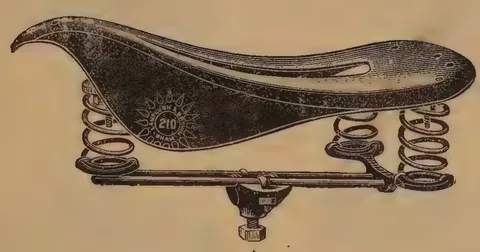
 Planche I, Figure I: Bicycle saddle with coil springs 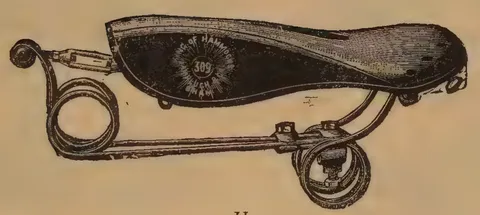 (opens in a new tab)
 Planche I, Figure II: Bicycle saddle with bracket mount 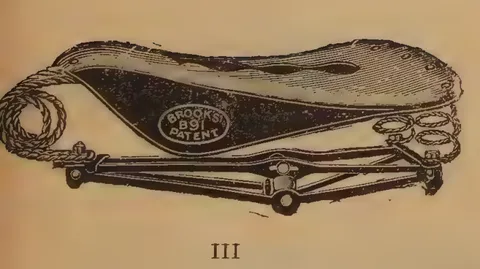 (opens in a new tab)
 Planche I, Figure III: Bicycle saddle with coil springs 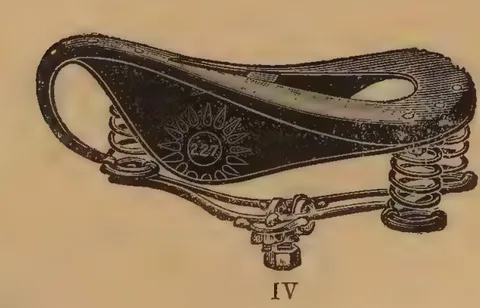 (opens in a new tab)
 Planche I, Figure IV: Bicycle saddle with spring attachment 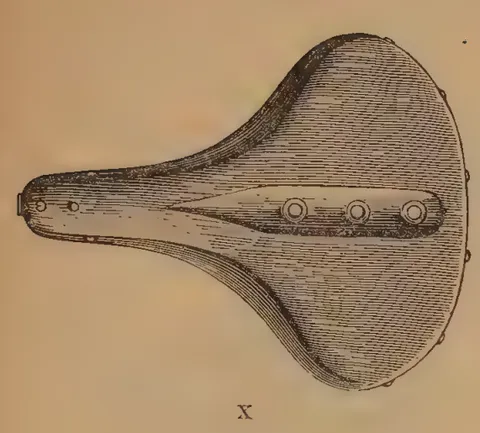 (opens in a new tab)
 Planche II, Figure X: Bicycle saddle design 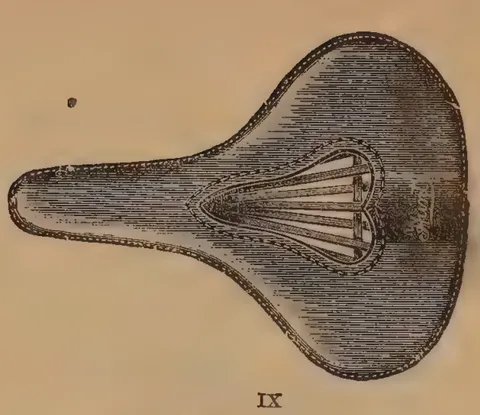 (opens in a new tab)
 Planche II, Figure IX: Bicycle saddle design 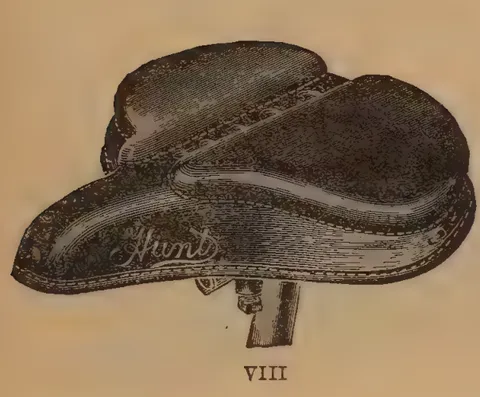 (opens in a new tab)
 Planche II, Figure VIII: Bicycle saddle with spring 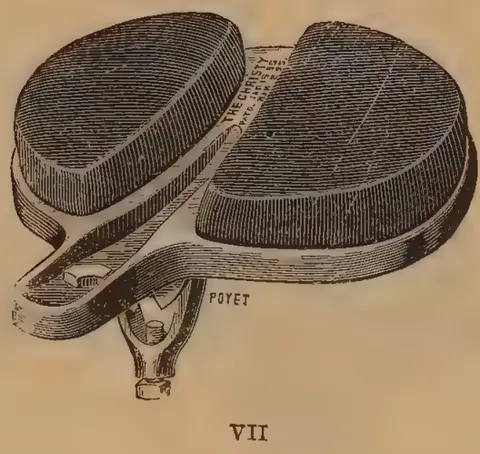 (opens in a new tab)
 Planche II, Figure VII: Bicycle saddle design 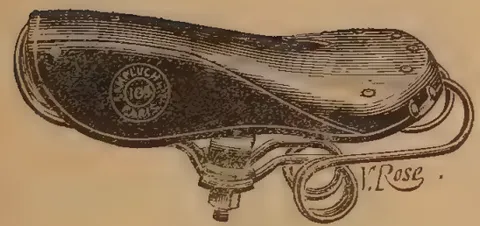 (opens in a new tab)
 Planche II, Figure II: Bicycle saddle variant 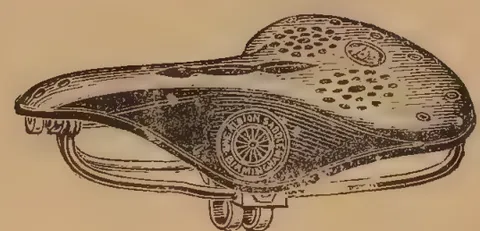 (opens in a new tab)
 Planche II, Figure V: Bicycle saddle design 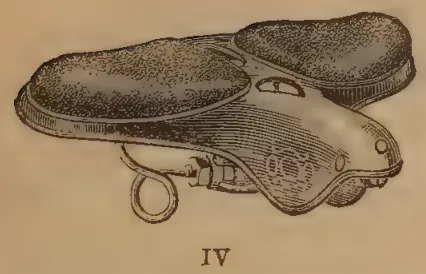 (opens in a new tab)
 Planche II, Figure IV: Bicycle saddle assembly 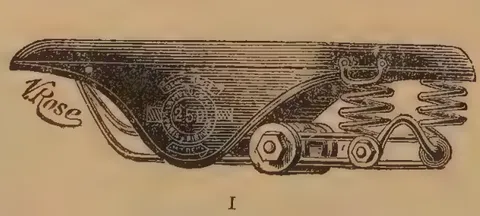 (opens in a new tab)
 Planche II, Figure I: Bicycle saddle with bracket 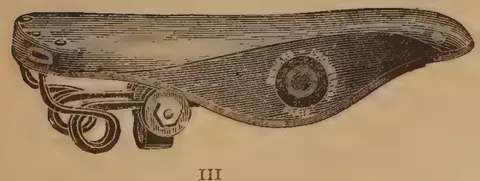 (opens in a new tab)
 Planche II, Figure III: Bicycle saddle design 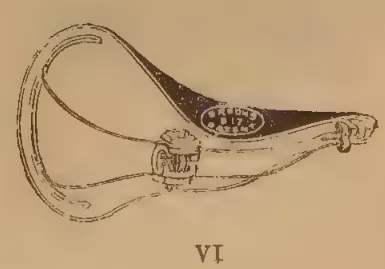 (opens in a new tab)
 Planche II, Figure VI: Bicycle saddle variant 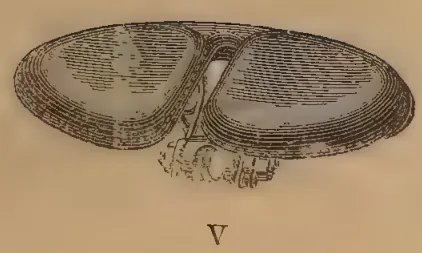 (opens in a new tab)
 Planche III, Figure V: Double-caved bicycle saddle 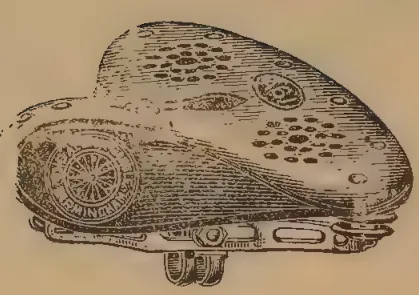 (opens in a new tab)
 Planche III, Figure I: Bicycle saddle design 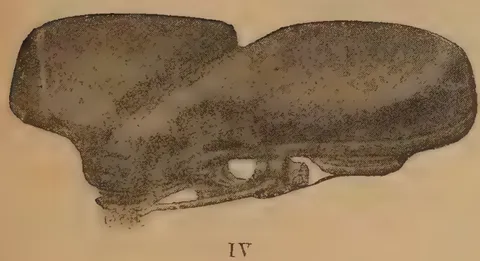 (opens in a new tab)
 Planche III, Figure IV: Bicycle saddle variant 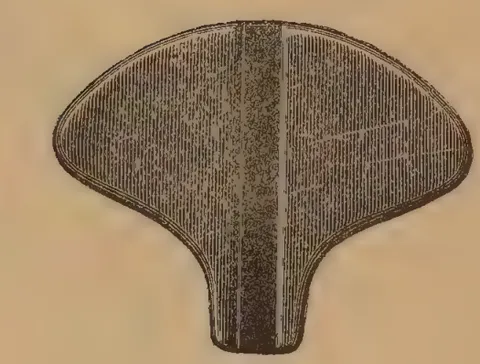 (opens in a new tab)
 Planche III, Figure II: Bicycle saddle design 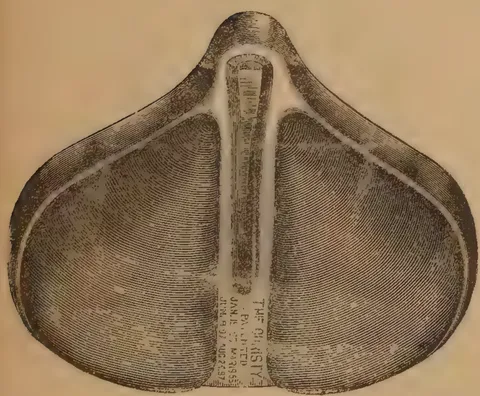 (opens in a new tab)
 Planche III, Figure III: Bicycle saddle design 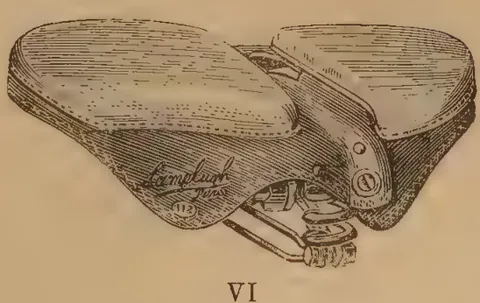 (opens in a new tab)
 Planche III, Figure VI: Bicycle saddle variant 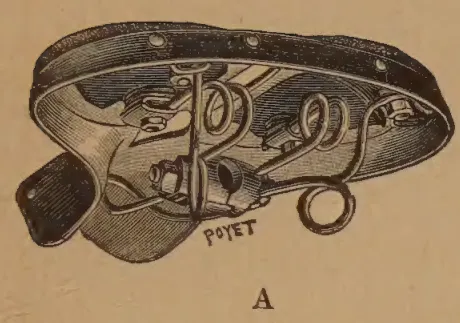 (opens in a new tab)
 Planche IV, Figure A: Saddle with extended nose 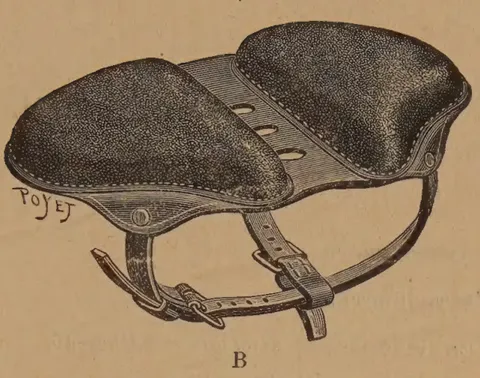 (opens in a new tab)
 Planche IV, Figure B: Leather saddle cover prototype 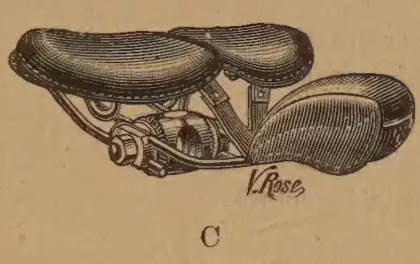 (opens in a new tab)
 Planche IV, Figure C: Mobile-nose bicycle saddle 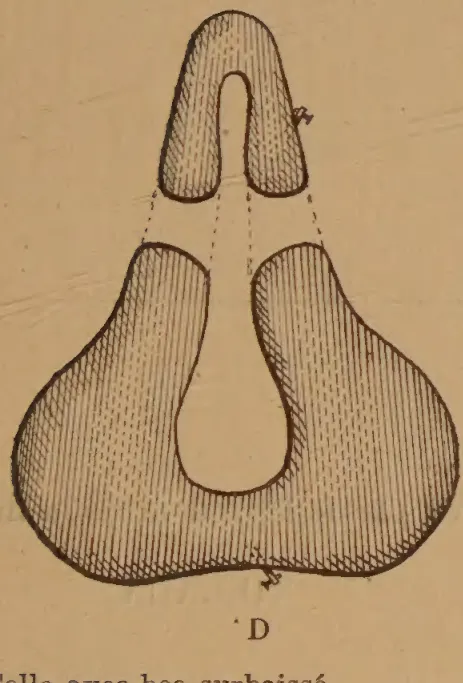 (opens in a new tab)
 Planche IV, Figure D: Pneumatic saddle design 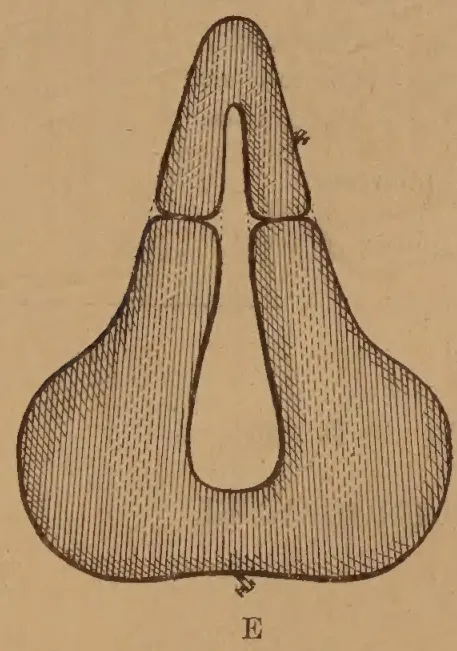 (opens in a new tab)
 Planche IV, Figure E: Pneumatic saddle variant