How to Ride a Bicycle
188422 chapters21 images
Contents
- Opens with Mr. Winkle's mishap in the Pickwick Papers as an image of the beginner's awkwardness, and promises simple instructions for learners. Notes how far the machine has improved, the modern high bicycle would have been impossible to learn on had it come first, and remarks that a 45-mile day, once a great feat, is now thought nothing beside twice that distance.
- Advises a competent teacher or a friendly arm, but writes for the learner thrown on his own resources, recommending the low, solid-built machine of the early figures rather than the modern large-wheeled bicycle. Warns that too small a machine knocks the knees on the handles and too large a one puts the crank throw beyond the legs, and doubts the value of learning on a boy's machine down an inclined plane.
- Measure yourself by standing beside the machine so the saddle is level with the hips, the saddle point about six inches from the handle upright, then practise wheeling it along by the handles, turning the wheel toward the side it leans, on the principle of the boy's hoop. The lesson proper (Fig. 1) is to sit the saddle with the feet hanging free while an assistant wheels you about for a quarter of an hour, steering only by the handles and never by swaying the body.
- With balance and straight running mastered, the feet now go on the treadles (Fig. 2). The up-and-down leg movement at first distracts from steering, but after a few turns the difficulty disappears; some learners need six times the teaching of others.
- Having ridden with the feet hanging and then on the treadles, the learner should now travel a short distance unaided, working the treadles in the usual way. Stresses that practice, not instruction, makes the rider, and that skill is generally proportional to the practice taken.
- Teaches vaulting on and off a stepless machine, keep the bicycle perfectly perpendicular and throw all the weight on to the handles, or you will knock it over or go clean over the top of it. Also gives mounting by the treadle at its lowest point (Fig. 3), whose upward momentum lifts you to the saddle, and alighting in motion by throwing the right leg over the handles into a side-sitting posture (Fig. 4), never letting go one handle before the other has firm hold.
- Vault on as usual, work up to a moderate speed, then throw the right leg over the handles as if dismounting but keep the seat, driving with the left leg only (Fig. 5). Practise passing the right leg back across the saddle into the ordinary riding position.
- Fig. 6's position rests the legs on long journeys and on descents, where the weight of machine and rider keeps up the momentum without treadling. Warns that the brake is generally applied from here, and to turn the handles one hand at a time, use both at once and, on letting go for a fresh hold, a strong spring flies the handles back.
- A showy feat in which the arms are folded and the steering done by the feet alone (Fig. 7), which requires keeping the feet on the treadles through the upward as well as the downward stroke, a clinging hold that also proves useful when climbing hills on the road. Every stroke, right or left, must be of equal force, since heavier pressure on one treadle turns the machine that way; attempt it only on good surfaces.
- Get up to full speed, lift the feet off the treadles on to each side of the leg-rest (Fig. 8), then let go the handles and fold the arms, gravity being overcome by motion, as with the boy's hoop, until the momentum is lost. Only for an expert able to hold twelve to fourteen miles an hour on a very good surface; from the position one may even lie back flat along the spring.
- Called the most useful feat of all: stopping the bicycle and sitting still upon it (Fig. 9), first practised beside a railing, a wall or an assistant's shoulder. Slacken almost to a standstill, turn the front wheel to 45 degrees against the back wheel, and correct the lean by pressing the left or right treadle until the balance holds well enough to read or write letters in the saddle.
- Describes a two-rider machine made by coupling the front wheels of two ordinary bicycles of the same make with a connecting-iron, so that only the iron and one spring need be bought rather than a whole new machine. It carries two brakes, both acting on the rear wheel and one worked by each handle, two steps, and a leather splasher over the rear wheel to protect the front rider.
- Figs. 11 and 12 show a roadster and a racer; wheel height is chosen by leg length, tested by sitting the seat and touching the lower treadle with the toe without quite straightening the leg (a 5 ft 8 in rider is taken as the average case). The modern machine's saddle is too high to vault, so it carries a jagged step on the backbone above the hinder fork, and the section works through mounting by running alongside and hopping on to the step, mounting by hopping from behind, and getting off backwards over the treadle (Figs. 13–17), closing on riding style.
- Recommends regular diet, rest and exercise, the daily cold or tepid bath, early rising, and avoidance of pork, veal, duck, salmon and pastry in favour of beef, mutton, fowls and soles, noting that professional training rules have relaxed to allow vegetables and stimulants in moderation. For readers inclined to obesity it reprints Banting's dietary, abstain from bread, butter, milk, sugar, beer and potatoes, with set breakfast and 2 p.m. dinner allowances and claret, sherry or Madeira but no champagne, port or beer.
- A non-cycling filler section introducing the laws and regulations of base ball as recognised generally by the associations and clubs.
- The full playing code: ball weight of five to five and a quarter ounces and nine to nine and a quarter inches round, bases thirty yards apart with canvas bags and a marble or stone home base, nine innings to a side with nine men, and rules on pitching (arm swinging nearly perpendicular, hand below the hip, overhand throws called a foul balk), called balls, strikes, fair and foul hits, base-running and expulsion for betting.
- Sets out the umpire's duties, clear, audible decisions, keeping the nines playing without delay except for accident, injury or rain, and reserving the triangular space behind home base for umpire, catcher and batsman. He is master of the field, may fine a disobedient or abusive player five to ten dollars, and the game is forfeited if the captain fails to pay or arrange payment.
- Introduces the game for two, four or eight players, with courts chosen by tossing or spinning the racquet, and defines the server and servee and the Hand-in / Hand-out alternation of service.
- Explains service from behind the base line into the diagonally opposite court between net and service line, faults, the ban on volleying the service, and scoring to fifteen aces with Deuce and Vantage at fourteen-all. Covers double matches and handicapping, half-court play, a cord stretched at seven feet, conceded points or extra Hand-ins, and closes with John Tompkins of the Tennis Court, Brighton, on grip, the shoulder stroke, the cut, and the underhand and overhand twists.
- The numbered code: choice of sides and service by toss, service alternately from the right and left courts, faults, the service not to be volleyed, and scoring 15, 30, 40, game, with deuce and advantage, six games to a set and the advantage-set at games-all. Laws 14 onward define the bisque and the odds, half-15, 15, half-30, 30, half-40, 40 and half-court.
- Laws 23 and its sections adapt the code for three and four players: the single player serves every alternate game, each pair chooses which partner serves first, and partners then serve in the third and fourth games and so on. Service is taken alternately, no player may return a service delivered to his partner, and the strikers-out may not change courts before the end of the set.
- Laws 24 to 32 restate the game using Hand-in for Server and Hand-out for Striker-out, so that only the Hand-in can score and the first to 15 points takes the game, with the game set to 3 and the score called Love-all at 14-all. In three- and four-handed play only one partner serves at the start of each game, and points or extra successive Hand-ins may be given as odds.
Images in this book 21 pictures from 68 pages
Illustrations 16
 (opens in a new tab)
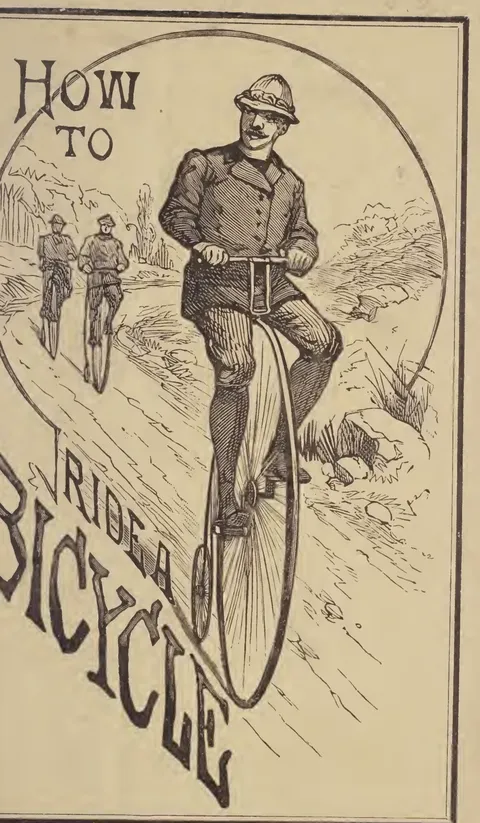
 How to Ride a Bicycle - Title Page 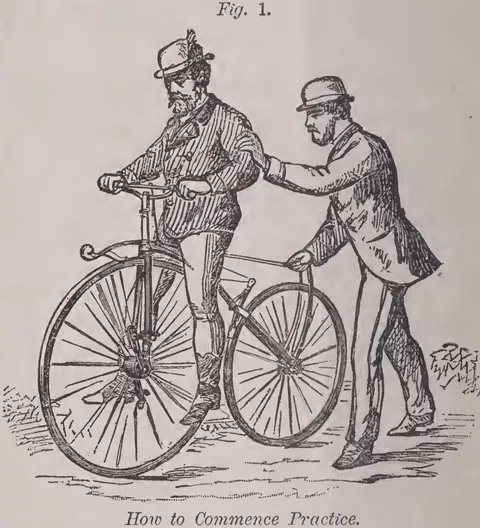 (opens in a new tab)
 Fig. 1 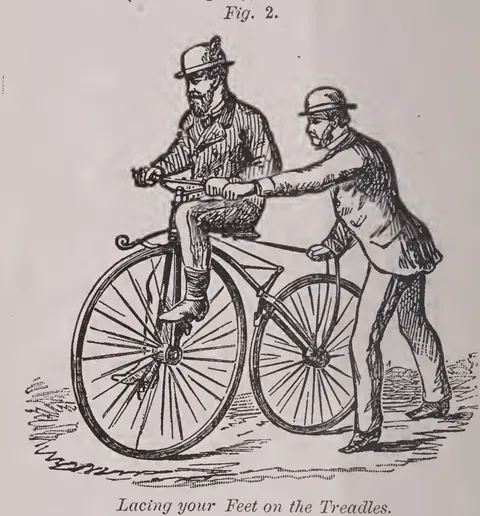 (opens in a new tab)
 Fig. 2 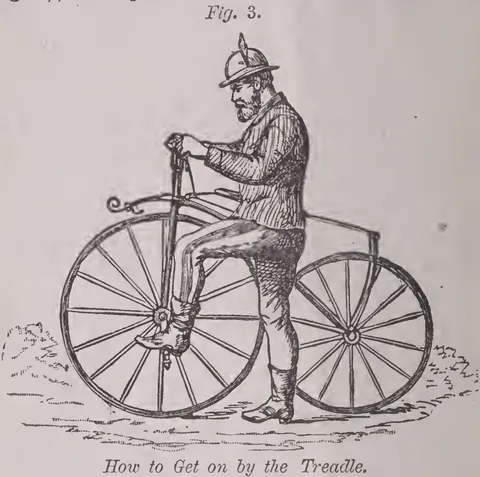 (opens in a new tab)
 Fig. 3 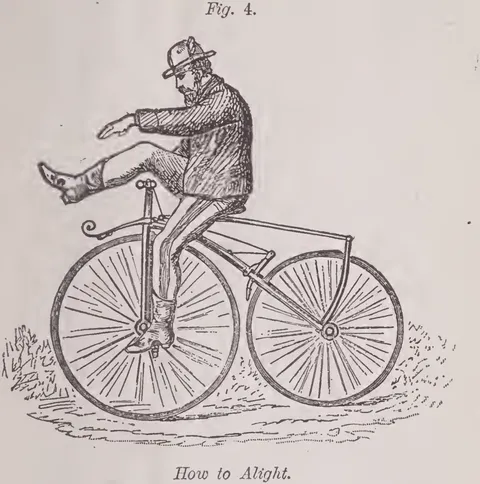 (opens in a new tab)
 Fig. 4 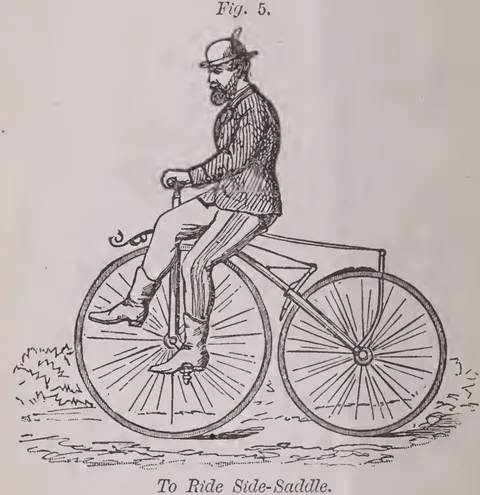 (opens in a new tab)
 Fig. 5 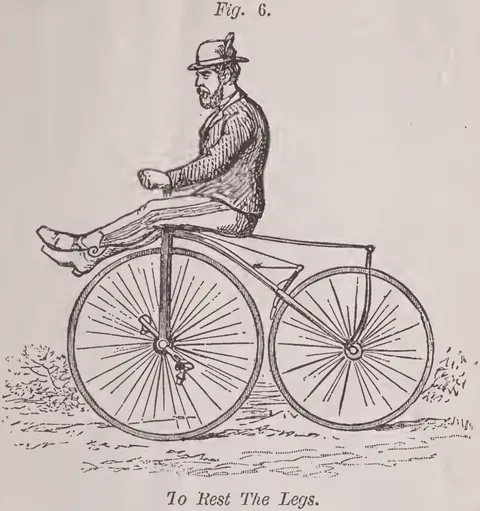 (opens in a new tab)
 Fig. 6 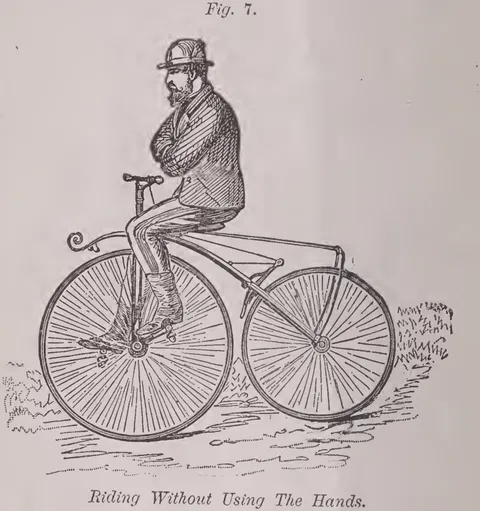 (opens in a new tab)
 Fig. 7 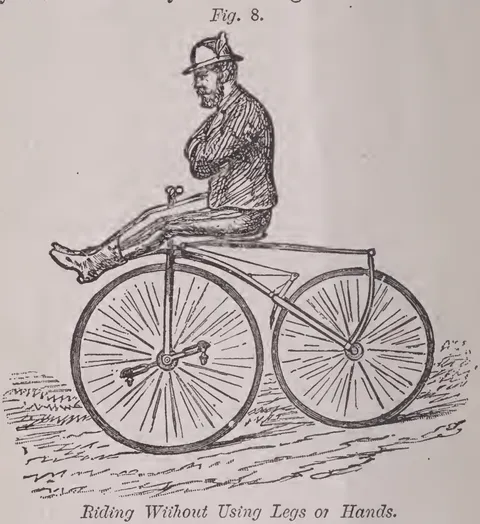 (opens in a new tab)
 Fig. 8 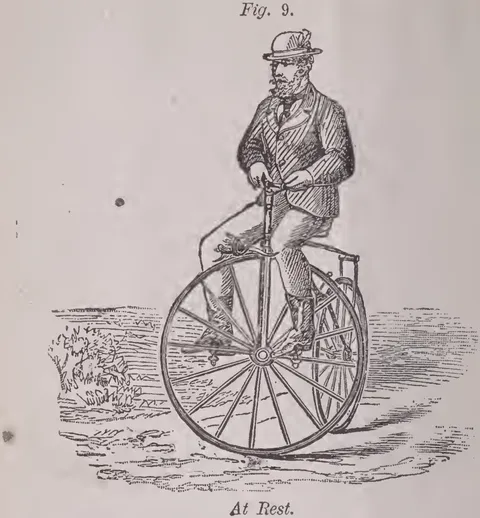 (opens in a new tab)
 Fig. 9 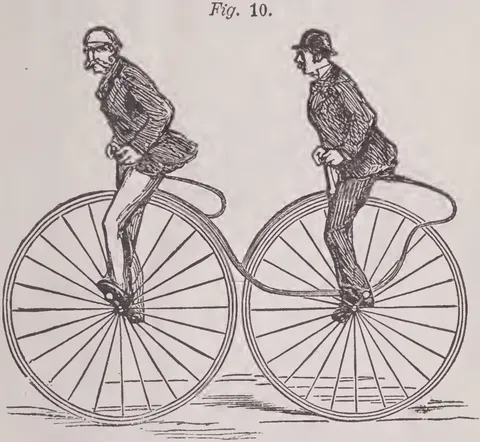 (opens in a new tab)
 Fig. 10 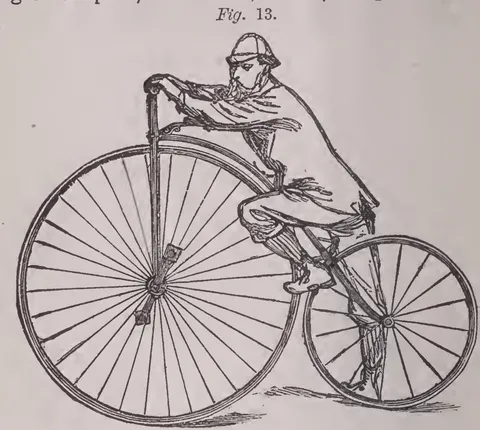 (opens in a new tab)
 Fig. 13 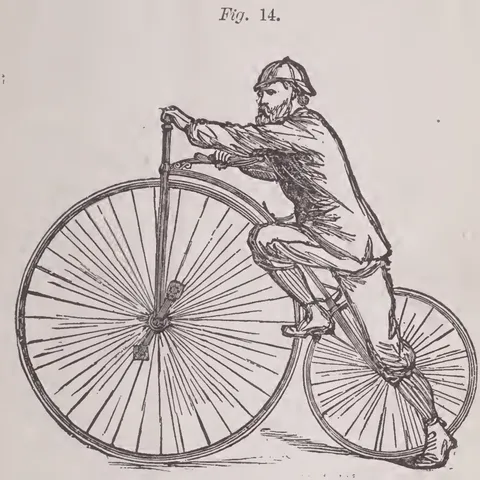 (opens in a new tab)
 Fig. 14 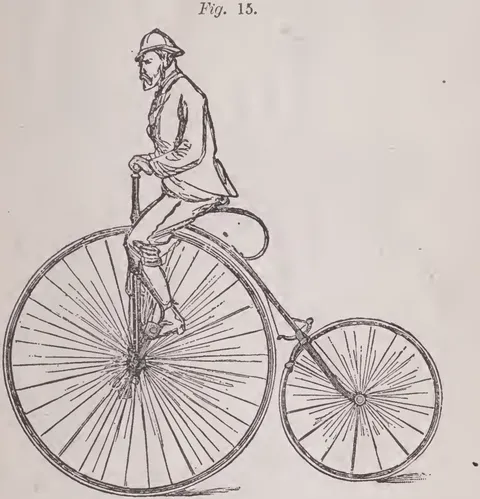 (opens in a new tab)
 Fig. 15 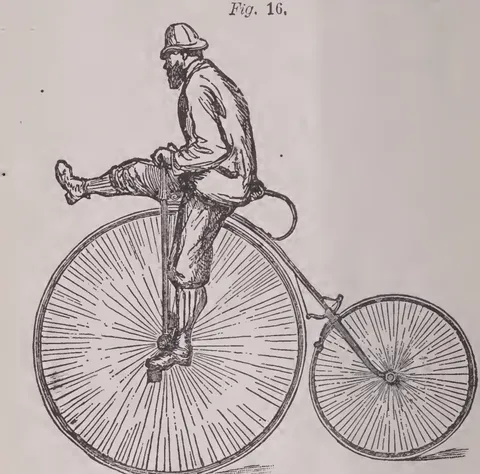 (opens in a new tab)
 Fig. 16 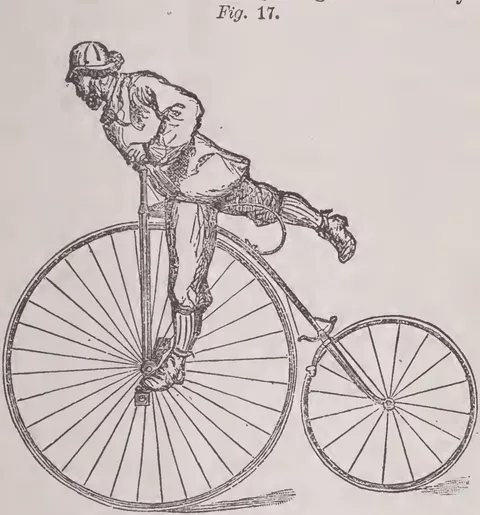 (opens in a new tab)
 Fig. 17
Diagrams 2
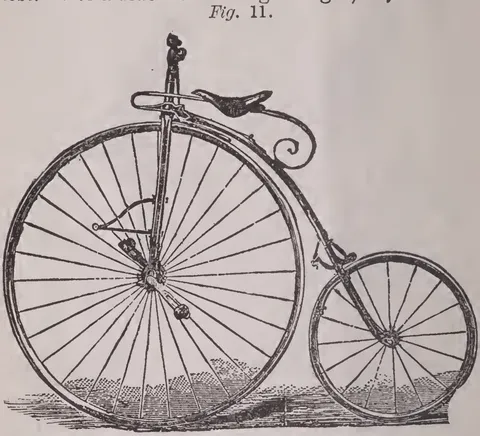 (opens in a new tab)
 Fig. 11 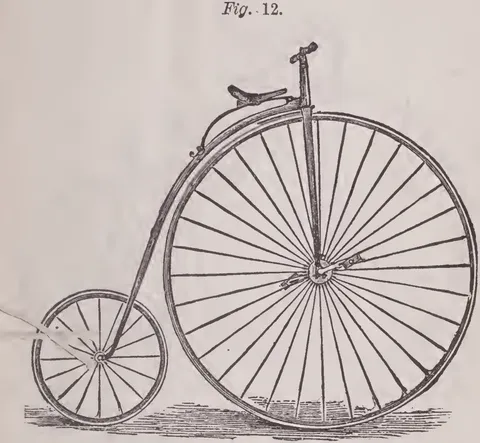 (opens in a new tab)
 Fig. 12
3 advertisements
 (opens in a new tab)
 Our Comic Books 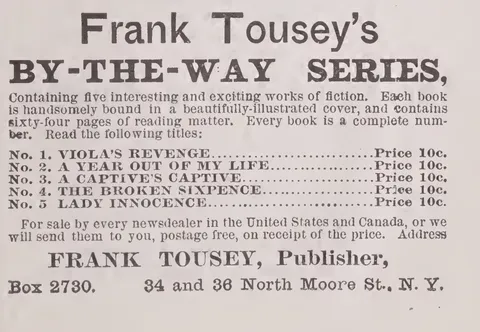 (opens in a new tab)
 Frank Tousey's By-The-Way Series 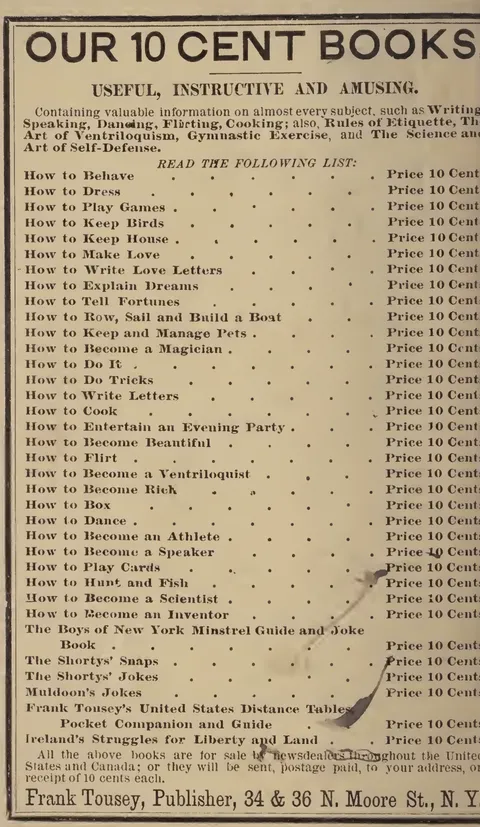 (opens in a new tab)
 Our 10 Cent Books