Ist das Radfahren gesund?
Edited by Theophil Weber189321 chapters14 imagesGerman

Contents
- Preface by Ludwig Lamer (Dresden, January 1893) arguing that modern civilization's sedentary 'sitting age' has robbed people of the exertion natural life once required, and presenting cycling as at least the second-best form of vigorous body-wide movement available to those who cannot walk enough or live near mountains to climb; addresses lingering prejudice against cycling by older people and women.
- A physician (Geheimrat von Nussbaum) argues mechanical remedies like Oertel's and Schweninger's terrain-cures and cycling are more reliably understood than drugs, citing Pettenkofer and Voit's metabolic findings (24-hour human air intake of 9,000 litres) to explain how cycling reduces excess body fat and water and strengthens heart, lungs and chest expansion; closes with detailed practical advice on wool-cotton cyclist's clothing, tour diet, and first-aid treatment of wounds, burns, fractures and artificial respiration for heatstroke.
- Argues that touring cycling carries little real accident risk, citing the Riga Velocipedist Club's record of no serious injuries, and that it strengthens leg, trunk, circulatory and respiratory-system muscles; credits cycling with treating obesity (Fettsucht), hemorrhoids, cardiac muscle weakness and neurasthenia through improved metabolism and circulation.
- A country doctor's signed letter (Dr. Becker, Dresden) describing 3.5 years using an Imperial-Klub tricycle and then a Rover Safety bicycle to conduct his medical rounds in the Harz mountains, arguing that rational, non-excessive cycling cannot cause heart enlargement or valve defects and recommending it especially for neurasthenics who cannot afford horseback riding.
- A tricyclist since 1886 reports that, based on his own and other riders' experience, moderate cycling benefits health, but warns against excessive speed and overly long daily tours, and advises anyone not fully healthy, particularly those with heart-valve defects, to consult a doctor before riding.
- Rebuts the common charge, voiced even by educated Germans, that the country's roughly 25,000 organized cyclists are courting lung or spinal disease and constant broken bones, explaining physiologically that pedaling deepens breathing and improves digestion and circulation precisely because the rider's weight is carried by the machine rather than by the legs as in walking.
- The director of a sanatorium for nervous patients endorses cycling as a generally healthy exercise that engages the muscles harmoniously, but cautions that it can strain the heart muscle on hilly tours or through insufficient training, especially in heavier riders.
- Signed 'Dr. K.' (Kreuznach), this reports clinical observations of over 300 cyclists across two clubs of about 100 active riders over six years, finding no illness attributable to cycling itself apart from mechanical injuries from falls (two arm fractures, one ankle fracture); cites a rider who reduced from 220 to 180 pounds in one season and notes the German Cyclists' Federation then had over 15,000 members.
- A six-year tricyclist (Dr. med. Wolf, Naunhof) credits cycling with stimulating regular bowel movement through the contraction of the abdominal muscles against the intestines, gives detailed clothing and drinking advice for long tours (warning against heavy lager beer), and personally refutes the claim that cycling causes rheumatism from his own experience riding in near-freezing winter temperatures.
- Reprinted from the periodical 'Deutsche Warte', this argues methodically practised sport combats obesity and excess water content in the blood and improves metabolism, singling out rowing and cycling as fresh-air exercises that protect against tuberculosis by expanding the chest, and argues fashion, not medicine, is the real obstacle to women taking up tricycling.
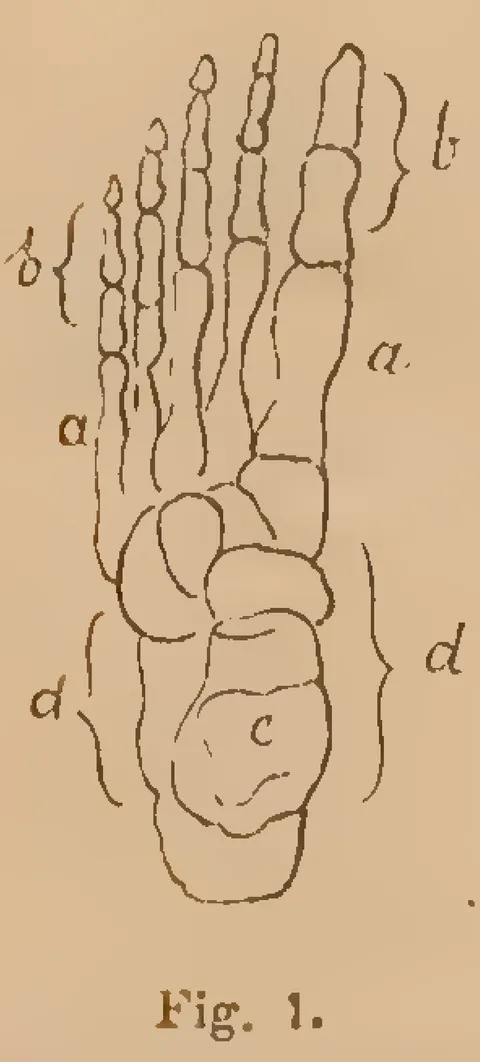
- A detailed anatomical treatise on the 26 bones of the human foot, illustrated with figures showing how ill-fitting symmetrical ('einbällig') shoes crush and overlap the toes from childhood onward, arguing this crippling directly weakens the toe-power a cyclist delivers to the pedals, and recommending wide, elastic wool-tricot shoes built to Prof. Dr. Jäger's system instead of stiff leather uppers.
- Sanitätsrat Dr. Kunze of Halle argues cycling is a distinct form of gymnastics because it trains balance ('Balancefähigkeit') through the precise coordinated action of individual muscles, and that this same muscular effort strengthens the leg, trunk and arm muscles together with the heart and lungs via their physiological interdependence.
- Explains obesity as fatty degeneration of regressing body cells, citing hereditary predisposition and excess carbohydrate consumption as its causes, and argues tricycling matches Professor Oertel's mountain-climbing terrain-cure in effect, calling it 'constant mountain-climbing on the flat'; includes the reasoning that each kilogram of body-weight lost through cycling represents roughly two kilograms of fat burned, since lean muscle replaces it.
- A long summary of Professor Dr. Gustav Jäger's book 'Mein System', explaining that sedentary life causes excess fat and water to accumulate in body tissue, reducing blood supply and the excitability of nerve and muscle, and arguing that sweat-inducing exercise such as cycling is the best remedy, particularly for schoolchildren whose brains suffer from congested blood during long hours of sitting and study.
- A point-by-point rebuttal of bacteriologist Dr. Robert Koch's 1887/88 article in 'Uber Land und Meer' condemning cycling and rowing as harmful, arguing Koch's warnings apply only to excessive or competitive riding and not ordinary touring, and that Koch, never having cycled himself, is unqualified to judge the sport; closes by quoting Goethe against the couple's critics.
- A muscle-by-muscle anatomical description of the thigh, calf and diaphragm muscles engaged in pedaling, refuting the claim that cycling is 'one-sided' exercise, and explaining how the diaphragm's rhythmic contraction during pedaling promotes regular bowel movement, countering the constipation and stagnation blamed on the sedentary 'Stubenhocker' (housebound) lifestyle.
- Argues that heart and lung patients need not be categorically barred from cycling if they use a light machine on flat roads over short distances, and reports the author's own spirometric measurements of lung capacity while riding (5,500-6,000 cubic centimetres), concluding a bent-forward riding posture does not compress the chest as critics claimed. Signed Dr. Klamann-Luckenwalde.
- Quoting 'Psyche' writing in the American journal 'The Wheel', this recounts three case histories of young women, an anxious convalescent, an overworked insomniac student, and a nerve-exhausted teacher, whose doctors prescribed cycling against their families' objections, restoring their sleep, nerves and general health.
- A former soldier's advice on hydration while touring, refuting the popular doctrine of drinking as little as possible by comparing it to the army's practice of supplying water to marching troops in hot weather, and giving specific recommendations against undiluted cold milk and iced drinks in favour of frequent small drinks of coffee, tea or wine cut with carbonated water.
- A second, shorter printing of the same essay's opening (see the earlier entry at pdf_page 67), again explaining fatty cellular degeneration and hereditary predisposition to obesity, reset in different type without the original periodical citation and cut short before the article's second half.
- Opens with an anecdote of a rheumatic-gout sufferer cured by tricycling after nineteen doctors failed him, then presents bacteriologist Dr. Robert Koch's own first-person account of converting from cycling skeptic, after a bout of bronchitis caught riding open-mouthed in cold weather, to passionate cyclist; closes the book reflecting on inherited susceptibility to tuberculosis and cycling's value for children's chest development.
Images in this book 14 pictures from 139 pages
Diagrams 14
 (opens in a new tab)
 Fig. 1: Foot bones and metatarsal structure 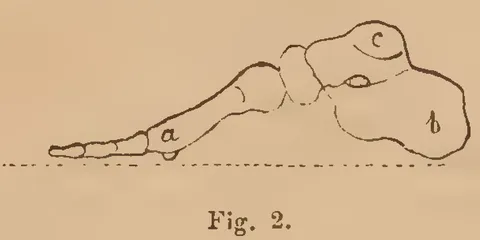 (opens in a new tab)
 Fig. 2: Foot side profile 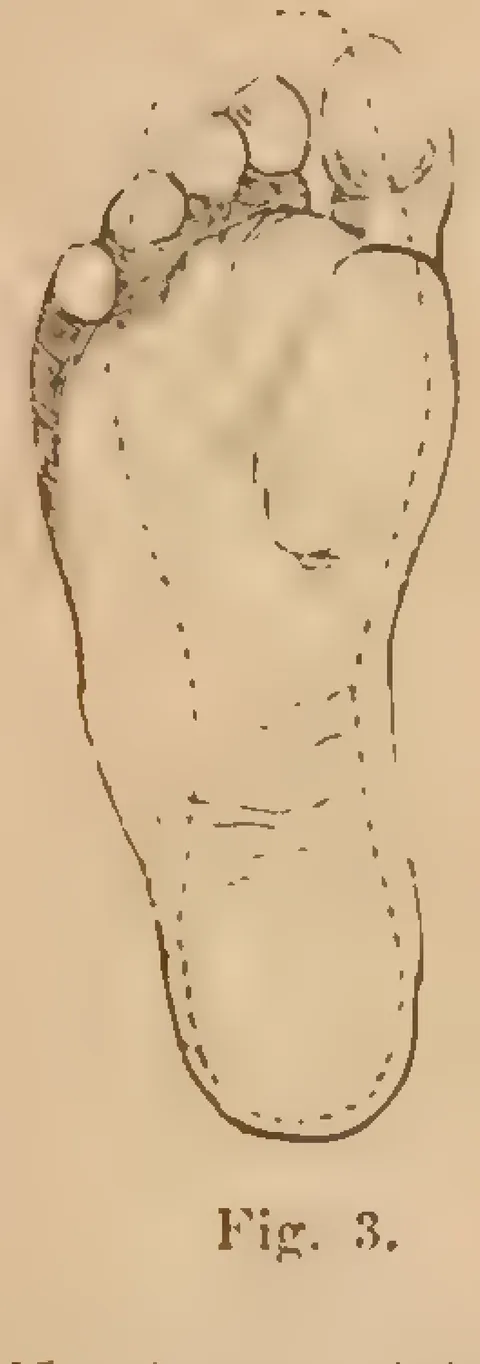 (opens in a new tab)
 Fig. 3: Foot sole bottom view 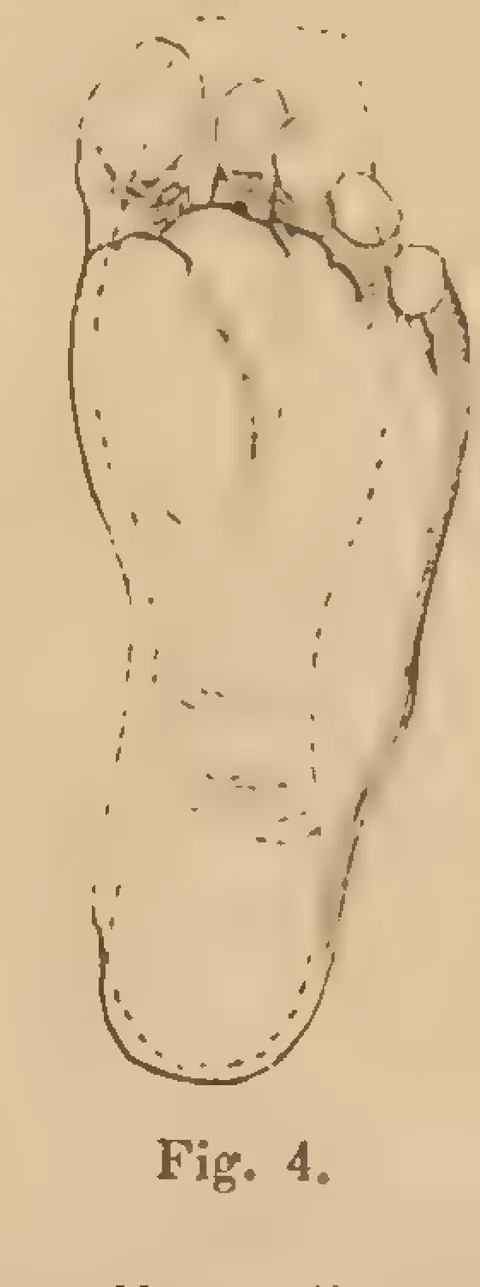 (opens in a new tab)
 Fig. 4: Foot sole variant 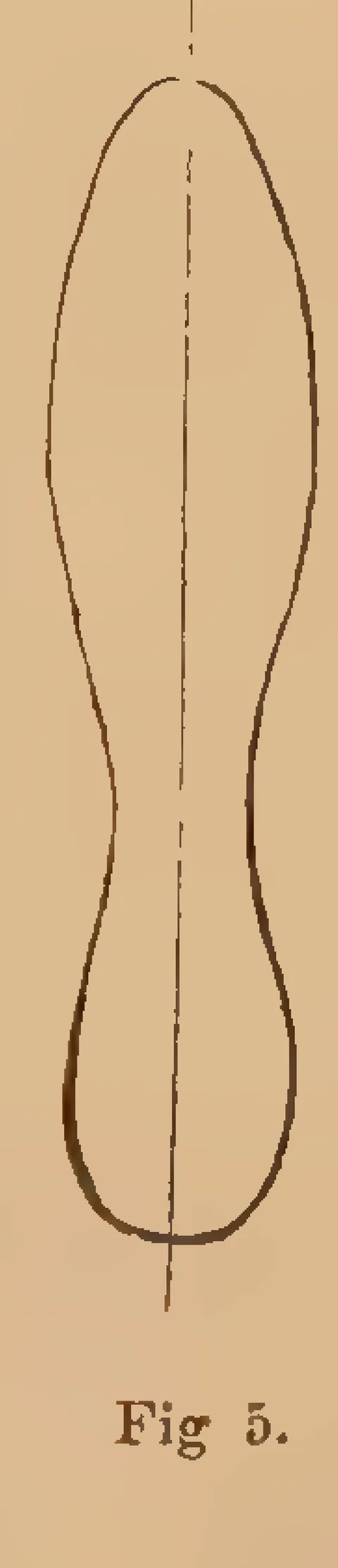 (opens in a new tab)
 Fig. 5: Natural wide shoe sole 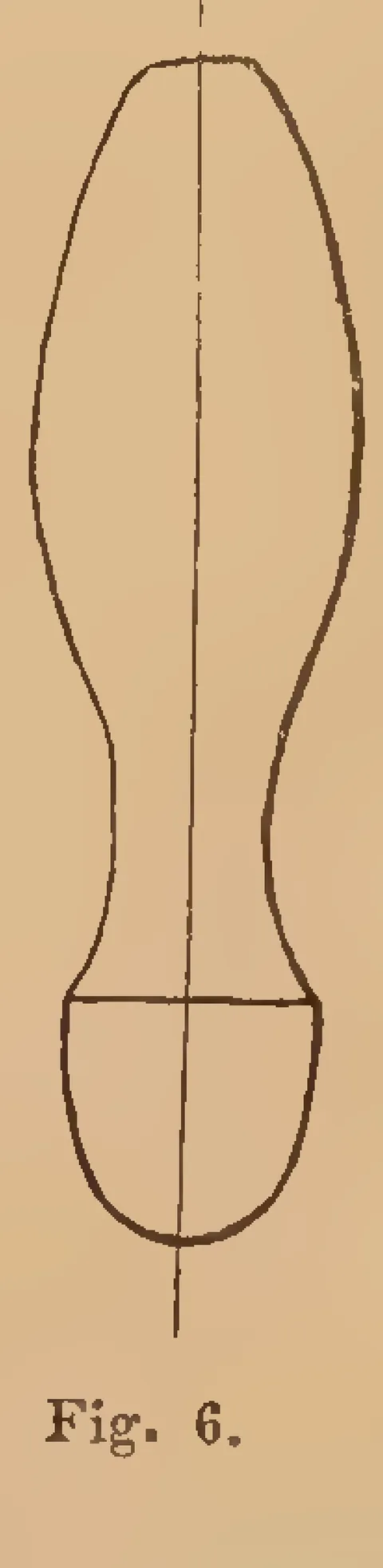 (opens in a new tab)
 Fig. 6: Symmetric shoe sole design 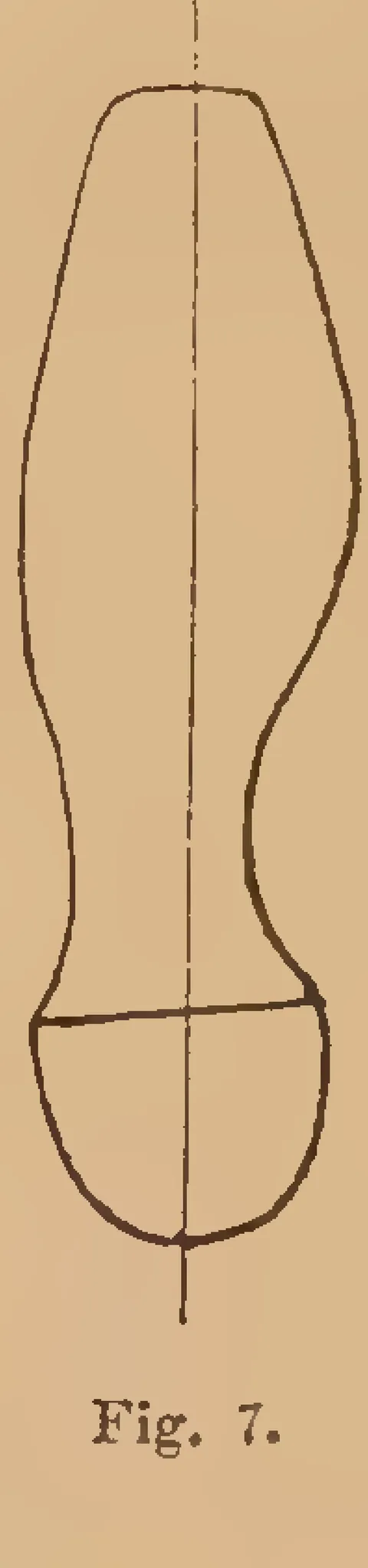 (opens in a new tab)
 Fig. 7: Practical shoe sole form  (opens in a new tab)
 Fig. 8: Comparative sole designs 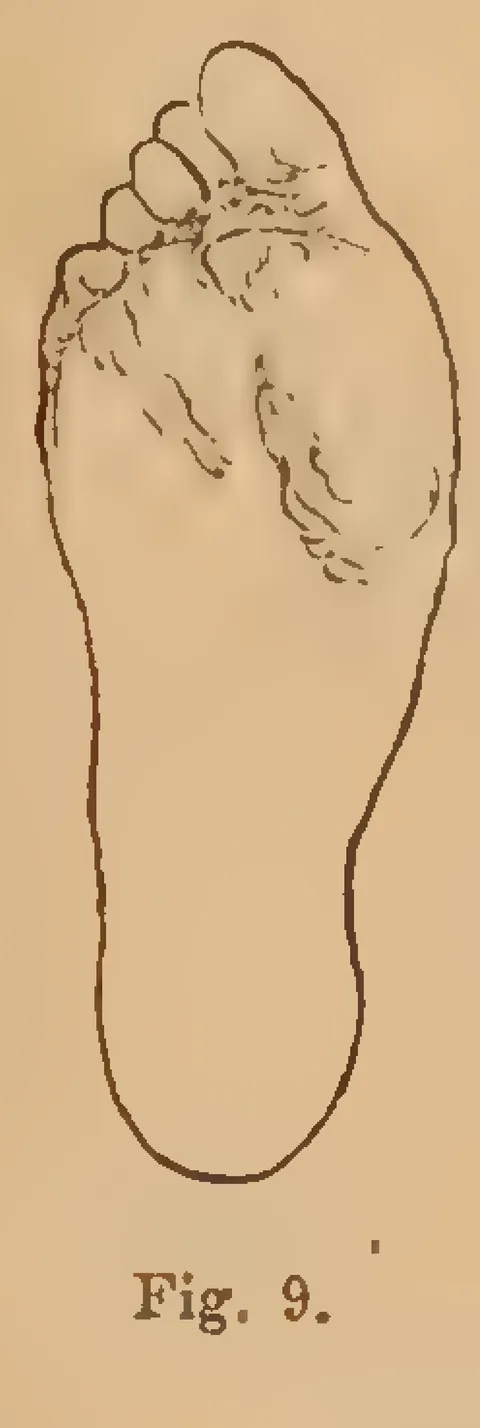 (opens in a new tab)
 Fig. 9: Naturally formed foot 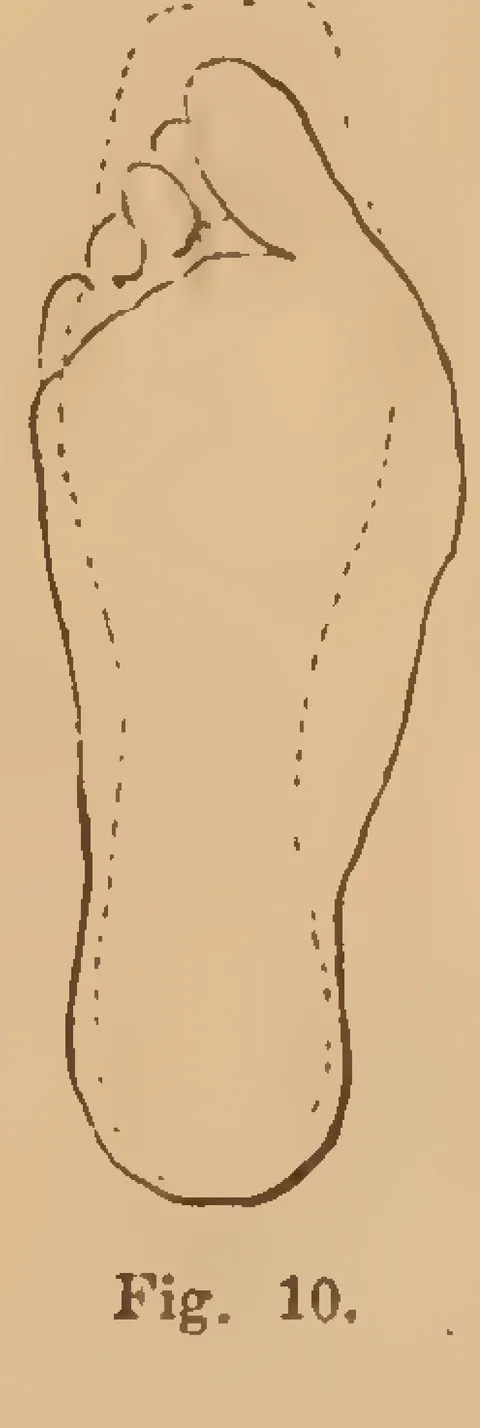 (opens in a new tab)
 Fig. 10: Foot sole profile variant  (opens in a new tab)
 Fig. 11: Foot skeletal structure 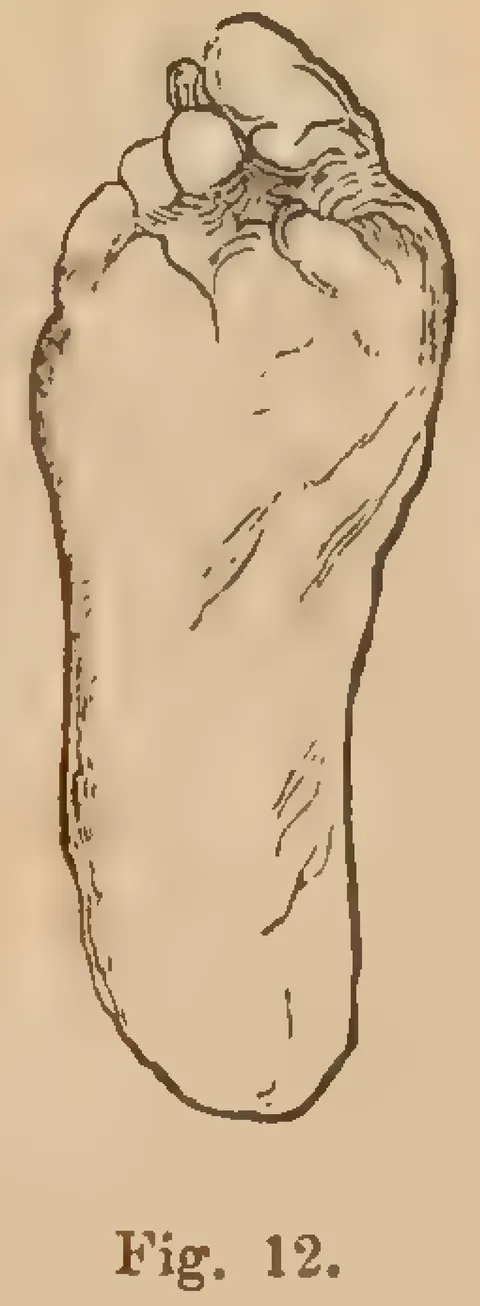 (opens in a new tab)
 Fig. 12: Moderately deformed foot 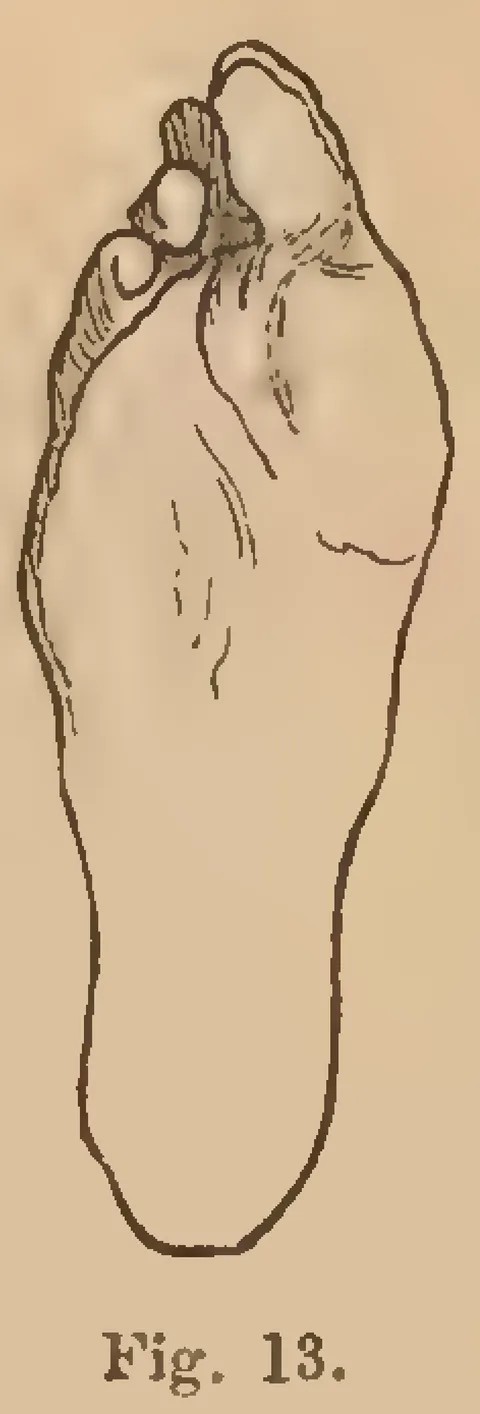 (opens in a new tab)
 Fig. 13: Severely deformed foot 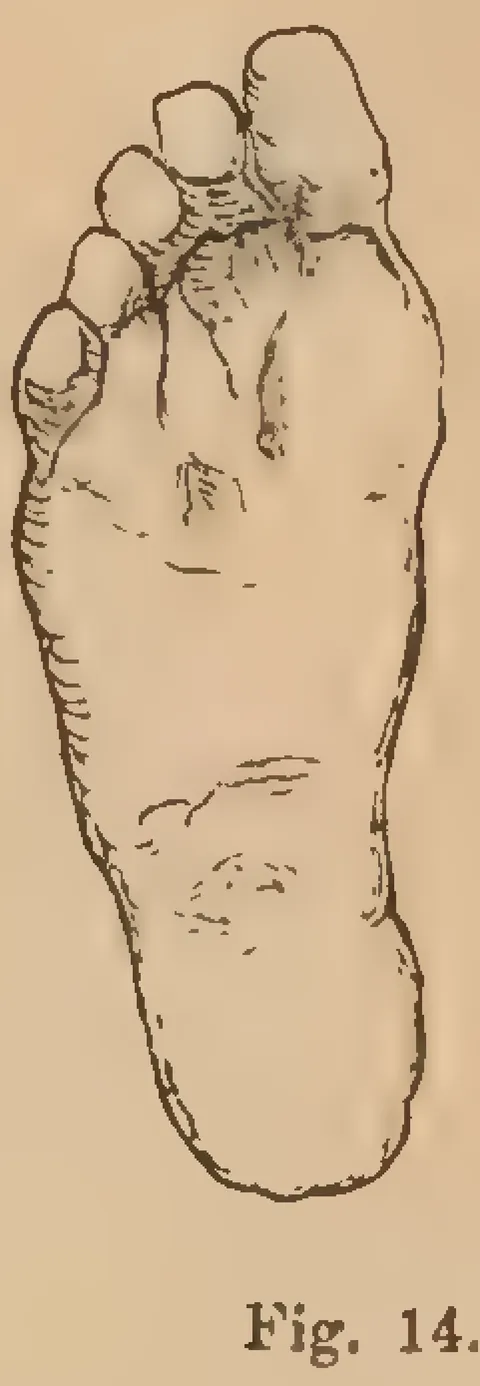 (opens in a new tab)
 Fig. 14: Extreme foot deformation