April 1914
Vol 1914, No 418 articles31 images
Articles in this issue
- Notes on the coming touring season and a call for members to recruit new riders they meet on the road; reports that the Annual Meeting was thinly attended (under 100), with Mr Trevarthen and Mr Haigh commenting on the membership decline and the year's finances, and recommends the Metropolitan Railway's 24 cycle-tour tickets around the Chilterns and Buckinghamshire.
- Signed 'A. W. T.', an article on road engineering prompted by a conference of surveyors at the Royal Automobile Club, arguing for clean, flat, uncambered road surfaces and for a serrated rather than straight junction between waterbound macadam and granite-sett paving so cyclists can cross the level change safely.
- 'The Wanderer' reviews George D. Abraham's newly published 'Motor Ways in Lakeland' (Methuen), recounting John Wilkinson's sunken iron boat on Helton Tarn, the tar-plait remedy used against saw-fly larvae infesting the larches around Thirlmere, and the view descending into Keswick.
- F. T. Bidlake debates chainless (bevel-drive) versus chain-driven bicycles, citing Mr H. W. Bartleet's experience of the Rover chainless and efficiency figures from Hans Renold Ltd; also notes H. Green's record Pedersen rides from London to Liverpool and London to York, and welcomes the new L.C.C. by-law requiring slow traffic to keep to the kerb.
- S. T. Chadwick recommends the south-west of Norway around the Christiania-Trondhjem line as an under-used touring ground, followed by a long run of member queries and replies covering tours to Spain, the Scilly Isles, Savoy, Brittany, the Cotswolds, Loch Lomond and Schleswig-Holstein, plus detailed route advice for a Scottish tour through Glencoe, Pitlochry and Aviemore.
- J. E. A. Steggall recalls an 1881 ride from Manchester to Garelochhead on a 'D.E.H.F.' (Duplex, Excelsior, Hollow Fork) high bicycle by Baylis, Thomas and Co., describing a side-slip on newly laid Manchester tramlines, a lost and recovered scarf-pin near Lancaster, and the climb over Shap Fell.
- A. W. Rumney continues (from the previous issue) a Riviera touring narrative along the coast road from St Maxime and Fréjus through the Esterel to Cannes, Grasse, Vence and Nice, the Puget-Théniers rail-and-road route, Menton, and on into the Italian Riviera from San Remo towards Sestri Levante via Noli.
- H. W. describes cycling to Dovedale near Ashbourne, Derbyshire, naming the Stepping Stones, the Tissington Spires, Reynard's Cave, the Lion-Faced Rock, the Dove Holes, and Viator's Bridge at Milldale associated with Izaak Walton and Charles Cotton.
- F. J. gives a humorous first-person account of giving up a railway commute for a ten-mile daily bicycle ride to business, dwelling on newly noticed nature along the route and on enduring fog, rain and cold in winter.
- Douglas Lechman, M.I.A.E., explains how two-stroke engines work, reviews the 'Perfloc' self-locking nut and the Crown Manufacturing Co.'s 'Mileage' combination tyre tread, discusses magneto-powered cycle lighting, and reports on the Amateur Camping Club's demonstration at Challoner Street and the Roads Improvement Association's February meeting.
- Mabel Richards laments the decline of distinctive cycling dress among women, recalls how the rational-dress movement fell into disrepute through exploitation by 'undesirables', and argues that the cross-frame motor-bicycle and divided dress point the way to a practical revival of women's cycling.
- Captain Currie's miscellany covers the Simple Life and Open Air Exhibition at the Royal Horticultural Hall, a cyclometer-tick method of gauging riding speed, the Bristol and Gloucestershire District Association's run to Thornbury Castle, London street-accident statistics for the last quarter of 1913, and the Metropolitan District Association's social evening at Tiffin's Restaurant.
- Advice on the seasonal overhaul of a touring camera, describing how to test bellows and dark slides for light leaks using an electric bulb in a darkened room, clean dusty lenses, and check shutter speeds and the focusing scale for accuracy.
- Minutes of the C.T.C.'s Annual General Meeting held 13th March 1914 at the Great Central Hotel, chaired by Mr James Lennox: adoption of the 1913 accounts (a small surplus after an estimated deficit), Mr Hopkinson's defeated amendment to end the Club's £25 grant to the Roads Improvement Association, debate over Secretary Mr W. S. Burke also acting as Editor, and resolutions on widening the Road Board's sign-posting powers and on excessive motor speed.
- Details of C.T.C.-organised Easter tours to Paris (with a Versailles excursion), Brussels and Bruges, alongside notices for the 1914 British and Continental Handbooks, chief-consular vacancies in counties from Herefordshire to Ross and Cromarty, and the Club's cycle and motor-cycle insurance schemes.
- Report of the Council's March meeting in London chaired by Lt.-Col. C. H. L. Baskerville, recording grants to the Metropolitan, Birmingham and Manchester District Associations, a resolution urging minimum and maximum standards for motor headlight range, and Rights and Privileges Committee settlements for members run down by a taxicab in Knightsbridge and a tramcar in Harlesden.
- Reader letters continue the debate on bicycle gearing and lever action raised by 'No. 3907', a note on where to find the church-door key for the Priory Church at Brecon (referencing Mr Bradley Smith's 'A Reconnaissance into South Wales'), and several members' experiences with Rich detachable air tubes.
- Round-up of District Association news and fixture lists from Birmingham, Bristol and Gloucestershire, Glasgow, Leicester, Liverpool, the Lothians and Peebles, Manchester, the Metropolitan, Nottingham and Derby, Preston and North Lancashire, Sheffield, Southampton and Yorkshire (West Riding), followed by the April list of candidates for membership.
Images in this issue 31 pictures from 58 pages
Illustrations 1
 (opens in a new tab)
 C.T.C. winged-wheel emblem
Photographs 9
 (opens in a new tab)
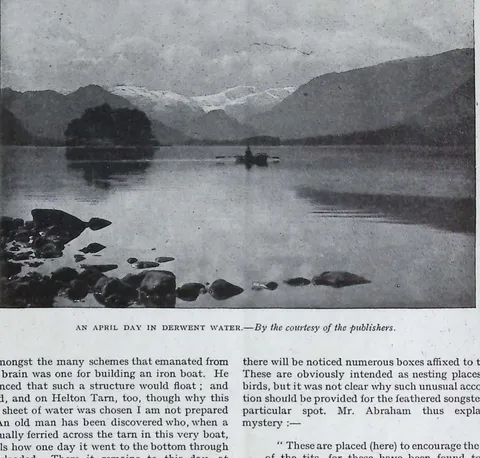
 An April Day in Derwent Water 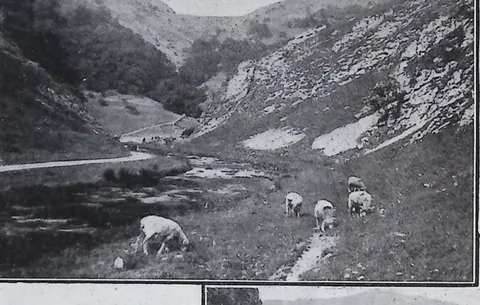 (opens in a new tab)
 The Entrance to Dovedale 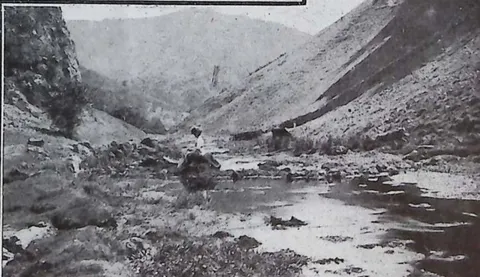 (opens in a new tab)
 The Wilder Part of Dovedale 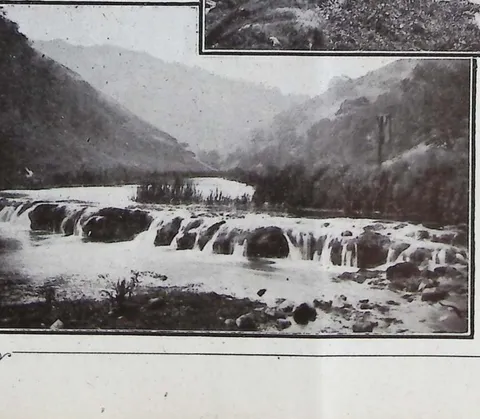 (opens in a new tab)
 Dovedale from the Stepping Stones 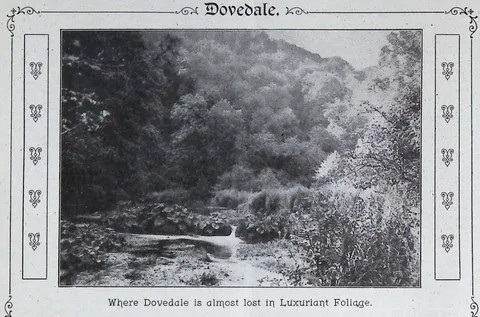 (opens in a new tab)
 Where Dovedale is almost lost in Luxuriant Foliage 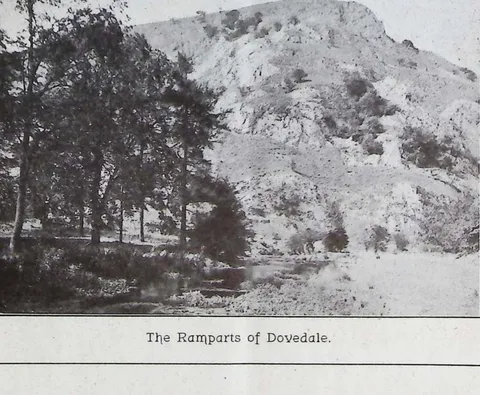 (opens in a new tab)
 The Ramparts of Dovedale 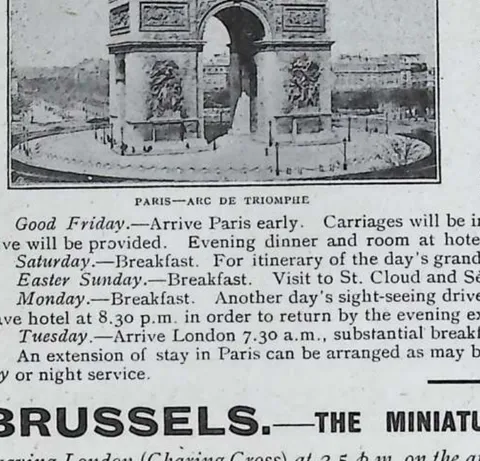 (opens in a new tab)
 Paris, Arc de Triomphe 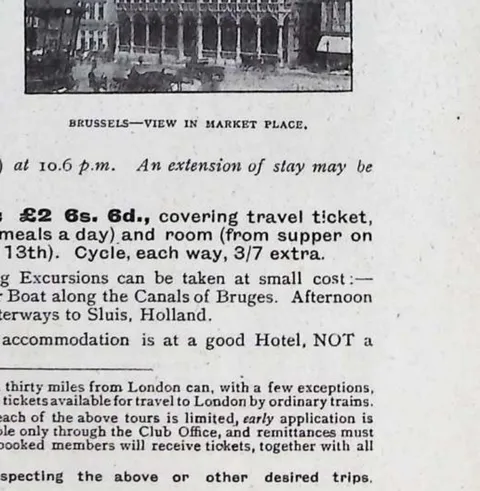 (opens in a new tab)
 Brussels, View in Market Place 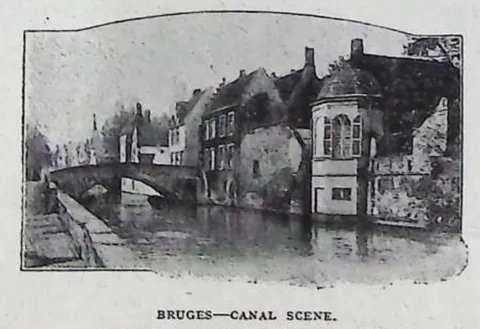 (opens in a new tab)
 Bruges, Canal Scene
Mastheads 3
 (opens in a new tab)
 The Cyclists' Touring Club Gazette masthead  (opens in a new tab)
 The Cyclists' Touring Club Gazette contents-page banner  (opens in a new tab)
 The Gazette department-heading banner
18 advertisements
 (opens in a new tab)
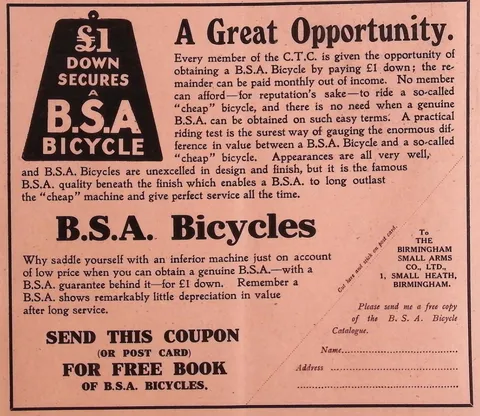
 B.S.A. Bicycles, £1 Down Secures a B.S.A. 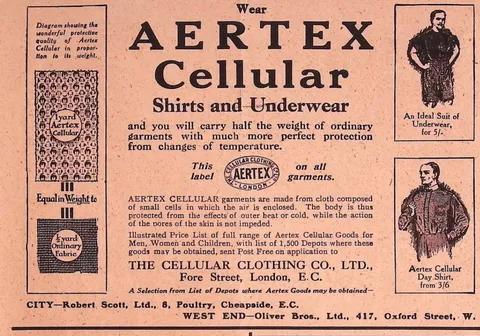 (opens in a new tab)
 Aertex Cellular Shirts and Underwear 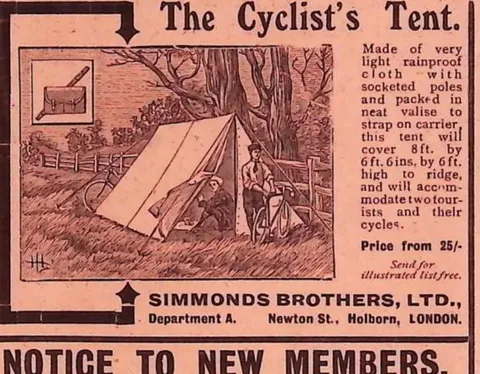 (opens in a new tab)
 The Cyclist's Tent (Simmonds Brothers) 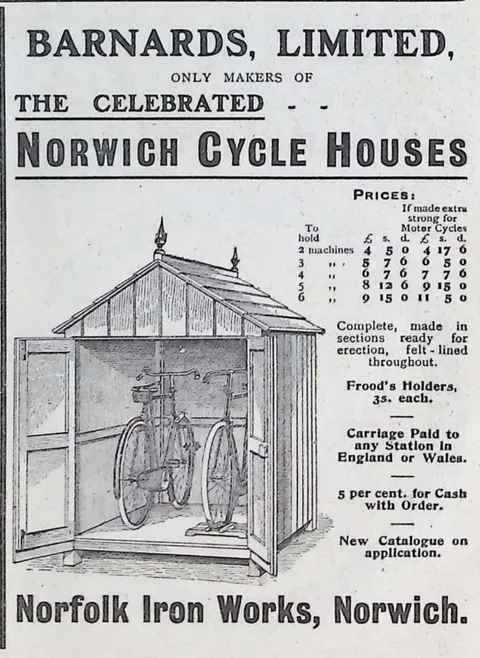 (opens in a new tab)
 Barnards Limited Norwich Cycle Houses 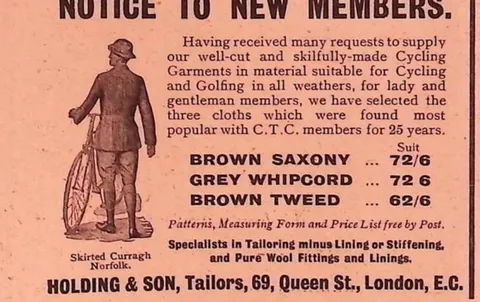 (opens in a new tab)
 Notice to New Members, Holding & Son, Tailors 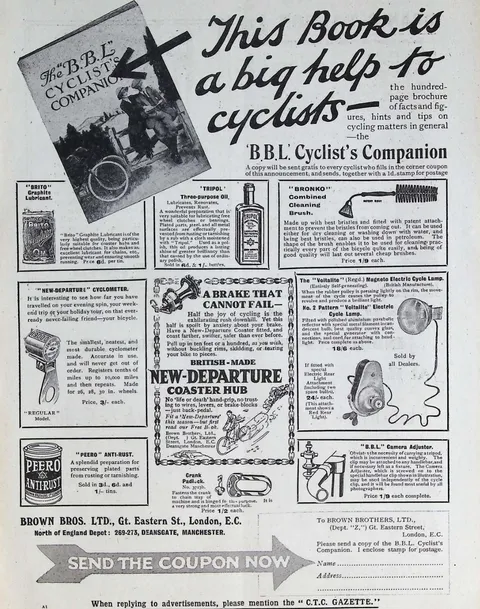 (opens in a new tab)
 Brown Bros. Ltd., 'B.B.L.' Cyclist's Companion and cycle sundries 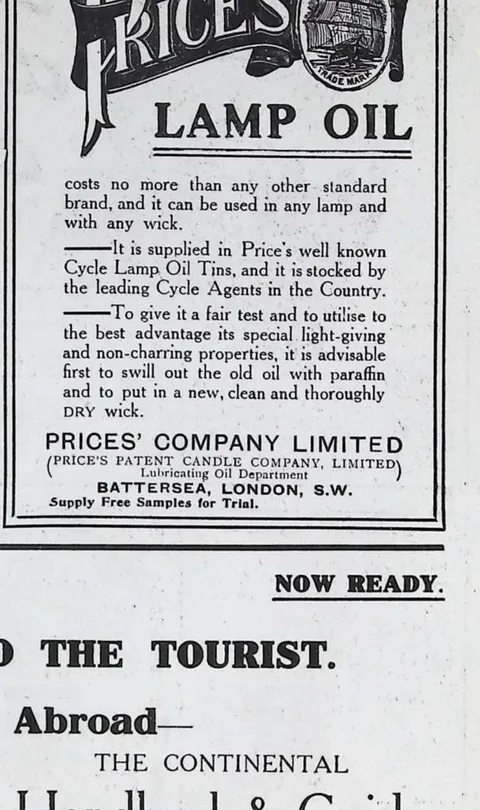 (opens in a new tab)
 Price's Lamp Oil 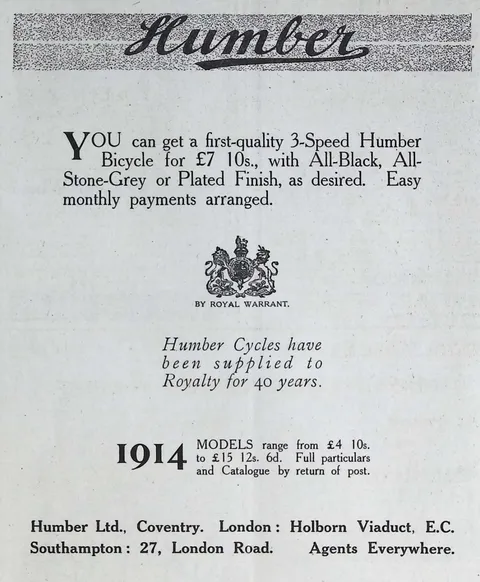 (opens in a new tab)
 Humber bicycles, by Royal Warrant 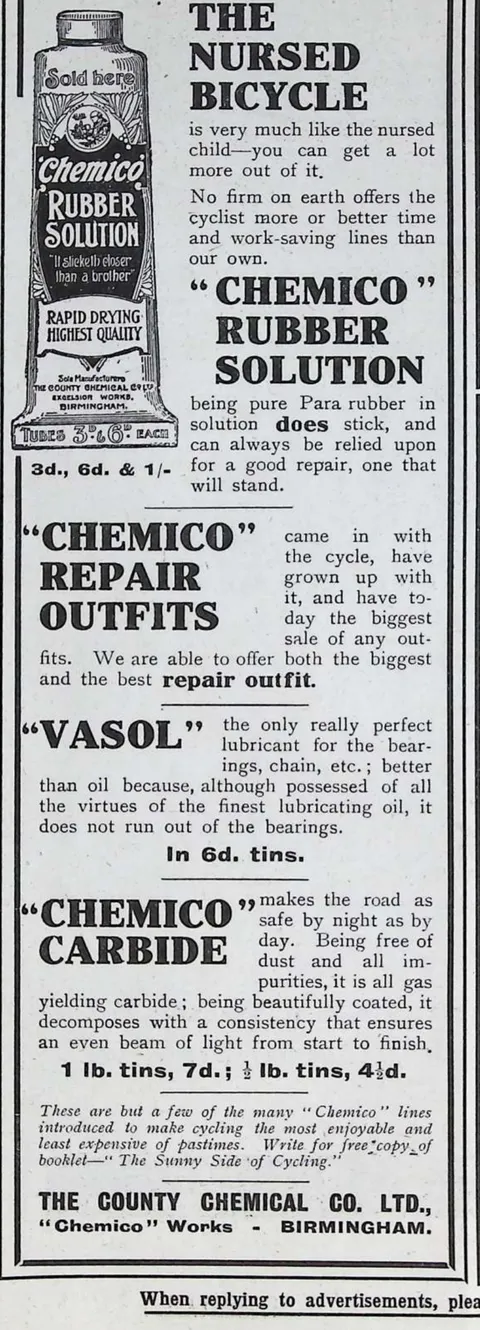 (opens in a new tab)
 Chemico Rubber Solution, The Nursed Bicycle 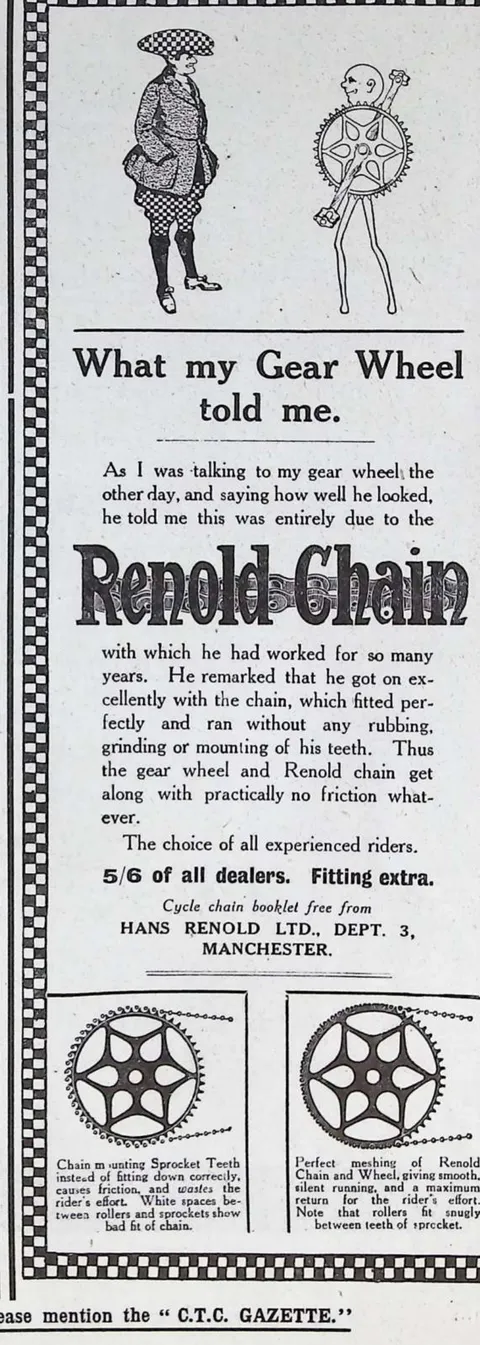 (opens in a new tab)
 Renold Chain, What My Gear Wheel Told Me 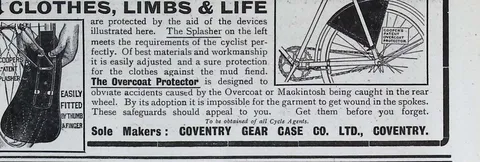 (opens in a new tab)
 Clothes, Limbs & Life, Cooper's Patent Splasher and Overcoat Protector 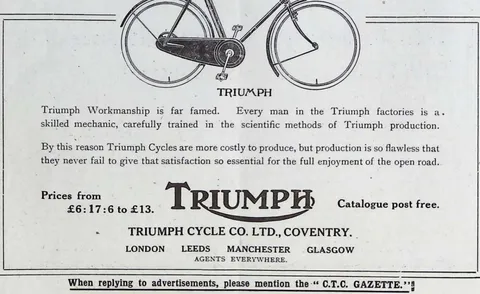 (opens in a new tab)
 Triumph bicycles 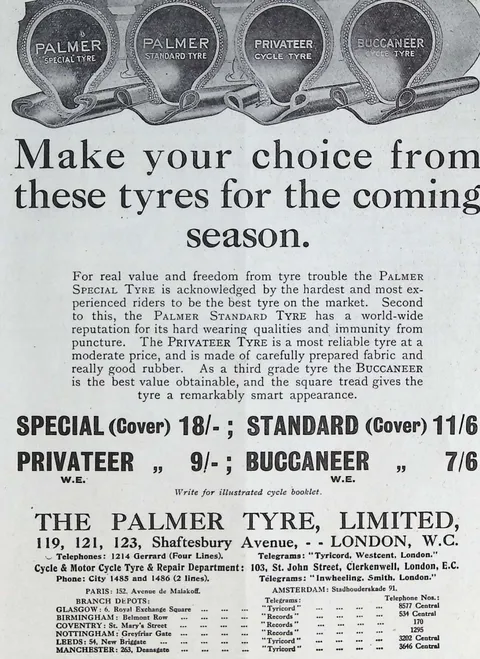 (opens in a new tab)
 Palmer, Privateer and Buccaneer cycle tyres 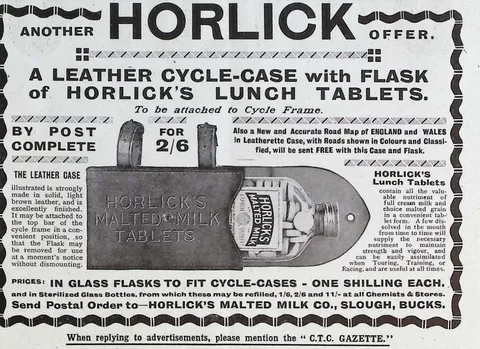 (opens in a new tab)
 Horlick's leather cycle-case with lunch-tablet flask 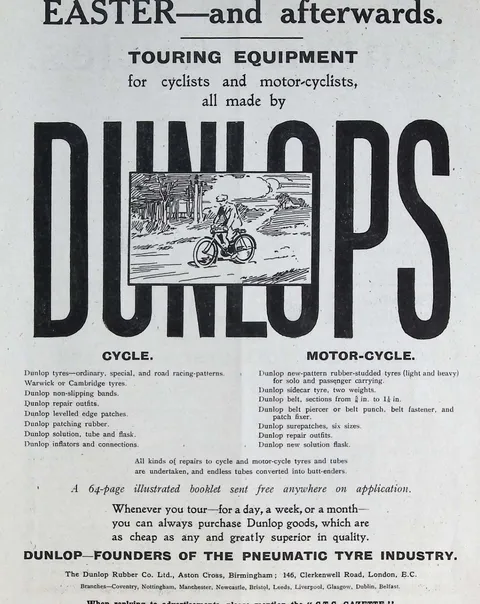 (opens in a new tab)
 Dunlop touring equipment, Easter and afterwards 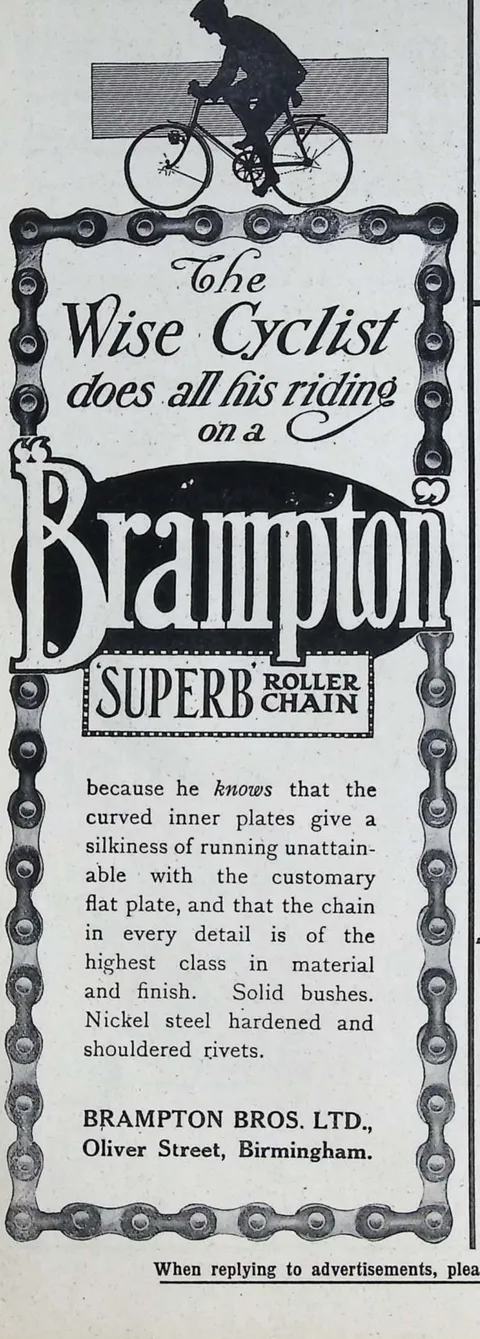 (opens in a new tab)
 Brampton 'Superb' Roller Chain, The Wise Cyclist 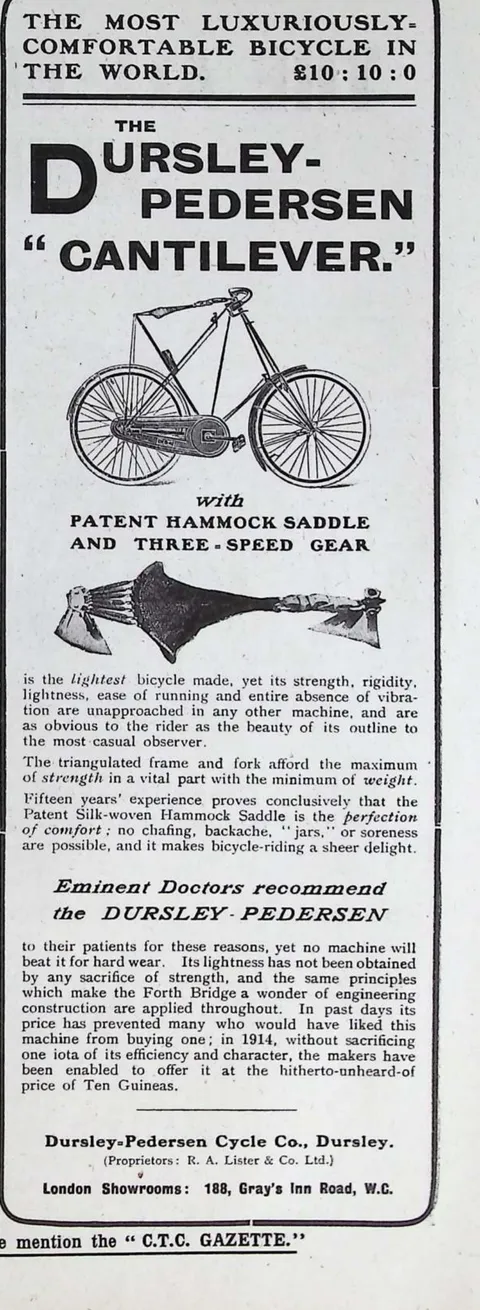 (opens in a new tab)
 The Dursley-Pedersen 'Cantilever' bicycle 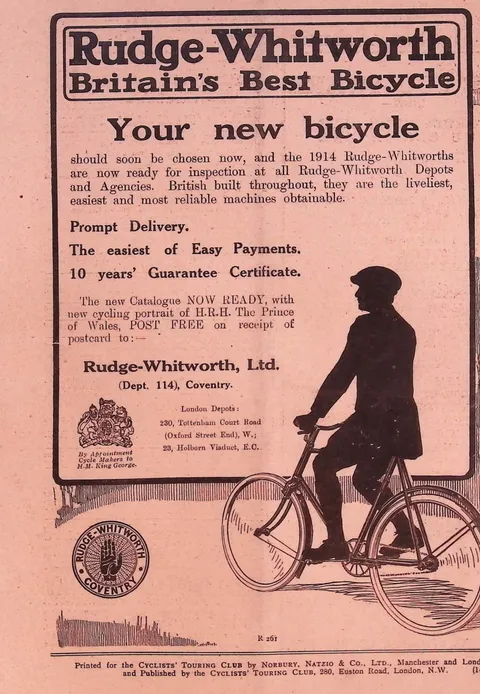 (opens in a new tab)
 Rudge-Whitworth, Britain's Best Bicycle