Vol 30, No 2
189948 articles70 images
Articles in this issue
- Illustrated travel article by L. S. Palmer on a visit to Mammoth Cave, Kentucky, describing the trip via the Louisville & Nashville R.R. to Glasgow Junction, the log-cabin hotel built up over decades, the guide's oil torches and stock jokes about the "Bottomless Pit" and "Suicide Rock," the Rotunda, the Bridal Altar where weddings are performed, and the fifteen consumptives who tried living in the cave's cottages in 1843.
- Four-line poem by Bertrand Gordon on genius as rare as "a Shakespeare once in a millennium," the gods sifting a million million clods to fashion one matchless diamond of a man.
- Essay tracing self-propelled transport from the 1799 "dandy horse" through the velocipede to the pneumatic-tired bicycle and now the automobile, arguing France leads in motor-carriages only because it leads in road improvement, and that the bicycle and automobile together will do more for good roads than either alone.
- Poem by Nixon Waterman on a September walk in the woods as an act of worship, with red leaves "glowing like an ember," the hills as hymns and the forest as an anthem, closing "For God is now walking with me."
- Essay by Glen Day on amateur photographers' obsession with pictures of household pets, opening with the cat "Teddy" photographed in hundreds of poses, and arguing that kindness rather than coaxing or dragging is the true secret of a natural-looking animal photograph.
- Poem by Nixon Waterman portraying a plain-faced, middle-aged woman called "mother" by grown children, whose autumn years hold bittersweet memories of youth, love and firelight, closing with a vision of her blushing cheeks "as I saw them long ago."
- Article by E. L. Johnston on the great jack-rabbit drives of California's San Joaquin Valley, describing the wire-fence corrals a mile or more on a side, the clubs used to kill the trapped animals, the 1892 Fresno drive that killed 20,000 rabbits before 8,000 spectators, and the state and county bounties and poisoning schemes that failed to control the pest.
- Comic poem by Glen Day, keyed to Longfellow's "Lives of great men all remind us," on drawing courage from Grant, Washington and Columbus to build the kitchen fire, tiptoe downstairs after a supposed burglar, and hunt for a lost collar-button.
- Travel article by Beverly L. Mead on New Brunswick and Nova Scotia, opening with the reversible falls of the St. John River at the city of St. John, "the City of the Loyalists," then ranging to Sable Island, the "Charnel-house of North America", and the Marquis De la Roche's 1598 colony of convicts marooned there for five years.
- The magazine's editorial miscellany department for September 1899, with short comment pieces on the Bulletin's contract dispute with the League, postal-rate anomalies for mailed magazines, the vacation habit, and the pleasures the month of September holds in store.
- Explains that the 1897 contract between the League of American Wheelmen and the publisher of the L. A. W. Bulletin and Good Roads has been strained by the magazine's change from a weekly to a monthly, and that a new independent weekly, the L. A. W. Bulletin and Good Roads Supplement, edited by Abbot Bassett at 25 cents a year, has been started for League officers and local consuls.
- Notes that a Boston-published monthly can be mailed to San Francisco and delivered miles into the suburbs for a cent a pound, yet delivering the same magazine across the street in Boston by mail would cost two cents a copy, a postal quirk the writer says explains why so many monthlies are published from small towns, with even Mr. Munsey said to be looking for a country location.
- Remarks that it is becoming more the proper thing every year to get away on a summer vacation, and credits the bicycle with luring thousands of people onto "little journeys" that have led on to larger ones: "the whole world is on wheels."
- Brief reflective piece pausing at September's threshold to weigh the gifts of "the most beautiful of the months" against the gathered souvenirs of the summer just past.
- Page of the magazine's short epigrams and wisecracks under small sub-heads, including "A Mighty Magnet," "Oh, What a Difference," "Not a Favorite Breed," "The Post-Graduate Course," "Right in Line," "A Yankee Bargain," "The Real Thing" and "Unexpected Testimony," touching on Dewey, Mark Twain, golf and bathing suits.
- Masthead opening the League of American Wheelmen's official department for Vol. XXX, September 1899, No. 2, published monthly by Sterling Elliott of Boston, with Sterling Elliott as editor and Nixon Waterman as associate editor.
- Report on the Twentieth Annual Meet of the League of American Wheelmen, praising the fine weather secured despite the Signal Service Bureau's forecasts of rain, the banquets, water carnival, races and dance, and judging the Boston '99 gathering a gratifying success reflecting credit on its organizers, notwithstanding attendance short of expectations.
- Essay arguing that most people cannot afford grand world tours but can still buy recreation "on the instalment plan," a little at a time, and that the owner of a bicycle who explores the scenery within a half-day's ride of home has a world of his own better in many ways than one requiring a year and a fortune to see.
- Explains a new reciprocal arrangement whereby L. A. W. membership now carries all the benefits of membership in England's Cyclists' Touring Club, free bicycle admission across Europe, official hotel discounts, repair-shop lists and guide-books, with English C.T.C. members granted the same privileges touring in America.
- Letter from an Ohio Division League member urging riders to adjust their handle-bars two inches higher, arguing that staid business-men who ride with bars too low would be astonished how much more they would enjoy cycling if properly elevated, comparing it to riding in a parlor-car versus a dray.
- Four-line verse noting that however well "Home, Sweet Home" serves, the very swell seaside hotel is, when the bill is counted, the dearest spot on earth.
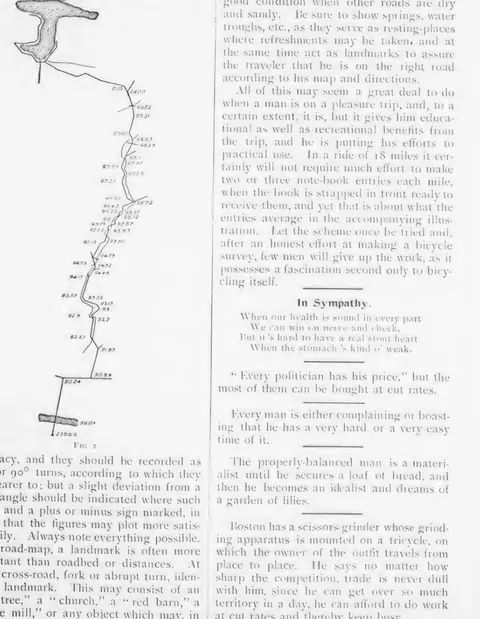
- Extracts from an article by Louis Allen Osborne explaining how a touring cyclist can turn his cyclometer, a note-book ruled with two parallel lines and a bicycle watch into an amateur road-surveying kit, recording bends, forks, streams and landmarks awheel and later plotting the notes into a scaled road map, illustrated with sample note-book pages and plotted routes around Wilkes-Barre and Kingston, Pa.
- Four-line verse observing that a sound and cheerful heart can win on nerve alone, "but it's hard to have a real stout heart when the stomach's kind o' weak."
- Comic ballad by John Eugene Butler about a compulsive punster at McGovern's who is warned to stop before he "wishes he ne'er existed," persists anyway, and is shot dead by an Indian named Abe Austin after one pun too many; a coroner's jury of the "coolest ones" rules the killing justifiable.
- First-person account, signed "By One of the Party," of a fifteen-member League tour that sailed from New York on the Maasdam, landed at Boulogne-sur-mer under C.T.C. consul Lieut.-Col. Beresford, and rode through Amiens, Beauvais, Compiegne, Chantilly, Rouen, Paris, Versailles, Havre, and across the Channel to a rain-soaked tour of Salisbury, Stonehenge, Bath, Cheltenham, Warwickshire and Stratford-on-Avon, guided along the way by local L. A. W. and C.T.C. contacts including Joseph Pennell and Ernest D. Lee of Brasenose College, Oxford.
- Four-line verse declaring that only the brave win in life, since "a bold, wed-to-his-purpose knave outdoes a timid saint."
- The magazine's motoring department for the month, opening with an article on the Paris automobile exhibition and following with editorial notes urging Americans to master their machines as thoroughly as French motorists, welcoming automobiles as kinder to horses than overwork, and predicting a growing class of lady automobilists to match the lady cyclists of a few years before.
- Article by F. E. Stanley describing the Paris Automobile Exhibition's 108 distinct exhibits and over fourteen hundred machines, from the de Dion tricycle to a ten-ton traction engine, and arguing that despite the crude, noisy state of the machines the French aristocracy's reckless pursuit of speed and mastery of mechanism is a lesson Americans must learn before they can match French automobile manufacture.
- Notice that L. A. W. members who missed the Twentieth Annual Meet may still obtain the 68-page official souvenir program from H. P. Hanaford in New York for ten cents postage, and the gilded-metal souvenir badge, a curved "Boston, Aug. 1899" bar linked to a miniature Bunker Hill Monument and a golden bean-pot, from Secretary Abbott Bassett in Boston for five cents; signed by the Twentieth Annual Meet Committee.
- Illustrated article on Seattle's Lake Washington Cycle Path, a ten-mile route built by the city's 5,000 licensed wheelmen through forest and along bluffs overlooking Lakes Washington and Union to the snow-capped Cascades, plus the new Magnolia Bluff Path along Puget Sound; the Queen City Good Roads Club maintains the network from eighty percent of the city's bicycle-license revenue, photographs credited to Alfred S. Witter.
- Reports that Vineland, N. J. has passed an ordinance permitting bicycle riding on sidewalks under restrictions, including a five-mile-an-hour speed limit, and that after early ridicule it is now nearly unanimously agreed to be a good law, with Councilman D. W. Ligatoe credited for securing its passage.
- Travel essay signed "Stam." of Stamford, Conn. on the tea, cheese and bread served at English roadside coffee-taverns and farmhouses during a thirty-five-day cycling tour, contrasting their honest, inexpensive fare with the high prices and stiff formality of first-class hotels, and warning that some houses catering to tourists were known to overcharge.
- Short trade notices: the American House, Boston, on the European plan at $1.00 a day and upwards; Arthur Munson's "Touring in England and Jamaica" at 25 cents; a reference to Aug. Coldewey & Co.'s advertisement; and Raven Gloss Mfg. Co.'s "Bi-cy-ka" rust remover and polish.
- Banner opening the good roads columns of the L. A. W. Bulletin department for September 1899.
- Reports that a committee chaired by W. B. E. Shufeldt will continue offering $250 in cash prizes for good roads and shade-tree planting around Oconomowoc, Wis., including a $100 first prize for the best two-mile stretch of continuous road, prizes for the best row of shade trees, and a prize for the school with the best half-mile of road in front of it.
- Notes the harmony now existing between organized farmers and organized wheelmen, citing the Farmers' National Congress's decision to add a good roads department to its next convention and its invitation to Otto Dorner, chairman of the L. A. W.'s Highway Improvement Committee, to prepare the feature for the Boston convention in October.
- The League's official department, edited by Abbot Bassett, carrying the roster of national and state officers and the business of the organization for September 1899.
- List of the League's national officers: President Thomas J. Keenan, Jr. of the Press, Pittsburg; 1st Vice-President Herbert W. Foltz, Indianapolis; 2d Vice-President Robert T. Kingsbury, Keene, N. H.; Treasurer J. C. Tattersall, Trenton, N. J.; and Secretary Abbot Bassett, 530 Atlantic Ave., Boston.
- Chairmen of the League's standing committees: W. A. Howell on Membership, Conway W. Sams on Rights and Privileges, Otto Dorner on Highway Improvement, Paul I. Aldrich on Touring, Henry C. Nickerson on Transportation, Fred Gerlach on the Racing Board, Wallace Sherwood on Local Organization and George I. McCarthy on the Press.
- State-by-state directory of chief consuls and secretary-treasurers from Alabama to Wisconsin, to whom consuls and agents should apply for application and renewal blanks and League literature; Joseph Pennell, care J. S. Morgan & Co., Old Broad St., London, is listed as foreign marshal.
- The Division's Nominating Committee reports its recommendation of M. M. Belding, Jr. of Manhattan for Chief Consul and H. B. Fullerton of Brooklyn for Vice Consul, signed by chairman F. M. Froebisher, J. D. Chism, Jr. and George I. Stebbins, New York, July 27, 1899, together with the membership of the six district nominating committees.
- Notice that I. A. McGuire has been appointed the third member of the Rules and Regulation Committee, joining D. J. O'Brien of Omaha and Charles W. Lloyd of Detroit, signed by President T. J. Keenan, Jr.
- Minutes of a special Board of Officers meeting held in Philadelphia amending the Division by-laws on the payment of delegates' transportation and hotel costs to the National Assembly and on the mail-ballot procedure for nominating chief consul, vice-consul and representatives-at-large; signed P. S. Collins, Secretary-Treasurer, Philadelphia, July 27, 1899.
- Short notice inviting every man of good character, eighteen years of age or over, who rides a wheel to join the League of American Wheelmen, which the writer says wants members of the right sort who believe in the organization's work.
- Illustrated price list of League emblems and supplies ordered from Secretary Abbot Bassett, 530 Atlantic Ave., Boston: the official badge in enamel, solid gold or rolled plate, lapel and Good Roads buttons, cap pin, dated cap pin, consul pin, Veteran bar for ten-year members, decalcomania decorations, handle-bar ribbons and a colored hotel sign.
- Describes the League's pocket handbooks, sent free to members on receipt of postage: "Country Roads" (64 pages, 67 illustrations), "Macadam Roads" (72 pages, 72 illustrations), "Cycle Paths" (80 pages, 77 illustrations) and "Wide Tires," a report of tire-width trials by the Agricultural Experiment Station of the University of Missouri, plus "Cycling Abroad" and F. A. Elwell's "Cycling in Europe," an illustrated handbook of touring costs, routes and hotels.
- Department answering members' numbered queries, including a note that a member is credited to the Division of his legal residence even if temporarily away at college, and a correction that a previously printed place name should have read "Norwood" instead of "Norfolk," alongside a few unrelated maxims about chickens and car-conductors.
- Photograph and four-line verse of a laughing baby boy posed with toy alphabet blocks and a calendar reading "JULY 1, 1899," captioned to show he "gladly knows that he is up to date"; followed by notes that Vice-President Voorhies of the Philadelphia & Reading R. R. and Hon. T. S. McMurray, ex-mayor of Denver, are both L. A. W. members.
Images in this issue 70 pictures from 29 pages
Photographs 51
 (opens in a new tab)
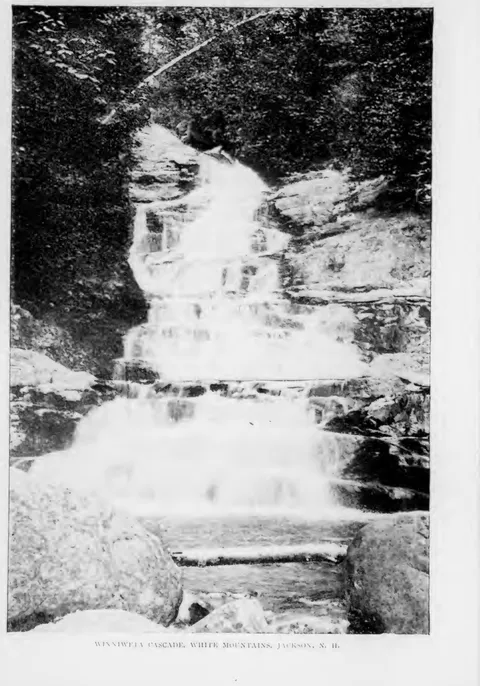
 Winniweta Cascade, White Mountains, Jackson, N.H. 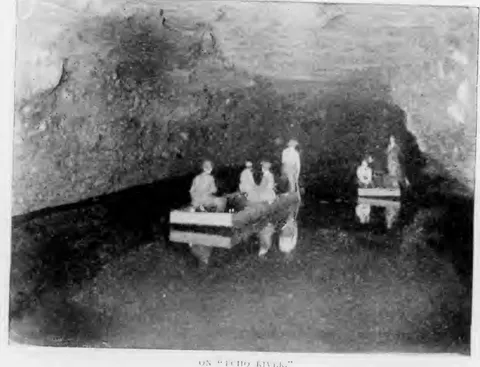 (opens in a new tab)
 On "Echo River." 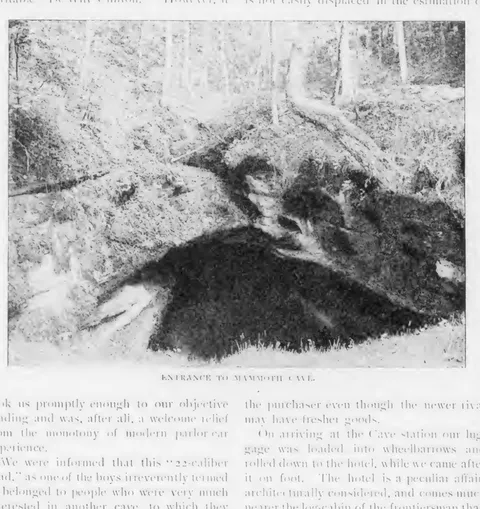 (opens in a new tab)
 Entrance to Mammoth Cave 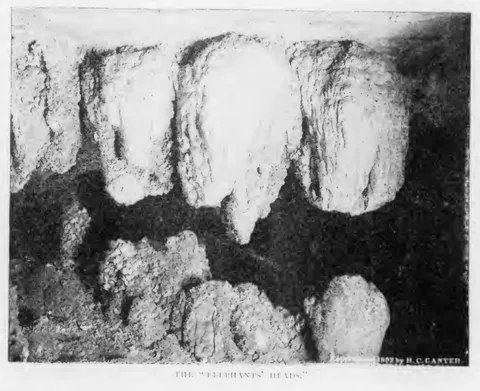 (opens in a new tab)
 The "Elephants' Heads" 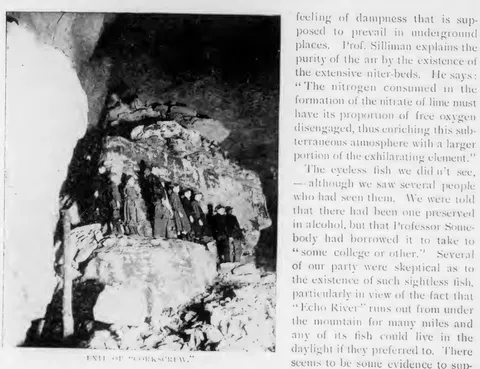 (opens in a new tab)
 End of "Corkscrew" 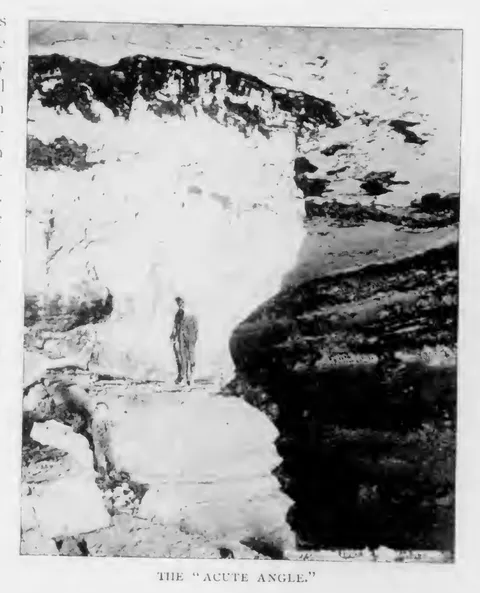 (opens in a new tab)
 The "Acute Angle"  (opens in a new tab)
 The "Bridal Altar" 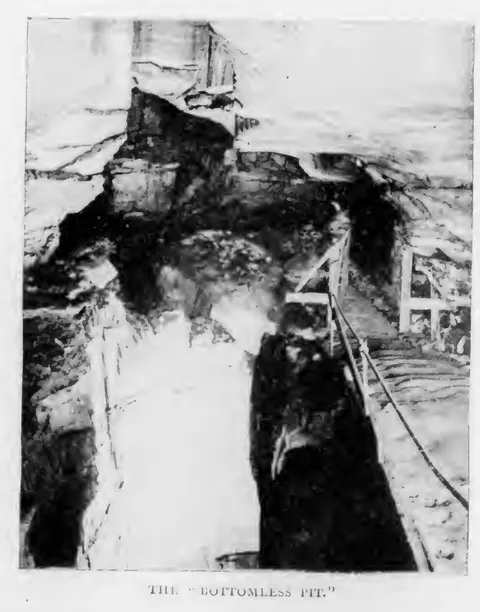 (opens in a new tab)
 The "Bottomless Pit" 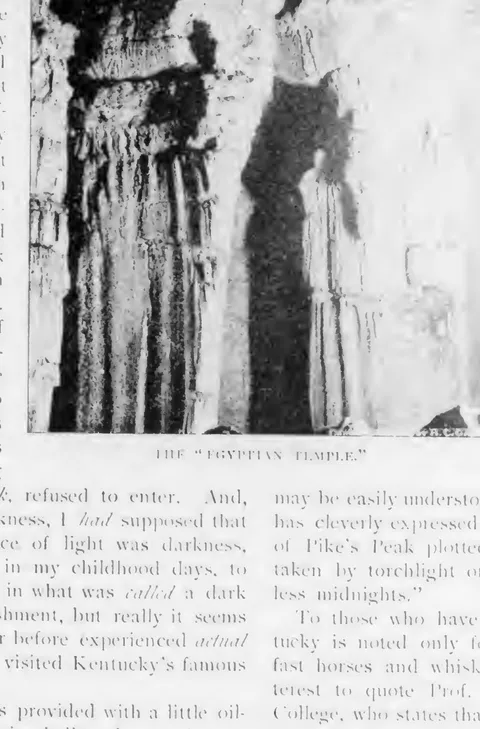 (opens in a new tab)
 The "Egyptian Temple" 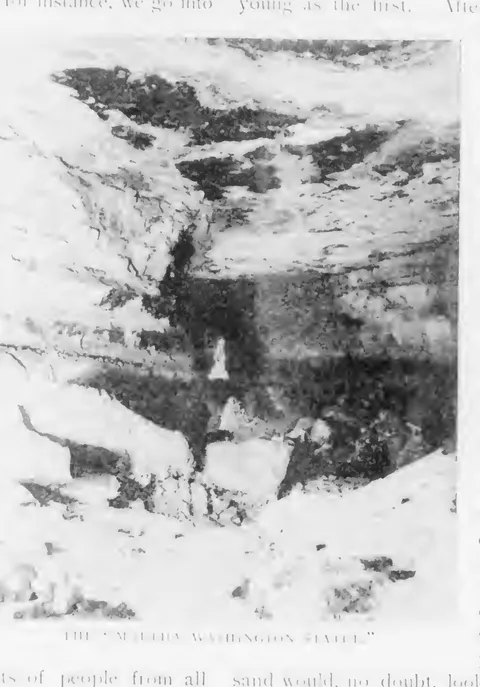 (opens in a new tab)
 The "Muddy Washington Statue" 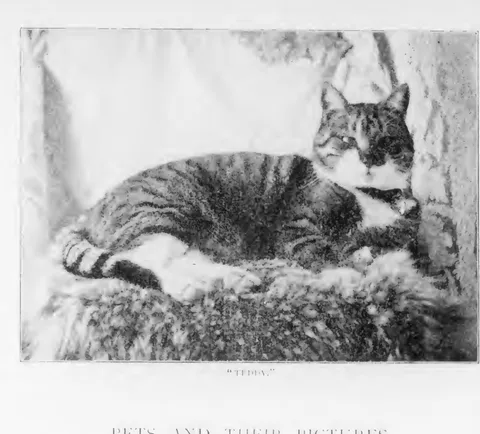 (opens in a new tab)
 "Tibbie." 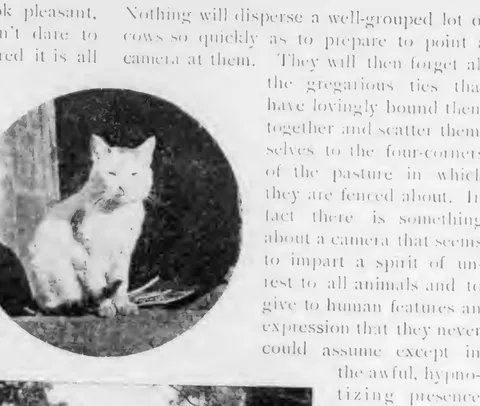 (opens in a new tab)
 A white cat's portrait 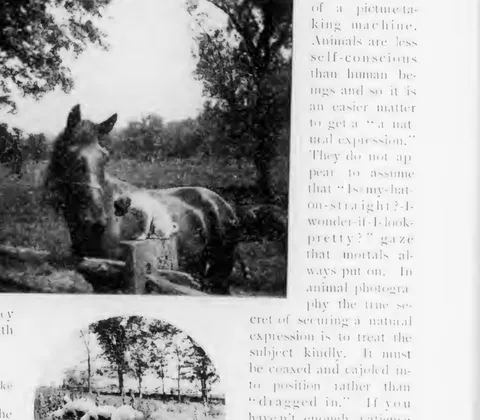 (opens in a new tab)
 Horse and dog in a pasture 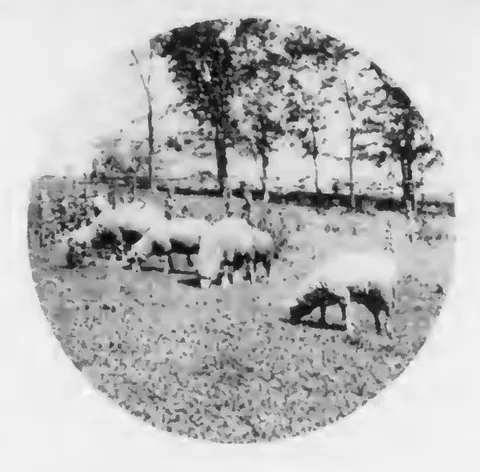 (opens in a new tab)
 Sheep grazing 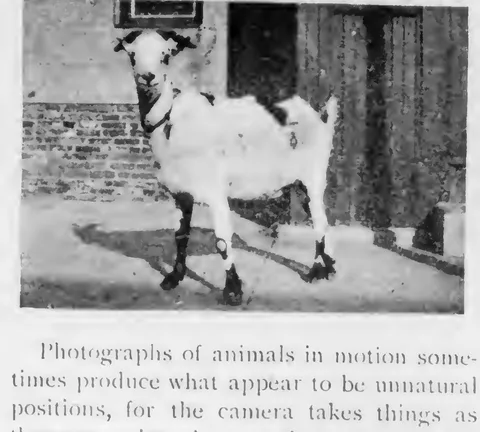 (opens in a new tab)
 A goat at a doorway 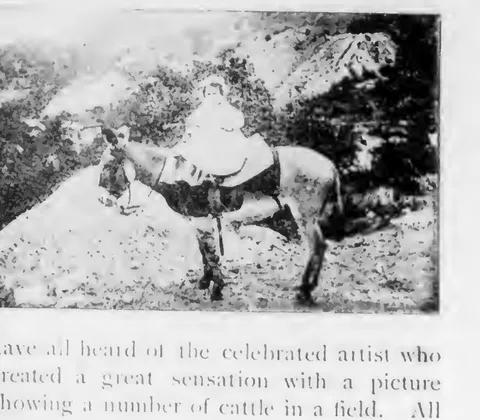 (opens in a new tab)
 Pony with a rider 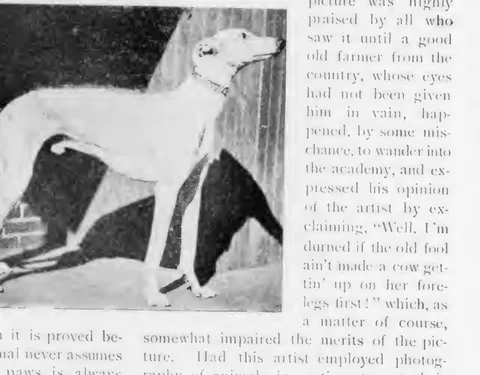 (opens in a new tab)
 A greyhound 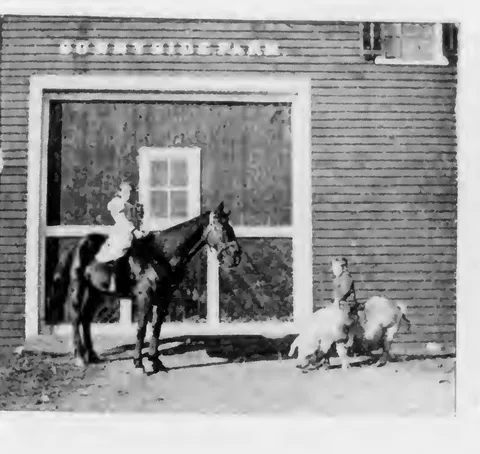 (opens in a new tab)
 Child on horseback at Sunnyside Farm 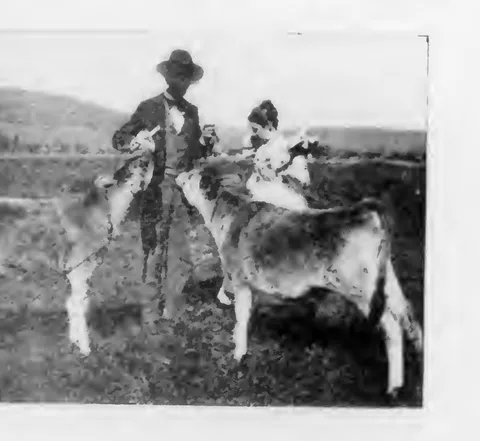 (opens in a new tab)
 Man leading a cow 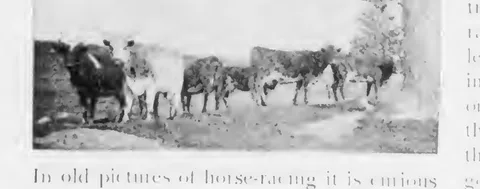 (opens in a new tab)
 Cattle in a pasture 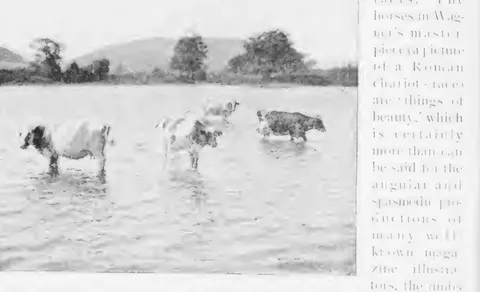 (opens in a new tab)
 Cattle standing in water 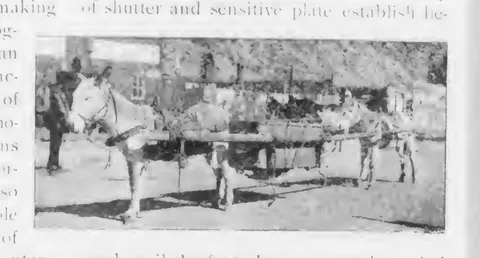 (opens in a new tab)
 Donkey team pulling a cart 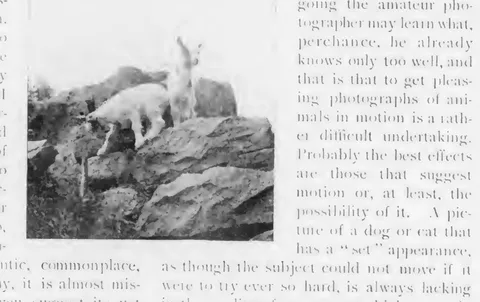 (opens in a new tab)
 Goats on rocks 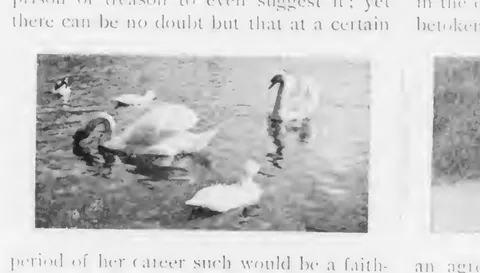 (opens in a new tab)
 Swans and a goose on a pond 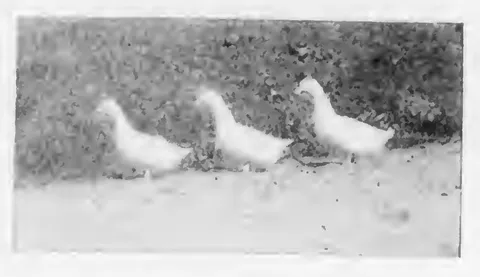 (opens in a new tab)
 Ducks by the water 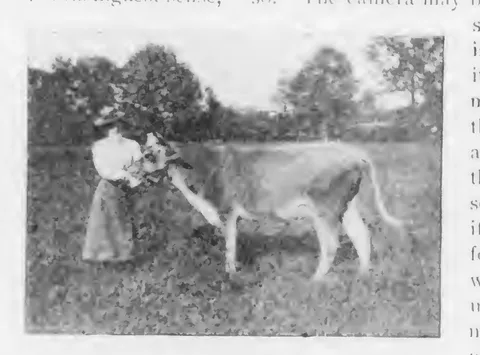 (opens in a new tab)
 Woman posed with a cow  (opens in a new tab)
 Dogs playing on grass 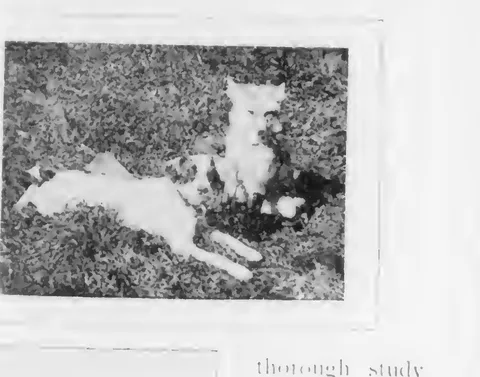 (opens in a new tab)
 A dog lying on grass 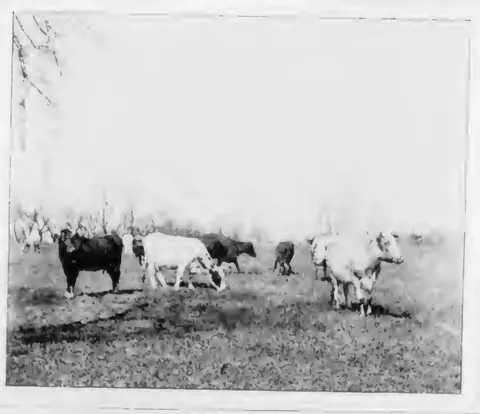 (opens in a new tab)
 Cattle and goats in a field  (opens in a new tab)
 Goats harnessed to a cart 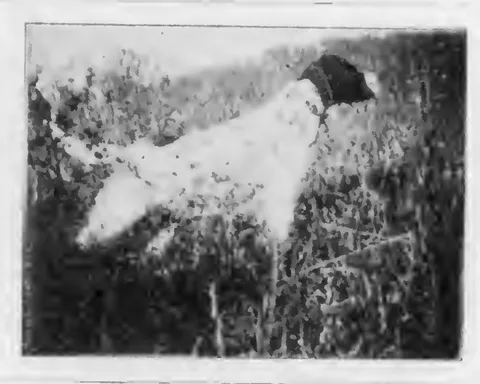 (opens in a new tab)
 A spaniel lying in grass 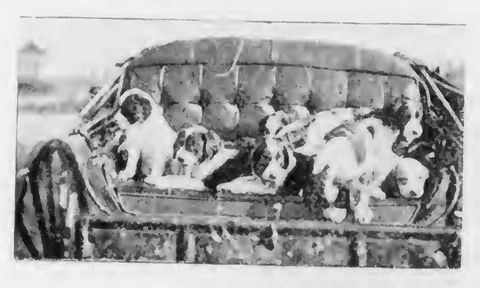 (opens in a new tab)
 Puppies in a wagon 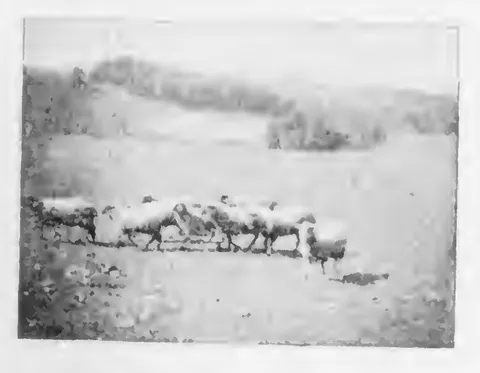 (opens in a new tab)
 Sheep in a field 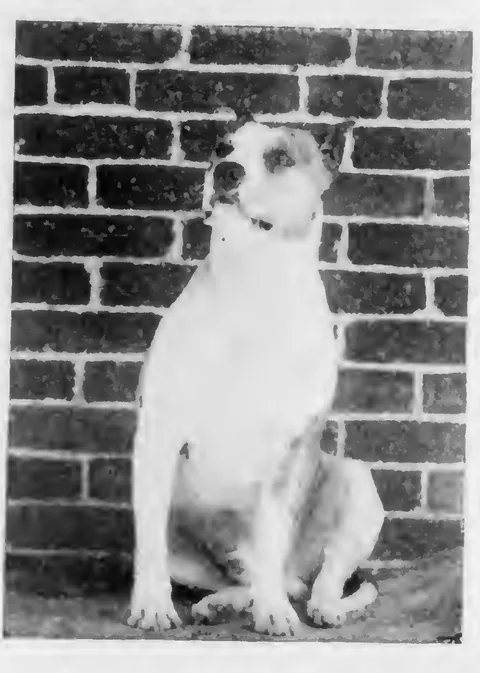 (opens in a new tab)
 A bulldog against a brick wall  (opens in a new tab)
 A man with young pigs 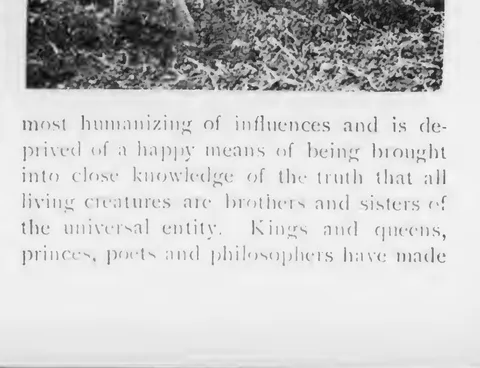 (opens in a new tab)
 Pigs foraging in a field 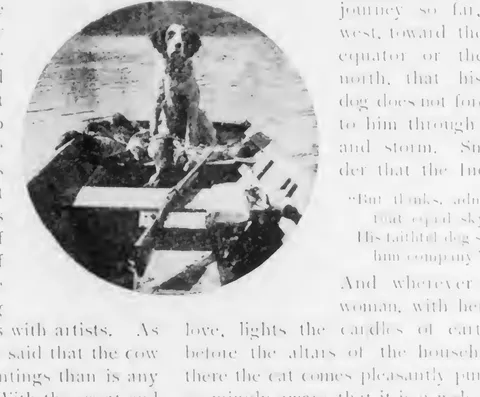 (opens in a new tab)
 Dogs in a boat 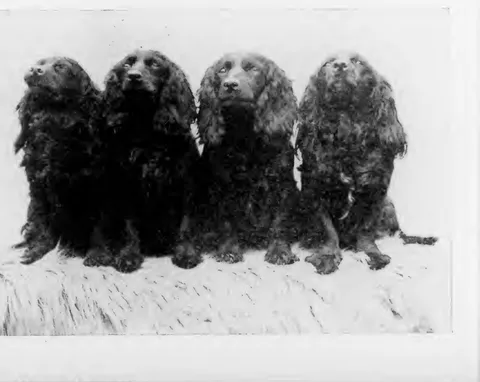 (opens in a new tab)
 Four spaniels in a row 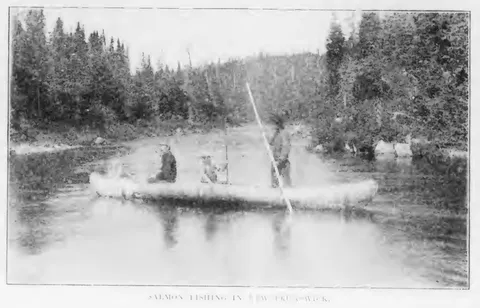 (opens in a new tab)
 Salmon Fishing in New Brunswick 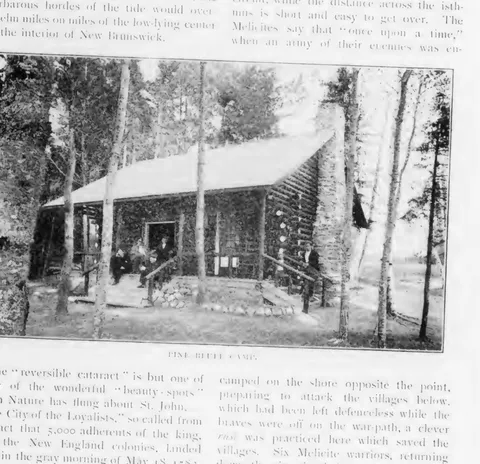 (opens in a new tab)
 Pine Bluff Camp 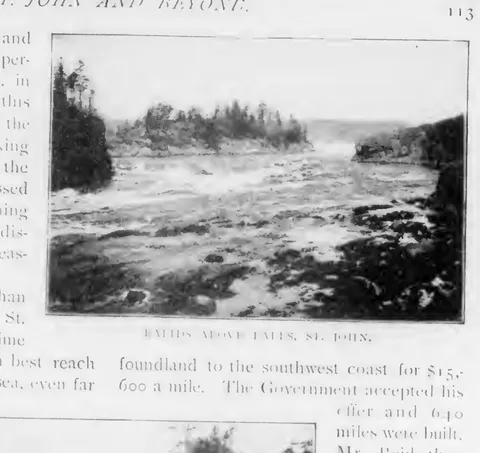 (opens in a new tab)
 Rapids Above Falls, St. John 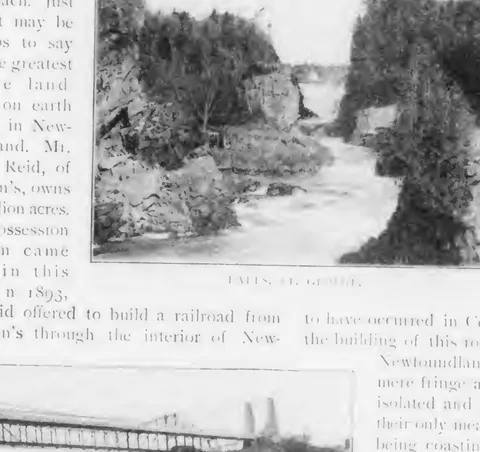 (opens in a new tab)
 Falls, St. George  (opens in a new tab)
 Below the Falls, St. John 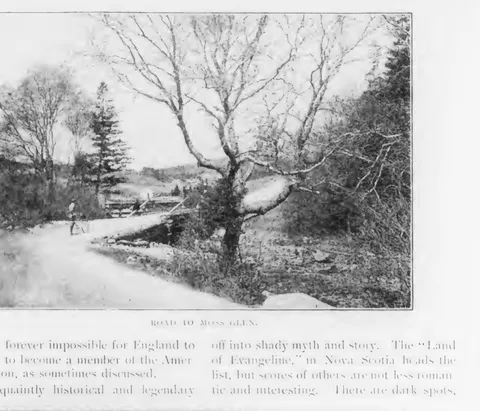 (opens in a new tab)
 Road to Moss Glen 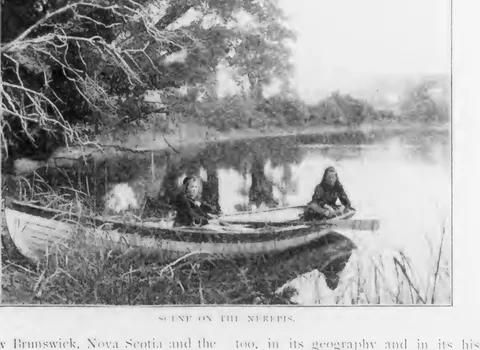 (opens in a new tab)
 Scene on the Nerepis 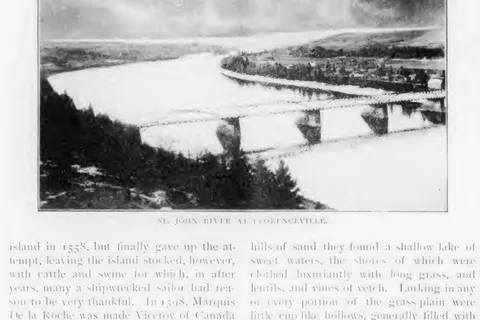 (opens in a new tab)
 St. John River at Fredericton 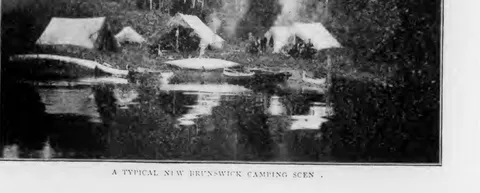 (opens in a new tab)
 A Typical New Brunswick Camping Scene 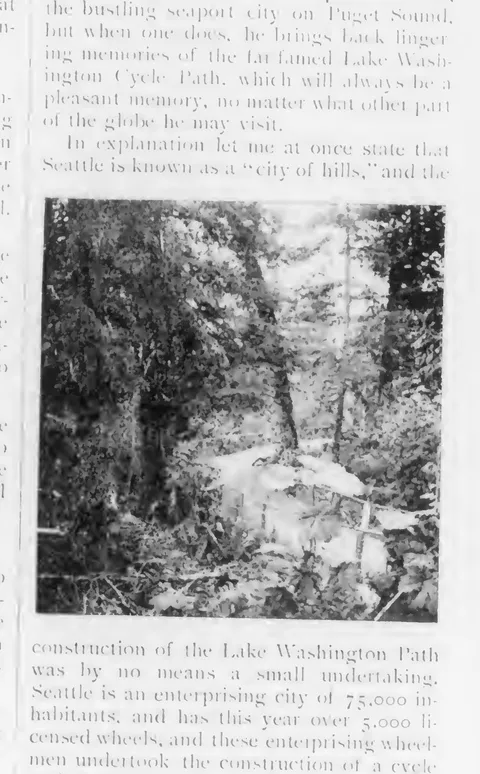 (opens in a new tab)
 Lake Washington Cycle Path 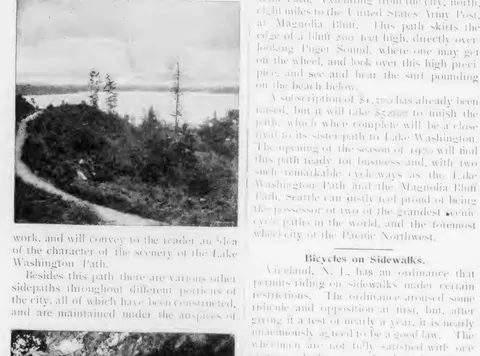 (opens in a new tab)
 A Seattle cycle path 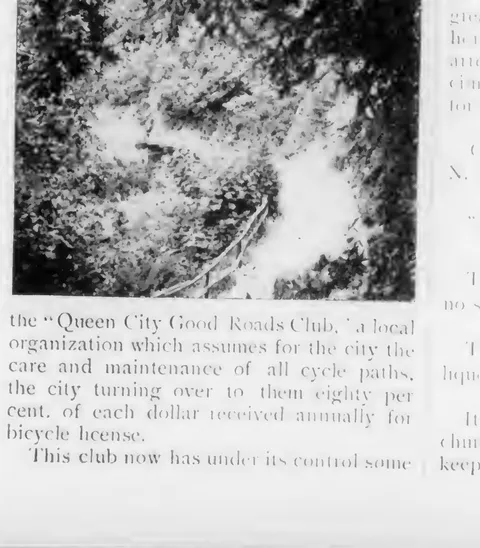 (opens in a new tab)
 A wooded ravine cycle path 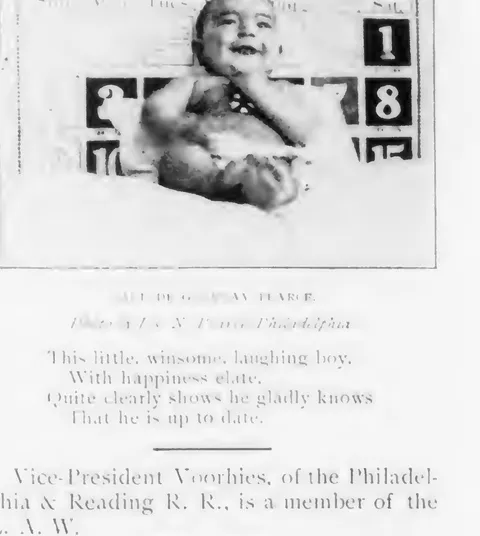 (opens in a new tab)
 A Junior Member
Diagrams 1
 (opens in a new tab)
 Fig. 2, plotted road map
Mastheads 4
 (opens in a new tab)
 Et Cetera  (opens in a new tab)
 Home-Made Heterodoxy  (opens in a new tab)
 L.A.W. Bulletin and Good Roads Department  (opens in a new tab)
 Automobiles
14 advertisements
 (opens in a new tab)
 The Jones Umbrella "Roof"  (opens in a new tab)
 A New York Rider Gives His Version  (opens in a new tab)
 D. & J. Hangers  (opens in a new tab)
 Don't Bind, Bicycle and Golf Garter  (opens in a new tab)
 Smokers Please Note!, Lucke's Rolls 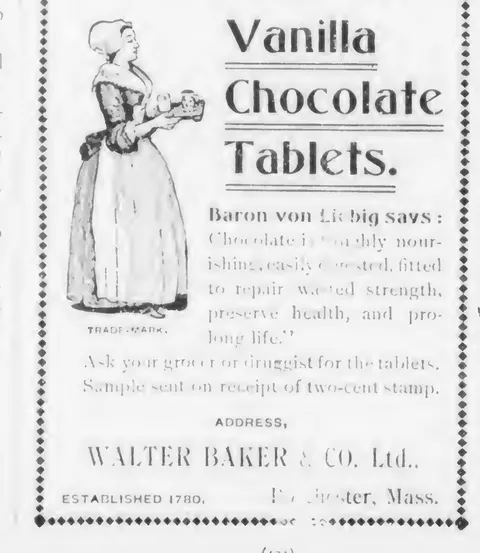 (opens in a new tab)
 Walter Baker & Co.'s Vanilla Chocolate Tablets 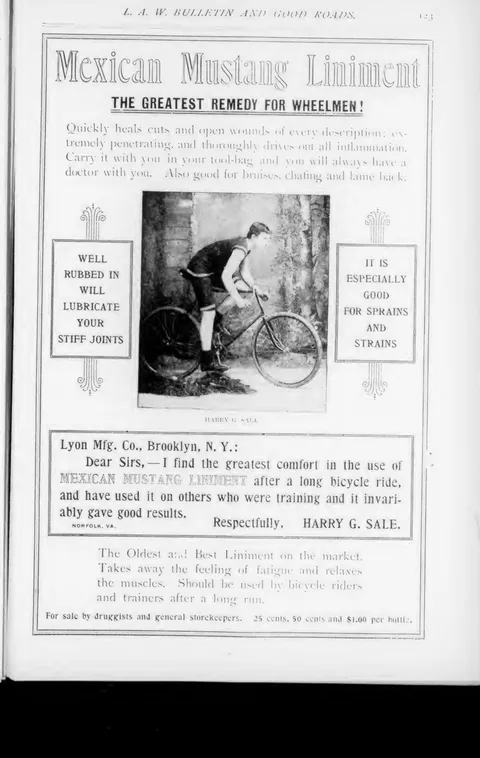 (opens in a new tab)
 Mexican Mustang Liniment 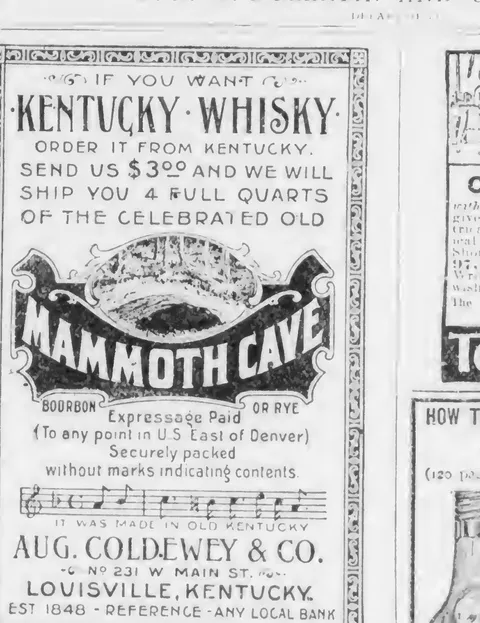 (opens in a new tab)
 Kentucky Whisky, Mammoth Cave Brand  (opens in a new tab)
 From the Shop to the Office, Change Your Work 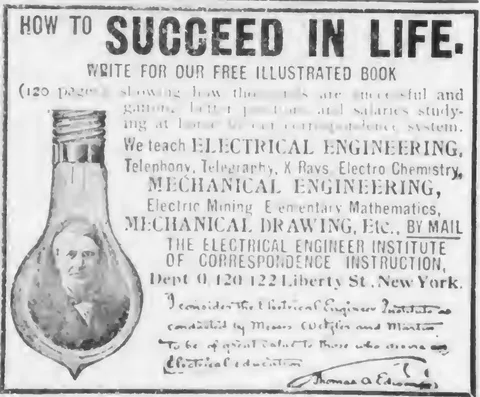 (opens in a new tab)
 How to Succeed in Life 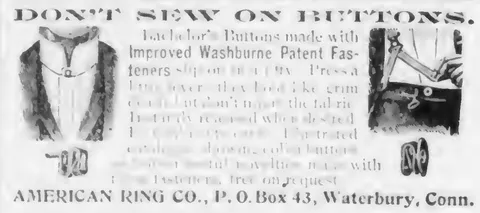 (opens in a new tab)
 Don't Sew on Buttons 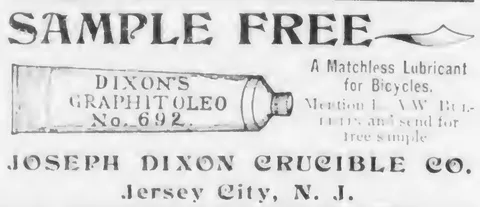 (opens in a new tab)
 Dixon's Graphite Oleo 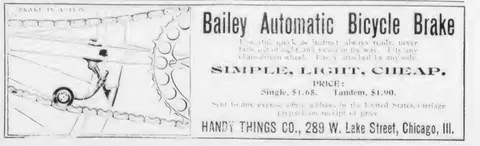 (opens in a new tab)
 Bailey Automatic Bicycle Brake 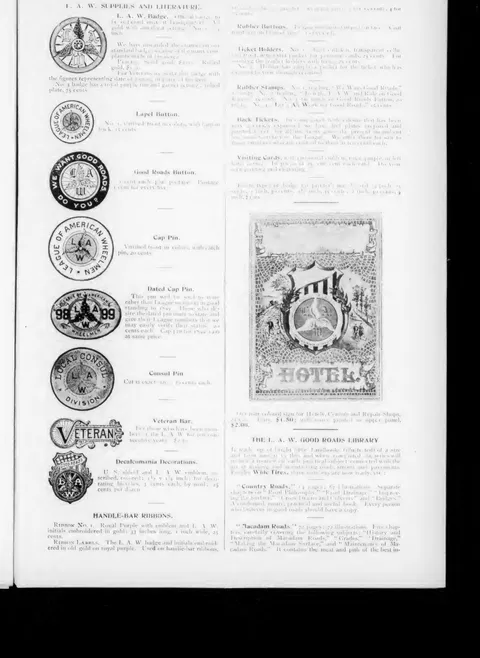 (opens in a new tab)
 L.A.W. Supplies and Literature