Vol 30, No 4
189949 articles31 images
Articles in this issue
- Illustrated account of Issue-Day among the Blanket Indians of the Indian Territory, the Apache, Comanche and Kiowa tribes who draw rations and dry-goods at the Anadarko Agency and the Ft. Sill sub-agency. Photographs show Josh A. Wah, a Comanche chief, a Kiowa squaw, teepees pitched before Issue-Day and wagons filled with rations, and the writer describes the war-dance, the painting of faces and the leasing of grass-money to cowmen at ten cents an acre.
- Verses by Nixon Waterman addressed to "Good Mrs. Grundy, potent dame," mocking the tyranny of public opinion, "Whate'er you say is law, we know; your edict full and sweeping."
- D. J. Dwyer visits the well at Greenbush (part of Scituate), Mass., commemorated in Samuel G. Woodworth's 1817 song, now on the Pond Street premises of Mr. Henry H. Northey. The original bucket is held for safe keeping by a friend and a replacement was given by the Richmond Cedar Works of Virginia; the young girl in the photograph is Miss Kathleen Kip Marshall of Detroit, Mich.
- A short poem by Glen Day, "O happy child of blissful dreams! If youth were but the joy it seems", printed beneath a picture of a small girl reading a large book.
- The magazine's monthly miscellany department of comment, squibs and verse, opening the November 1899 number's editorial pages.
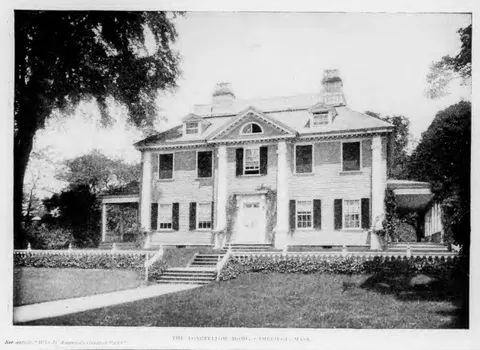
- Argues that although most Americans regard Longfellow as the foremost American poet, Poe and Whitman have been better received in England and on the Continent and surpass all others in originality; Whittier, Bryant, Lowell and Holmes rank high but none is likely to be given first place. Companion piece to the frontispiece view of the Longfellow home at Cambridge, Mass.
- A two-line epigram: "We've not yet found the way, my brother, To sow one thing and reap another."
- Notes that ministers who won local notoriety by denouncing the awfulness of cycling are now turning elsewhere, and quotes the invitation to the third Meet of the Federation of Clerical Cycle Clubs at Camden, Ohio, October 23, which wanted "seventy-five preachers of all varieties", riders and non-riders, to ride, drive or come by wagon, electric-car or train.
- An eight-line poem on insidious sin, whose "flossy fingers steal about the heart" and prove at last to be "the ruler of our citadel."
- A page of the magazine's own epigrams, jests and quatrains, taking in Americans attempting French, imperialists and the Filipinos, President McKinley waiting on next June's graduating essays, and the observation that "a cycle tire is made better by a blowing-up and a Thanksgiving turkey is improved by a roasting."
- A quatrain on spectacles: some kinds of glasses help our sight, but others are too strong for us and make us see things double.
- A quatrain arguing that being "found out" is the real curse of our wrongs, the rat in the trap is no worse than the one outside it.
- A quatrain on the man each of us is apt to deem his friend: the fellow who never asks to borrow gold but has some he will lend.
- A quatrain in which a wife cries that their daughter has eloped with the coachman and the husband laments only that he has lost the best coachman they ever had.
- A quatrain in which a spinster, "sear and yellow" and bereft of matrimonial hope, asks that if "whatever is is right," how does it happen that she is left?
- Masthead of the League of American Wheelmen's official department bound into Elliott's Magazine, Vol. XXX, November 1899, No. 4, published monthly by Sterling Elliott of Boston at 530 Atlantic Avenue, with Sterling Elliott as editor and Nixon Waterman as associate editor.
- Reports that the League's co-operative agreement with the Cyclists' Touring Club of England is about to be matched by one with the Deutscher Radfahrer Bund, Germany's national cycling organisation. President Keenan spent nearly three months among European cycling officials to secure the alliances, whose benefit will be felt at the 1900 Paris Exposition; L. A. W. tourists would gain the Bund's hotel and repair-shop discounts, road-maps and officials.
- The League's national committees, formerly mere auxiliaries to the state divisions, have been systematised and brought to a national standard by the Executive Committee, which has also organised two entirely new departments, the touring bureau and the press committee. The touring bureau is preparing detailed routes through the winter, to work in with the hotel and consul systems of the state divisions.
- T. J. Keenan, Jr. sets out the privileges an L. A. W. tourist gains abroad through the C. T. C. ticket: free entry of wheels into the principal nations of Europe, discounts on hotel rates in England and France, information from C. T. C. consuls, reduced charges from C. T. C. repairmen and cheap maps and guide-books; he thanks President Burnett and Secretary Shipton of the C. T. C. and credits Joseph Pennell, the League's English representative, with securing favourable action.
- Describes a device for clearing tacks and other iron or steel from cycle paths, designed by Mr. F. J. Root, an electrician of Binghamton, N. Y.: a series of permanent horseshoe magnets with alternating poles mounted on four small wheels and drawn along the path.
- A member of the French Academy finds that oxygen passes readily through rubber while nitrogen does not, so a newly inflated tire loses air fastest and a somewhat used tire, left practically inflated with nitrogen, does not deflate as readily as a new one.
- Notices "Father Goose; His Book," with verses by L. Frank Baum and pictures by W. W. Denslow (Geo. M. Hill & Co., Chicago); Mrs. Mary W. Morrison's "Stories True and Fancies New," which tells of "Old Ned," the last surviving horse of the Civil War, and of Mary Sawyer and her lamb; and "Bicycle Yarns" by Ex-Judge Henry Tate, president of the Van Cortlandt Wheelmen of New York City, eleven stories in which the bicycle plays a part.
- The first annual convention of sidepath workers ever held in the United States met at Rochester, N. Y., Sept. 28-29. President Raymond gave a history of sidepath building, methods of raising money, path construction and favourable legislation; Utica was chosen for the next state convention, with Oneida county delegates promising a profitable visit in 1900.
- Reprints the text accompanying an illustration in The Mechanics' Magazine for January, 1834, describing a steam carriage to carry fifty passengers on wheels six inches broad and eight feet in diameter, with crank-shaft driven by endless chains and a boiler of double siphon tubes, dated Birmingham, Oct. 3, 1833.
- The Bulletin's monthly motor-vehicle department, carrying a makers' list and short paragraphs on the growth of automobilism.
- In answer to readers' letters, prints a table of makers with power used, selling price and time required to fill orders, Graham Equipment Co. of Boston, Woods Motor Vehicle Co. of Chicago, Indiana Bicycle Co. of Indianapolis, Strathmore Automobile Co. of Boston, Duryea Mfg. Co. of Peoria, The Mobile Co. of Kingsland Point, N. Y., The Locomobile Co. of New York and the Columbia and Electric Vehicle Co. of Hartford.
- From the Scottish Cyclist: of the four places luggage may be carried, front-wheel carrier, handle-bar, frame and rear carrier, the frame-bag is judged the worst since it bulges and rubs the thigh on the narrow treads of modern machines. The best plan is two small packages, one on the handle-bar and one over the back wheel, with soiled clothing posted home en route.
- Reprinted from an exchange: on the increase in cycling accidents to women, illustrated by a party of three ladies met at the top of Westerham Hill, "a Kentish Alp," one in a white pique costume on a wood-framed machine with a flimsy makeshift brake, who flew past the danger-board singing and habitually rode down every hill in the district.
- From The Horseless Age: manufacturers who have tried both find the wood wheel better suited to present road conditions because it absorbs vibration and washes easily, while the wire wheel rusts in the threads where the drier cannot reach, causing spokes to pull out and the wheel to weaken.
- Quotes the French peasant's logic on highways, the bad roads are not worth repairing because nobody travels them, and the good roads need nothing done to them until they get bad.
- Short trade paragraphs: the American House, Boston, on the European plan at $1.00 a day; Bi-cy-ka wheel polish from the Raven Gloss Mfg. Co., 71 Barclay St., New York; and a note from the Twentieth Annual Meet Committee crediting the historical sketch in the meet souvenir programme to the "Guide to Metropolitan Boston," copyrighted by Geo. H. Walker & Co. of 160 Tremont St.
- Banner of the Bulletin's highway-improvement department.
- Otto Dorner, chairman of the L. A. W. Highway Improvement Committee, argues that permanent highways should not be paid for by the farmer alone since merchants, city people and distant travellers share the benefit, and describes the New Jersey state-aid system, under which no work is begun except on petition, and the state pays one-third, the adjoining property owners one-tenth and the county the remainder.
- Masthead of the League's own official pages, edited by Abbot Bassett.
- Lists the League's national officers for the term, headed by President Thomas J. Keenan, Jr. of Pittsburg, with first and second vice-presidents, treasurer, and Secretary Abbot Bassett at the Russia Building, 530 Atlantic Ave., Boston.
- The chairmen and members of the League's national committees, Membership, Rights and Privileges, Highway Improvement (Otto Dorner of Milwaukee), Touring, Transportation, the Racing Board, Local Organization and Press.
- Roster of chief consuls and secretary-treasurers for every state division from Alabama to Wisconsin, closing with Foreign Marshal Joseph Pennell, care of J. S. Morgan & Co., 22 Old Broad St., London.
- President T. J. Keenan, Jr. announces the appointment of a New York City member to the Touring Department Committee.
- The nominating committee, Frank R. Steel (chairman), Cecil L. Eppes and Edmond T. Baker, M.D., nominates Walter C. Mercer of Richmond for chief consul, Dr. W. M. Randolph of Charlottesville for vice-consul and J. Roy Collins of Norfolk for secretary-treasurer, from Richmond, Va., October 12, 1899.
- Prints the uncontested nominations for the New Jersey Division from December 1st, C. Frank Kircker of Paterson for chief consul, M. B. Rudderow of Merchantville for vice-consul and James C. Tattersall of Trenton for secretary-treasurer, with the state representatives, and explains that the chief consul has ordered no mail vote this year because of the division's finances.
- Additional nominations filed under Section 7 of Article VI of the division by-laws, Chas. F. Williams of Cincinnati for chief consul, James A. Sanford of Cleveland for vice-consul, A. B. Howson of Chillicothe for secretary-treasurer, followed by the complete election ticket to be sent to Ohio members Oct. 31st, on which S. L. Ghaster of Fostoria and Chas. W. Mears of Cleveland also stand for chief consul; W. H. Chubb, Sec.-Treas., Cleveland.
- Report of the secretary-treasurer for the quarter ending Aug. 3, showing total receipts of $570.62 from renewals, applications and road books, disbursements for printing, postage, stationery, prizes and expenses to meetings, and a balance to next quarter of $85.40, approved by the executive committee.
- Financial statement of Owen Lawson, secretary-treasurer, from December 1, 1898 to June 10, 1899: receipts of $142.46 including a five per cent dividend from the Masonic Savings Bank, disbursements for the chief consul's and secretary-treasurer's offices, the recruiting committee and travelling expenses of the board of officers, and a balance of $33.55 still unavailable in the suspended German National Bank.
- Announces that the new dated cap pin is ready and will be supplied only to members paid up to 1900; the 1899 pin may still be had by those paid to 1899. Twenty cents should be sent to the secretary with the renewal.
- Puts to the divisions the question of whether the League should keep control of racing, listing the arguments and the officials recorded for and against, has racing helped or harmed the L. A. W., has it brought in new members, has it attracted a class of riders that we desire, with the answers to be printed in the Supplement.
- A membership appeal to every man who rides a wheel, is of good character and of years of age, urging that the League's ranks be filled by those who share in the good roads work it has done.
- The Bulletin answers members: the L. A. W. is represented in England by Foreign Marshal Joseph Pennell, care J. S. Morgan & Co., London; the League does not accept life members; a division appoints a secretary-treasurer at fifty members and a vice-consul and constitution at one hundred; rising prices and cycle makers turning to automobiles make it doubtful that wheels will be cheaper in 1900; and "automobile" is pronounced au-to-mo-bil.
- The U. S. War Department contemplates improving Cuban highways, with orders to Gen. Brooks to secure reports from department commanders on road conditions and the cost of improvement; the work is expected to employ many Cubans and reduce the need for free food distribution, and a general plan will be outlined by Assistant Secretary of War Meiklejohn for the President's approval.
- Ralph Waldo Emerson's poem, "Announced by all the trumpets of the sky, Arrives the snow", printed in full on the closing page of the number.
Images in this issue 31 pictures from 16 pages
Photographs 10
 (opens in a new tab)
 The Longfellow Home, Amherst, Mass. 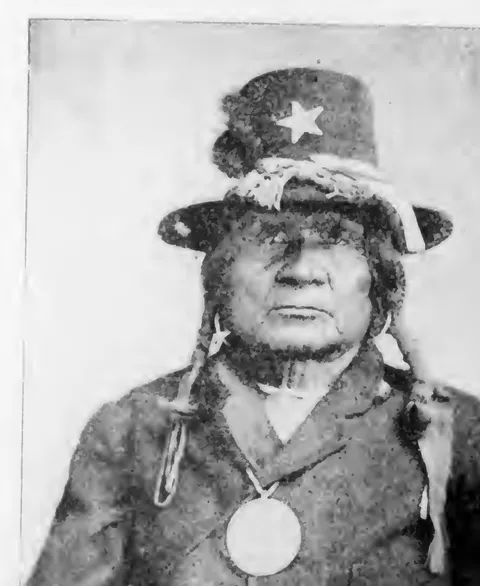 (opens in a new tab)
 Toshaway, Comanche Chief 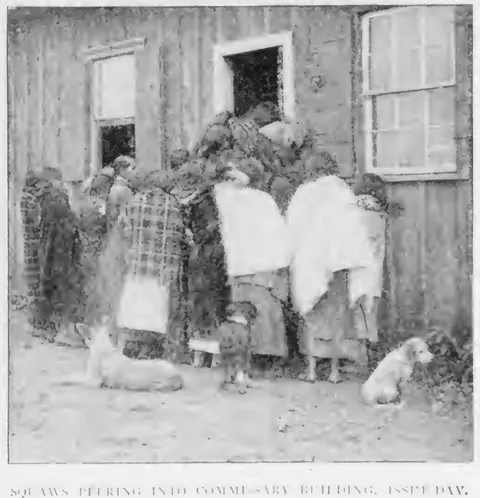 (opens in a new tab)
 Squaws Peering into Commissary Building, Issue-Day 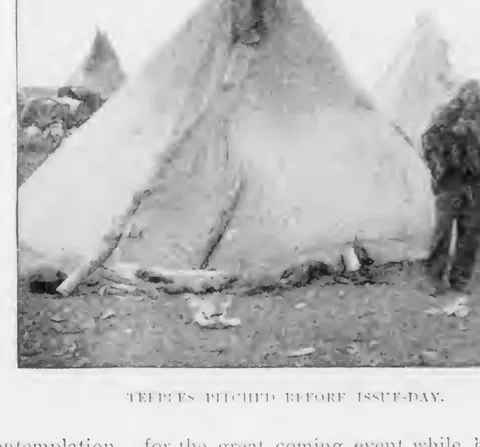 (opens in a new tab)
 Teepees Pitched Before Issue-Day 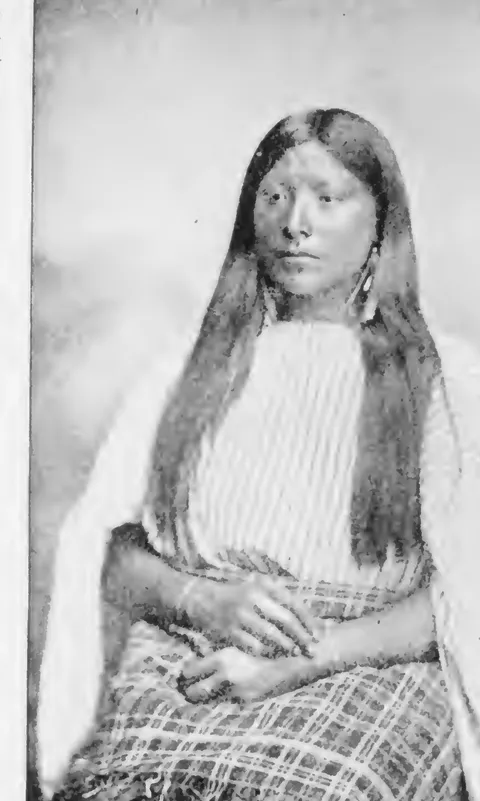 (opens in a new tab)
 Squaw of the Kiowa Tribe 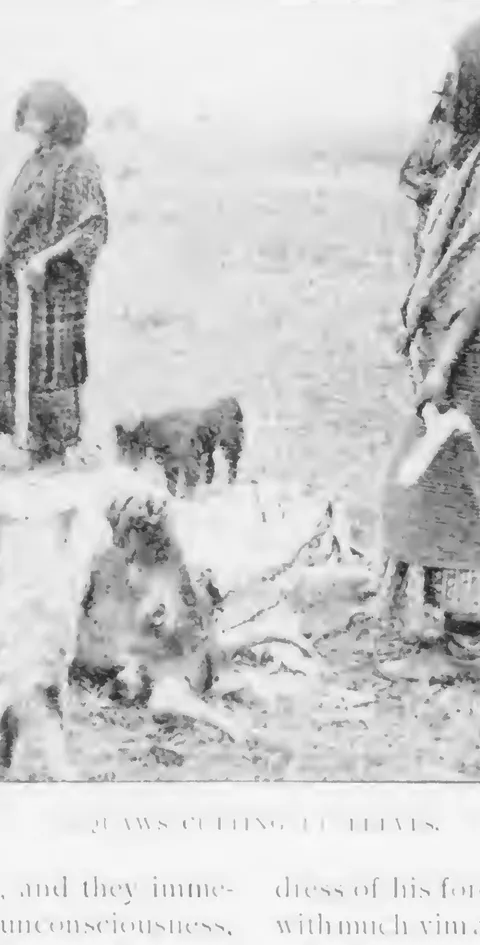 (opens in a new tab)
 Squaws Cutting Up Beeves 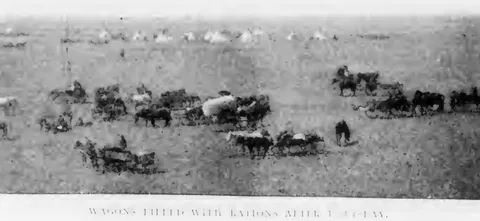 (opens in a new tab)
 Wagons Filled with Rations After Issue-Day 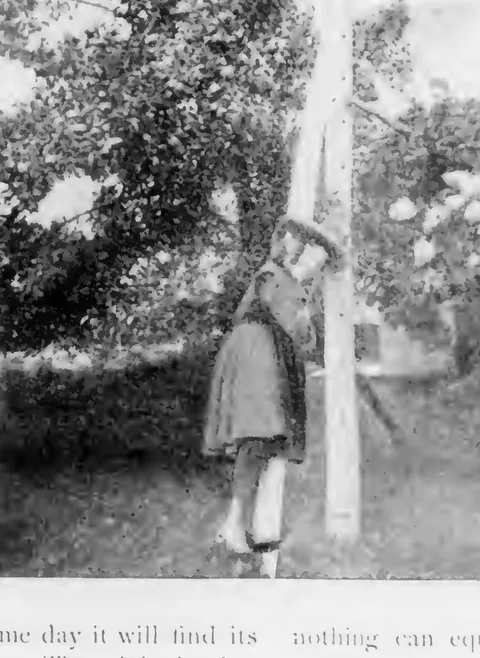 (opens in a new tab)
 The Old Oaken Bucket well, Greenbush, Mass. 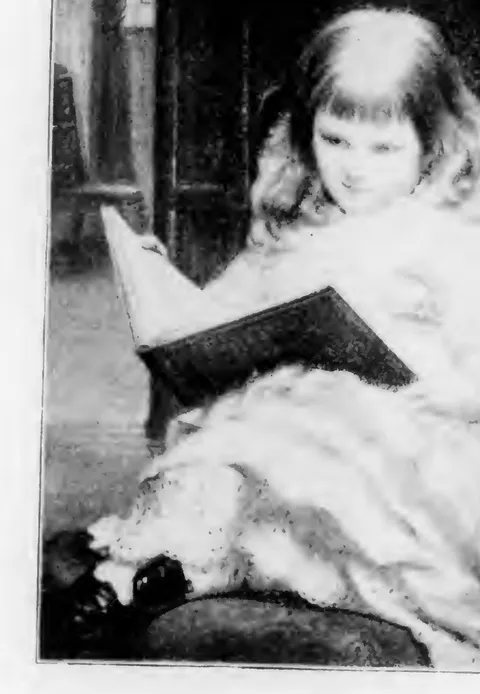 (opens in a new tab)
 Life's Story Book 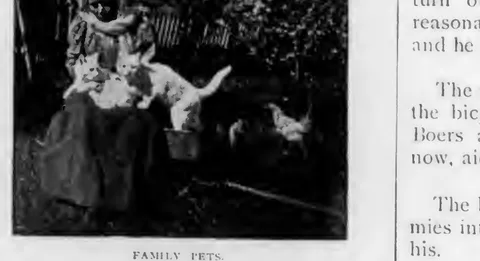 (opens in a new tab)
 Family Pets
Mastheads 1
 (opens in a new tab)
 L.A.W. Bulletin and Good Roads Department
20 advertisements
 (opens in a new tab)
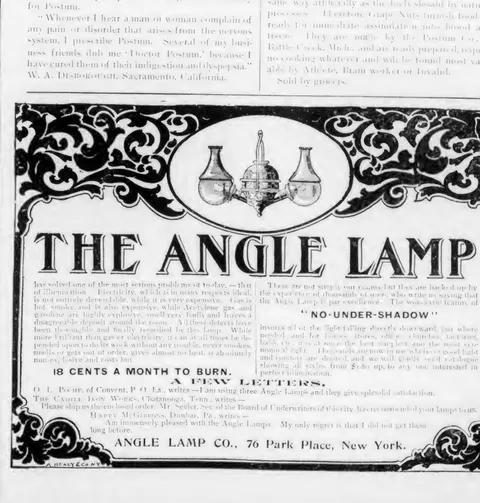
 The Angle Lamp 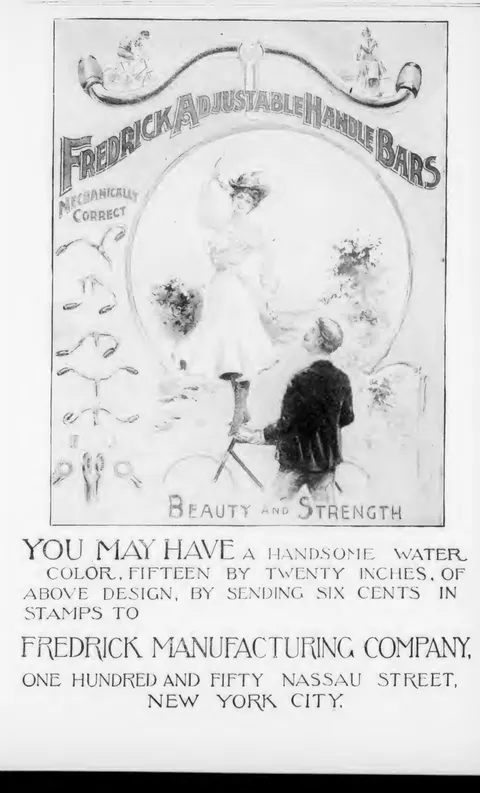 (opens in a new tab)
 Fredrick Adjustable Handle Bars 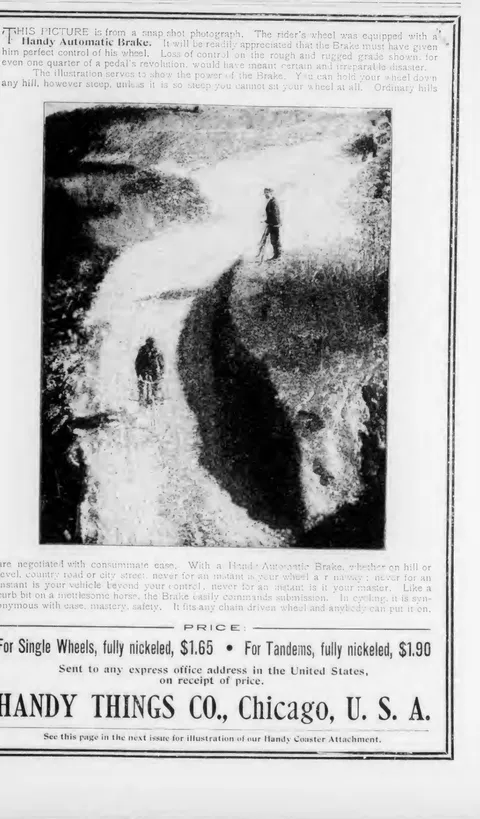 (opens in a new tab)
 Handy Automatic Brake 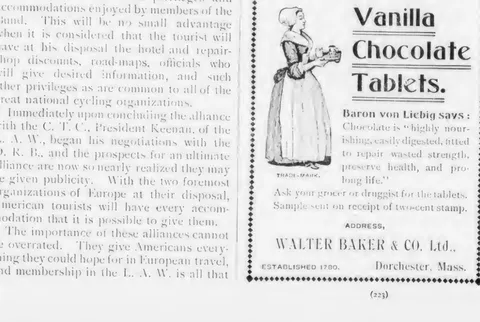 (opens in a new tab)
 Walter Baker & Co.'s Vanilla Chocolate Tablets 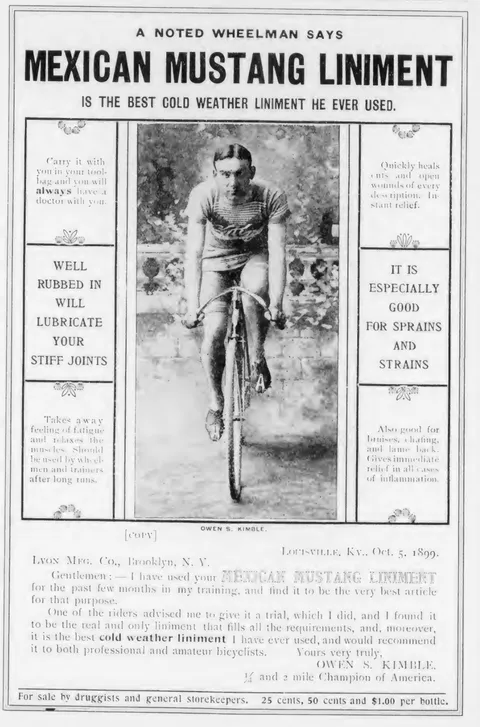 (opens in a new tab)
 Mexican Mustang Liniment 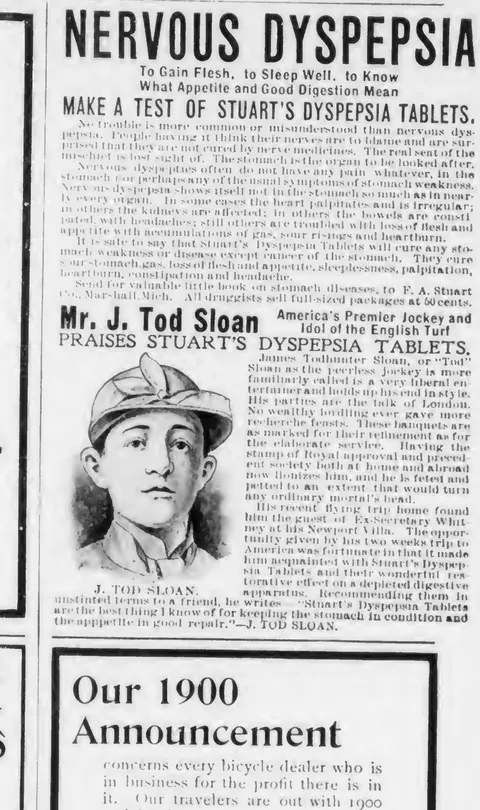 (opens in a new tab)
 Stuart's Dyspepsia Tablets 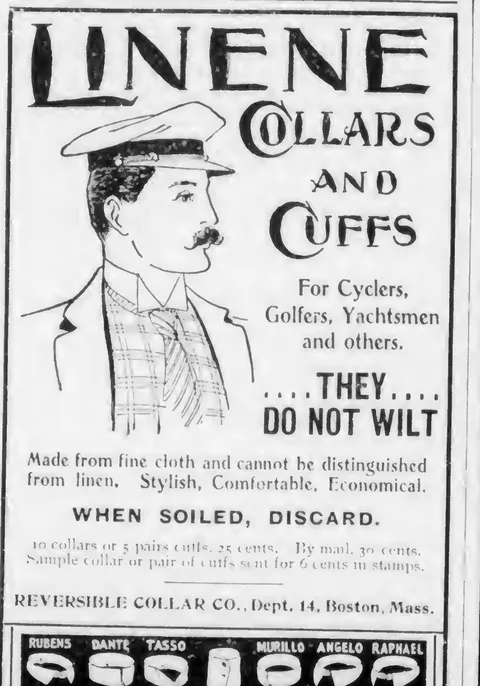 (opens in a new tab)
 Linene Collars and Cuffs  (opens in a new tab)
 The Top Rung 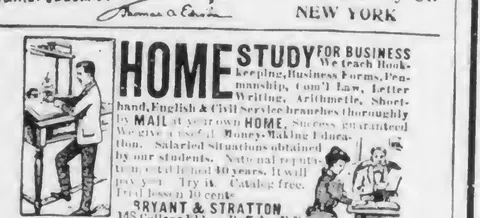 (opens in a new tab)
 Home Study 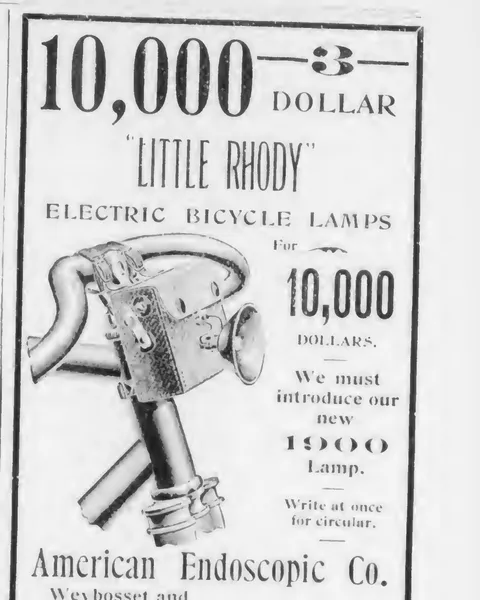 (opens in a new tab)
 Little Rhody Electric Bicycle Lamps 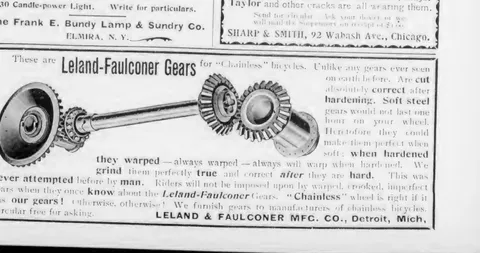 (opens in a new tab)
 Leland-Faulconer Gears 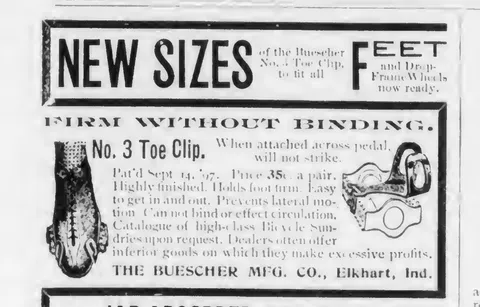 (opens in a new tab)
 No. 3 Toe Clip 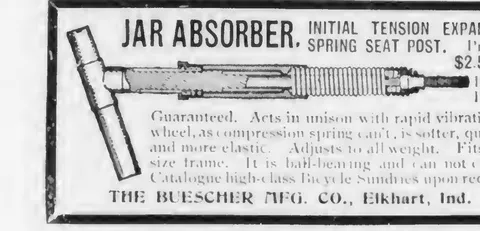 (opens in a new tab)
 Jar Absorber 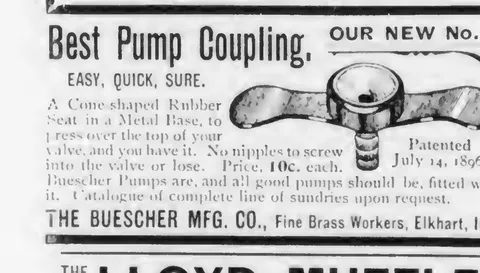 (opens in a new tab)
 Best Pump Coupling 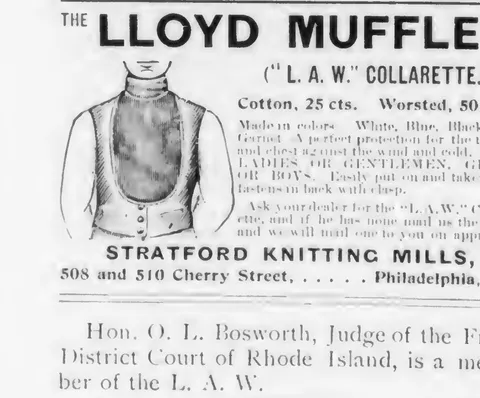 (opens in a new tab)
 The Lloyd Muffler (L.A.W. Collarette)  (opens in a new tab)
 Stanley Dry Plate Co. 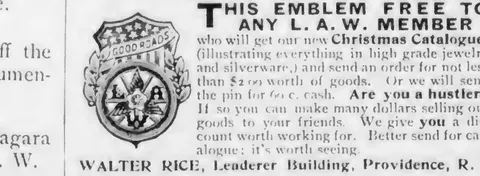 (opens in a new tab)
 L.A.W. Member's Emblem 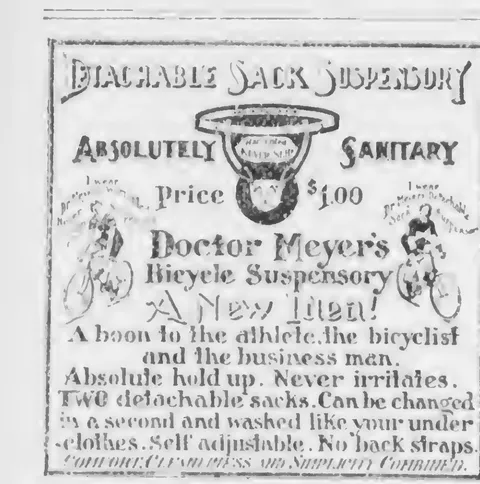 (opens in a new tab)
 Dr. Meyer's Bicycle Suspensory 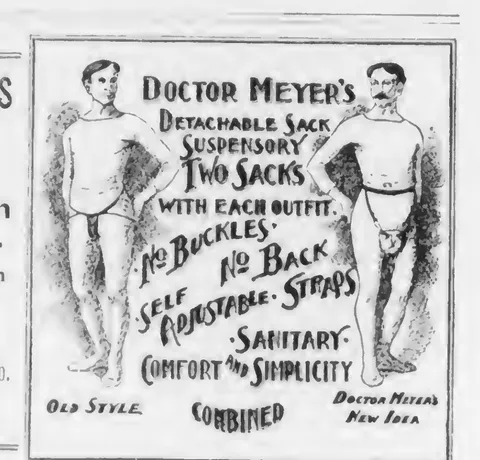 (opens in a new tab)
 Doctor Meyer's Detachable Sack Suspensory (Old Style / Combined) 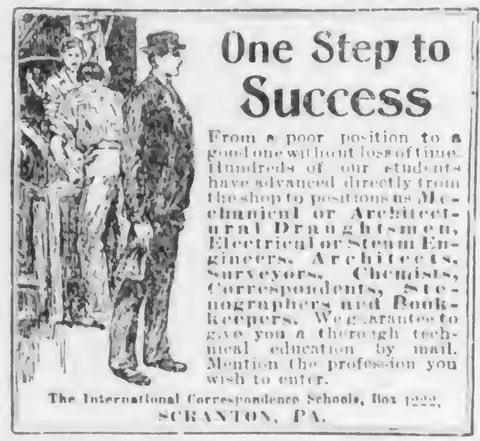 (opens in a new tab)
 One Step to Success