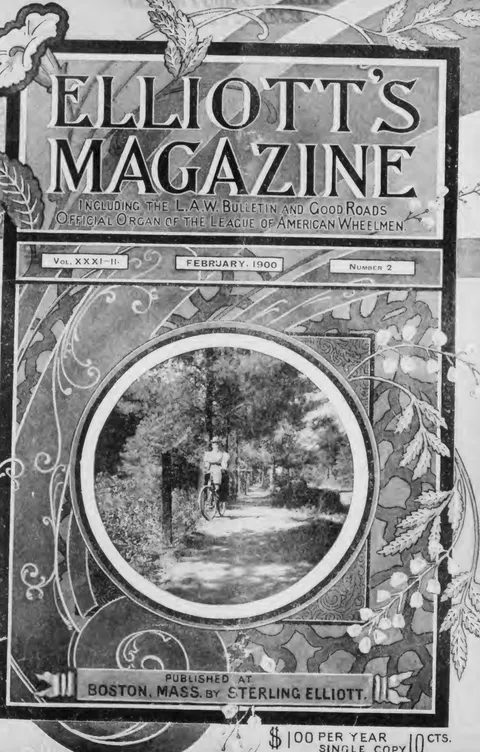
Vol 31, No 2
190040 articles45 images
Articles in this issue
- Rev. Chas. M. Sheldon, author of "In His Steps," is to be given the Topeka Capital to run in his own way for one week, and the writer imagines the result: an advertising man forced to confess a circulation of 16,237, a society editor calling Col. Jaggers a notorious boodler, and Rev. Longwind Emptypate's church emptying once the cycling, golf and fishing season opens.
- A four-stanza poem looking forward from midwinter to June coming "laughing back again with roses tangled in her hair," with honey-seeking bees in the clover-bloom, fireflies swinging their lamps and song-birds drinking the weeping willow's dew.
- Stephen F. Kendall opens with Hamlet's cloud that is camel, weasel and whale to mock the contradictory reports on the Philippines, then sets out the islands' discovery by Magellan in 1521, the founding of Manila in 1581, the earthquakes of 1863 and 1864, and their forests, fruits and vermin; illustrated with the old gate in the wall of Manila, a roadside market in a suburb of Manila, and the native "Lightning Express." Dewey's cable praising the Filipinos and Aguinaldo's double reputation are weighed against "benevolent assimilation."
- A short poem by Dorothy Mansfield on a coquette from whose rose each lover stole a leaf, until a blinded mortal came at last and won all the thorns they left.
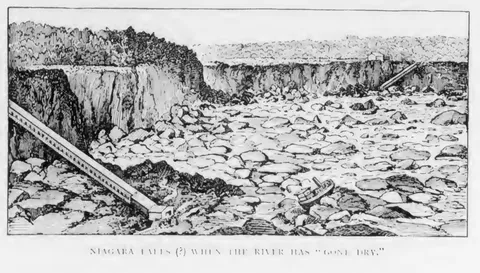
- Paul Endicott asks how soon the newly opened Chicago Drainage Canal will draw down the Falls, reviewing Andrew Ellicott's estimate of 55,000 years and Dr. J. W. Spencer's 1894 figure of about 31,000, the glacial history of the Great Lakes, and estimates that abstracting 300,000 to 600,000 cubic feet a minute will lower Michigan, Huron and Erie by three to eight inches. Illustrated with the American Falls, Horseshoe Falls and Terrapin Point, and a fanciful view of Niagara "when the river has gone dry."
- A narrative poem by Nixon Waterman telling how a princess gave each suitor half a double almond and banished any who accepted a gift without saying "I remember," until a comely prince came with his hands bound in his belt, persuaded her to bind her own, and won her with two cherries offered between his lips.
- The magazine's miscellany department, carrying four short signed-off paragraphs on German lese-majeste, Christmas homesickness, roadside gospel and a kilted shop-front Scotsman.
- Americans going to Europe this year are warned that 305 persons in Germany were convicted of lese-majeste last year, with sentences aggregating 100 years; the advice is to think twice before speaking and to save any levity for Paris, Coney Island or Chicago.
- The principal of an Indiana boys' school refused a pupil leave to go home last Christmas; a few days later the boy bounded into his room with a telegram, exclaiming, "Now, I've got to go home. Grandma's dead!"
- A grain-dealer in Lebanon, Kansas, a town councilman and temperance leader, has painted scripture texts in bright letters on his big grain elevator so they may be read for miles over the level country.
- Outside a store signed "Glasgow Woollen Mills" in an Eastern city stands a young man in Scottish tartan and kilts; hailed in broad Scots with "Hoo's a' wee ye, mon?" he answers in pure Milesian, "Shure, there's divil a wann here but mesilf!"
- The magazine's humour department, a page of short verses and epigrams including "Sly Sister Prudence," "Not a Circumstance," "Immunes," "A Second Fiddle," "The Sinews of War," "A Sorry Joke" on an automobile hauled home by a horse, "A Sympathetic Market" on the price of sugar, and the query "Is a bicycle path a calf-path?"
- Masthead of the League of American Wheelmen's official section bound into Elliott's Magazine, Vol. XXXI-II, February 1900, No. 2, published monthly by Sterling Elliott at 530 Atlantic Avenue, Boston, with Sterling Elliott as editor and Nixon Waterman as associate editor.
- An editorial on how pace-making destroyed pure individualism in cycle racing, a cyclist cannot ride faster than his pace-makers, and how motor cycle racing now promises to be the great feature of the year's Meets, so that the amateur cyclist must give way to the amateur engineer: "the cyclist was the polywog's tail" and "the motor cycle is the full-grown frog."
- Predicts automobiles as thick as lucky-bugs on the streets and highways next summer, warns that a few slam-bang drivers who "don't know enough about machinery to oil a wheel-barrow" will bring restrictions on the competent, and urges the Automobile Club of America to protect itself against its fool-friends.
- Summarises Mr. Harrington Emerson in the Automobile Magazine, who argues liquid air has no commercial value for power or cold: it would take 20 pounds of liquid air to yield the power of one pound of coal, coal is twenty times as powerful and a thousand times as durable, and a pound of ice would cool a refrigerator more than a pound of liquid air.
- A comic verse about the prudent man who waited for the cycle to be perfected, then for pneumatic tires, then for the motor, and was finally carted off in a crude, old-fashioned, horse-drawn hearse.
- Department banner heading the Bulletin's motoring notes, which this month cover safe stopping distance, the Chicago fender ordinance, the pronunciation of "automobile," pneumatic tire wear on heavy vehicles, and the growth of the Automobile Club of Great Britain from 163 to 588 members in a year.
- A four-line verse on the horseless carriage: everybody who has tried it "declares it takes horse sense to guide it."
- Argues that the ability to stop quickly is the real measure of safe speed, and quotes an English motorcarist that police, magistrates and public misjudge autocars because they do not know the control a driver has; autocarists must prove the machine is not "a wild, ungovernable thing, gyrating irresponsibly over the road surface."
- A Chicago alderman has proposed an ordinance requiring all horseless conveyances to carry fenders; an owner replies at length that fenders would kill automobiling, that it would be wiser to compel wheelmen to carry fenders or horsemen to fit their steeds with a modified hoop skirt, and that the measure is a foretaste of much "fool legislation."
- Thomas J. Keenan, Sr., father of L. A. W. President Keenan, died at his home in Pittsburg on January 9; he had long been esteemed among the foremost members of the legal fraternity of city, county and state, and the League extends its sympathy.
- Total representation at the National Assembly to meet in Philadelphia, Feb. 14-17, is now estimated at 227, so 153 votes will be needed to change the constitution. President Keenan will move that the Assembly elect a committee of five to propose amendments, Secretary Bassett will offer one on delegates-at-large, and Ex-President Potter one removing all reference to cycle racing from the constitution.
- An illustrated verse tracing the wheel's hundred-year history, the two-wheeled hobby-horse toy that "started out as the chainless kind" with no crank but the rider's pawing feet, an 1819 dandy-horse scene, the coming of cranks and chains, and the modern chainless and motor machines that bring the wheel back to what grandpa knew.
- Mr. John A. Miller of Cairo, Ill., suggests petitioning Congress to establish free rural mail delivery only to communities that build inspected good highways, so that enterprising districts are not taxed to carry mail to people who make no effort. Followed by notes on The Farm Magazine of Milwaukee, whose associate editors are Good Roads chairman Otto Dorner and Ex-Vice-Pres. Van Valkenburgh.
- Short trade paragraphs: the American House, Boston, on the European plan at $1.00 a day; the Veeder Mfg. Co. of Hartford, Conn., offering bicycle sundry dealers a handsome eight-colour calendar for a two-cent stamp; Arthur Munson of Stamford, Ct., selling "Touring in England and Jamaica" at 25 cents; and Raven Gloss Mfg. Co.'s Indispensable Bi-cy-ka cleaner.
- Department banner introducing the Bulletin's road-improvement pages.
- Contrasts the spectacle of war with the unglamorous work of road-building, quoting a Chicago Times-Herald letter from Camp Pasay in which Colonel Gardener's gang and volunteering natives made the mudholed road from Pineda (Pasay) to Manila passable in three days, so that villagers petitioned to keep his regiment. Argues that $120,000,000 spent so would have gone further, and notes the L. A. W. will ask Congress for $5,000,000 to establish national highways.
- The League's own official pages, edited by Abbot Bassett, carrying the roster of national and division officers, notices and division reports.
- List of League officers: President Thomas J. Keenan, Jr., Pittsburg; 1st Vice-President Herbert W. Foltz, Indianapolis; 2d Vice-President Robert T. Kingsbury, Keene, N. H.; Treasurer J. C. Tattersall, Trenton, N. J.; Secretary Abbot Bassett, Russia Bldg., 530 Atlantic Ave., Boston.
- Chairmen and members of the League's national committees: Membership (W. A. Howell), Rights and Privileges (Conway W. Sams), Highway Improvement (Otto Dorner), Touring (Geo. L. Sullivan), Transportation (Henry C. Nickerson), Racing Board (Fred Gerlach), Local Organization (Wallace Sherwood), Press (George L. McCarthy), Auditing (C. W. Small) and Rules and Regulations (Dr. W. S. Cook).
- Postoffice addresses of every state division's chief consul and secretary-treasurer, from Colorado (Thomas H. Gist, Denver) through Massachusetts (Sterling Elliott, Boston) to Wisconsin (H. L. Marshall, Milwaukee), with Joseph Pennell of 22 Old Broad St., London, as foreign marshal.
- Notice that the dated cap pin for 1899-1900 is ready and will be supplied only to members paid to 1900; the 1898-99 pin may still be had by those paid to 1899.
- The League of American Wheelmen invites every man who rides a wheel, of good character and 18 years of age, to join its ranks; it wants cyclists of character who believe in the organisation's work.
- Chief Consul Milo M. Belding, Jr., asks representatives to name active wheelmen for appointment as Local Consuls in each town of the twenty new districts, and to help establish L. A. W. Consulates, explaining what a Local Consulate is, its duties in securing streets, roads and cycle paths, the rules for Consulates in cities and Consulate Boards, and a coming meeting of representatives in Manhattan and the Bronx.
- Three notices from Chief Consul Thos. H. Gist: with racing prospects poor, a Field Day or Festival of Sports will replace the annual Meet, its sanction awarded to the city sending in the most new-member applications by July 1 (Denver barred); appointments to the division's Rights and Privileges, Highways and Cycle Path, and Transportation committees and local consuls; and three prizes, a $10 watch-charm or fob, a silver Honor Medal and enamelled Honor Medals, for members recruiting the most new applications by Oct. 1, 1900.
- No. 1,276 proposes touring with bicycle in Europe during March, April and May, taking in the Paris Exposition and anticipating lower rates by going early, and wants one or more companions; address 122 Pubic Street, Providence, R. I.
- Chairman Henry C. Nickerson announces a fare and one-third reduction on the certificate plan for those attending the National Assembly at Philadelphia, Feb. 13-15, with seven numbered directions on obtaining and validating certificates, the Trunk Line Association's special agent attending Feb. 15, and the reduction contingent on at least 100 certificate-holders.
- Replies to correspondents and paragraphs: No. 15,099 is told the fastest mile by a motor-cycle in America was one minute nineteen seconds at the Garfield bicycle track, Chicago, by Major Taylor's steam tandem; D. M. is told drivers of steam motor-vehicles in Washington, D. C., must pass an examination and take out a licence, with boilers periodically inspected. Also notes London trade opinion favouring one cycle show every three years instead of two a year, the Somerville, N. J., merchants' complaint about good roads taking trade away, and a verdict that 1899 was above the average season for cycling.
- A four-line squib contrasting the house-bat, which plays amid the murky shades of night, with the brick-bat, which "goes speeding on its way" be it dark or light.
Images in this issue 45 pictures from 18 pages
Illustrations 4
 (opens in a new tab)
 Niagara Falls (?) When the River Has "Gone Dry" 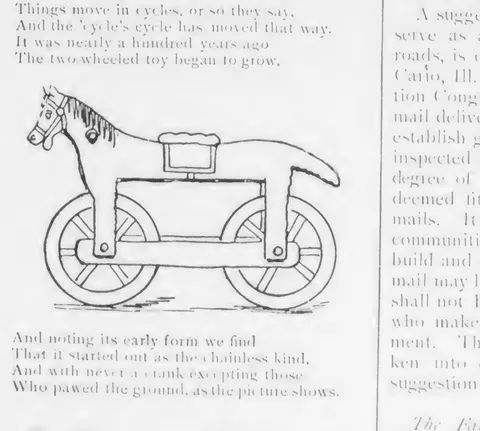 (opens in a new tab)
 A hobby-horse velocipede 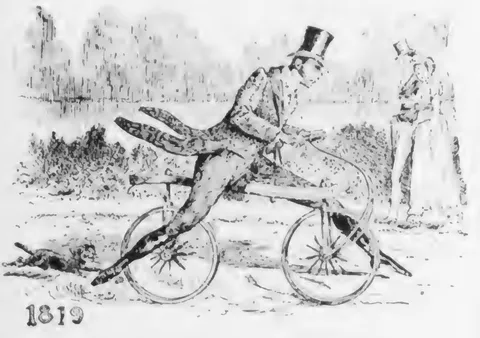 (opens in a new tab)
 Dandy-horse rider, 1819 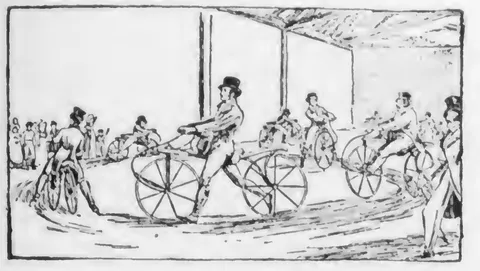 (opens in a new tab)
 Group riding a multi-seat cycle
Photographs 6
 (opens in a new tab)
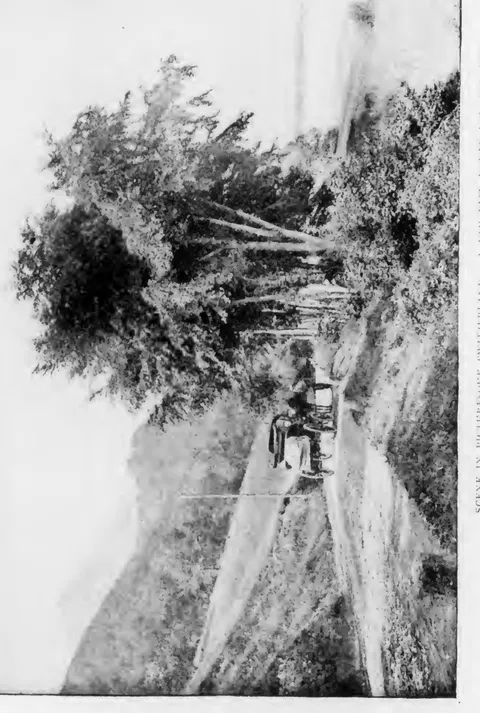
 Scene in Picturesque Switzerland 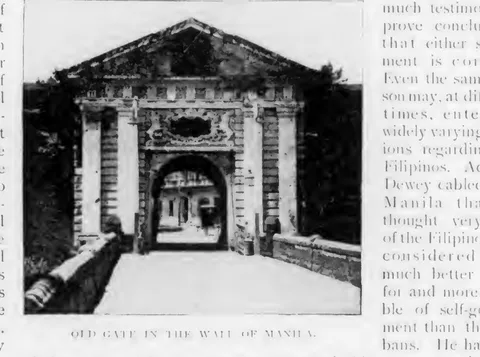 (opens in a new tab)
 Old Gate in the Wall of Manila 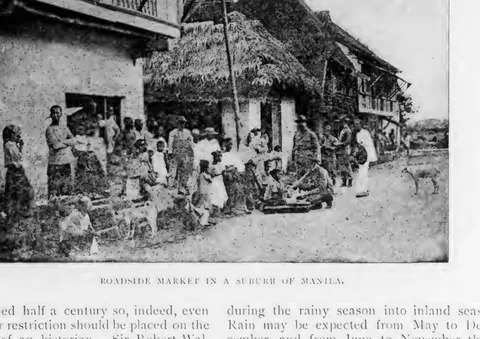 (opens in a new tab)
 Roadside Market in a Suburb of Manila 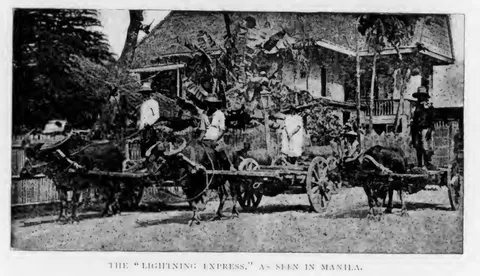 (opens in a new tab)
 The "Lightning Express" as seen in Manila 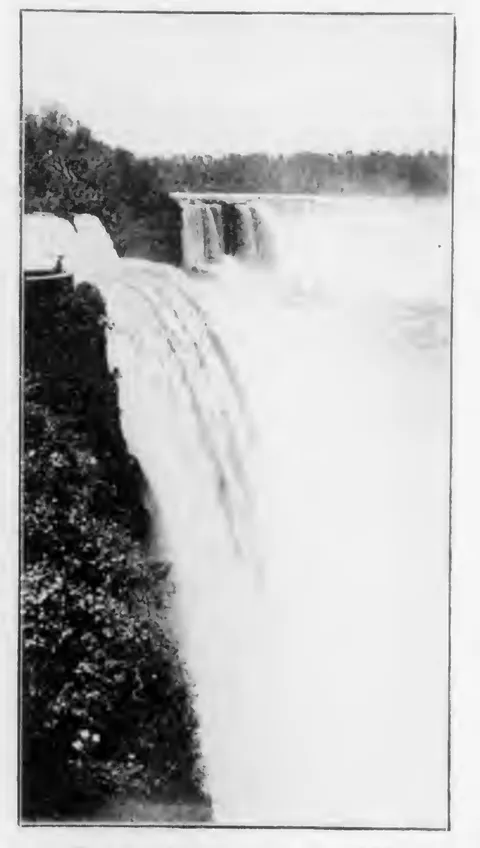 (opens in a new tab)
 The American Falls, Niagara 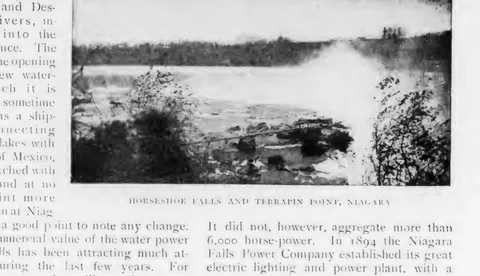 (opens in a new tab)
 Horseshoe Falls and Terrapin Point, Niagara
Cartoons 1
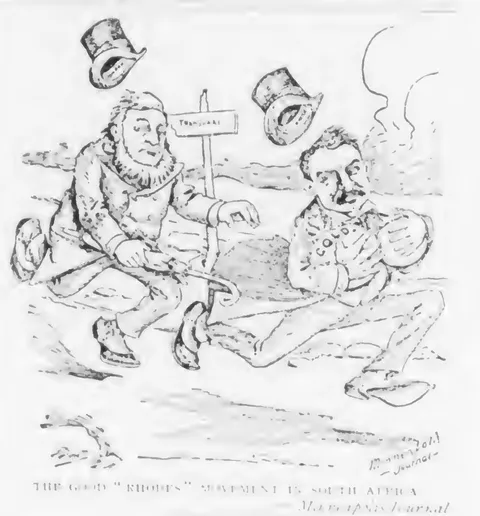 (opens in a new tab)
 The Good "Broer"
Mastheads 2
 (opens in a new tab)
 Elliott's Magazine, Vol. XXXI No. 2, February 1900  (opens in a new tab)
 L.A.W. Bulletin and Good Roads Department
32 advertisements
 (opens in a new tab)
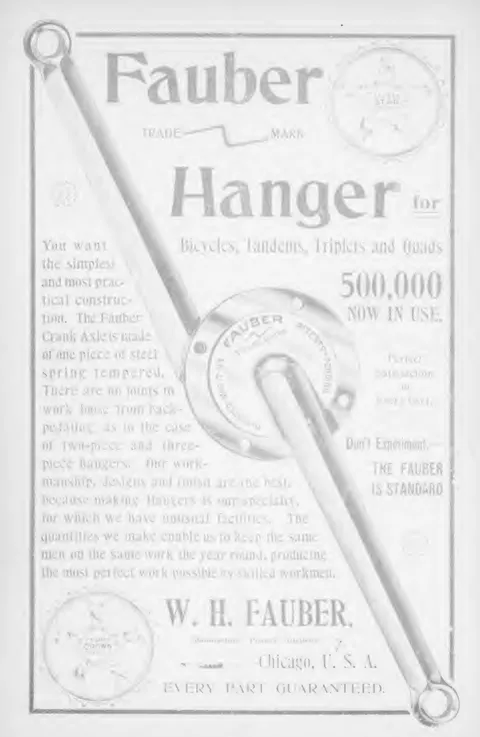
 Fauber Hanger 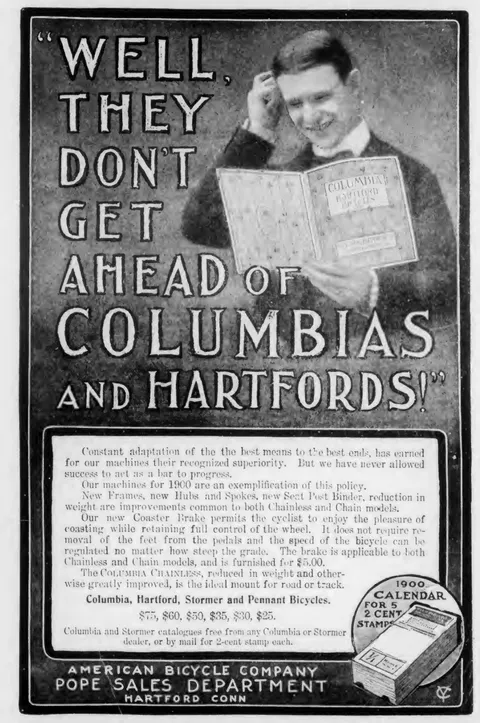 (opens in a new tab)
 Well, They Don't Get Ahead of Columbias and Hartfords! 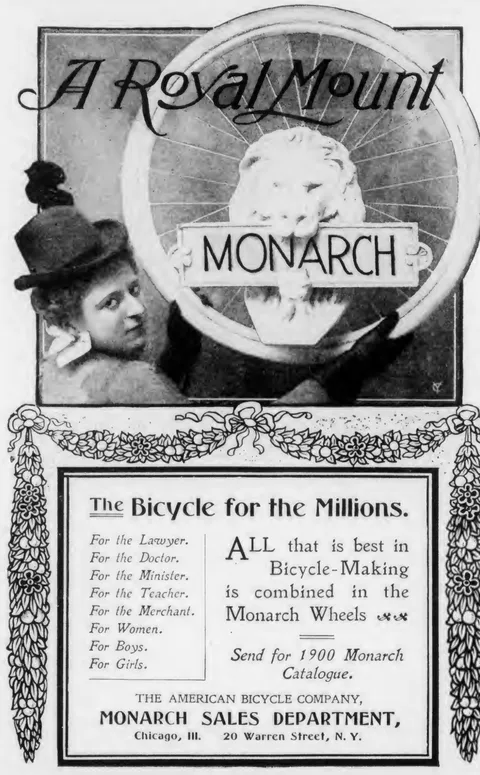 (opens in a new tab)
 A Royal Mount - Monarch 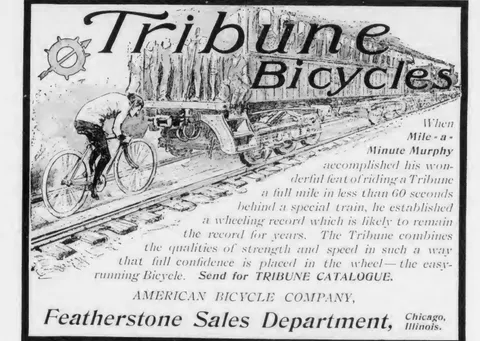 (opens in a new tab)
 Tribune Bicycles 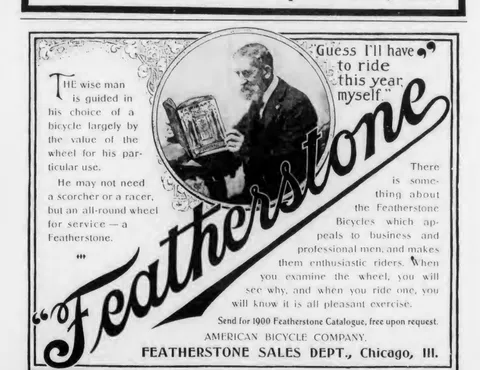 (opens in a new tab)
 Featherstone 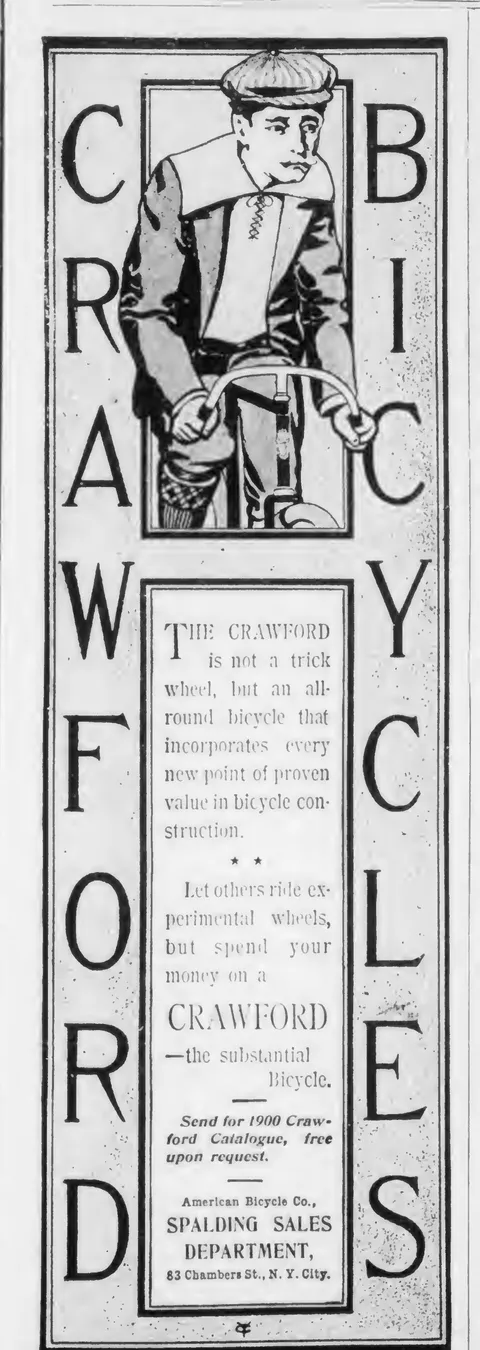 (opens in a new tab)
 Crawford Bicycles 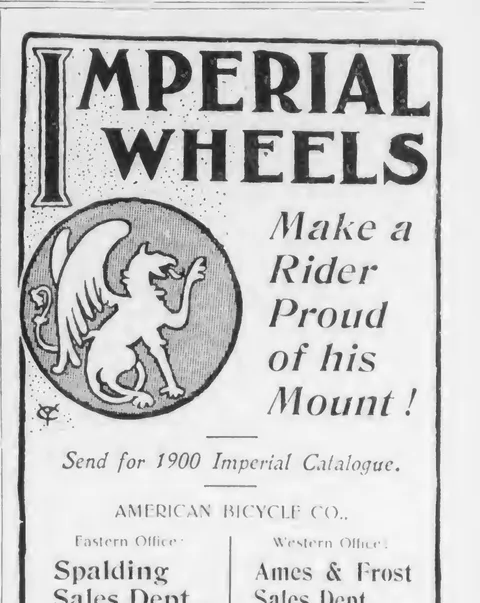 (opens in a new tab)
 Imperial Wheels 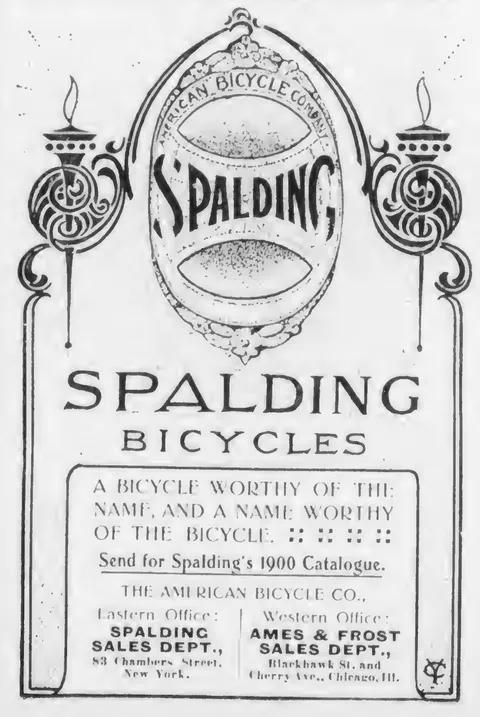 (opens in a new tab)
 Spalding Bicycles 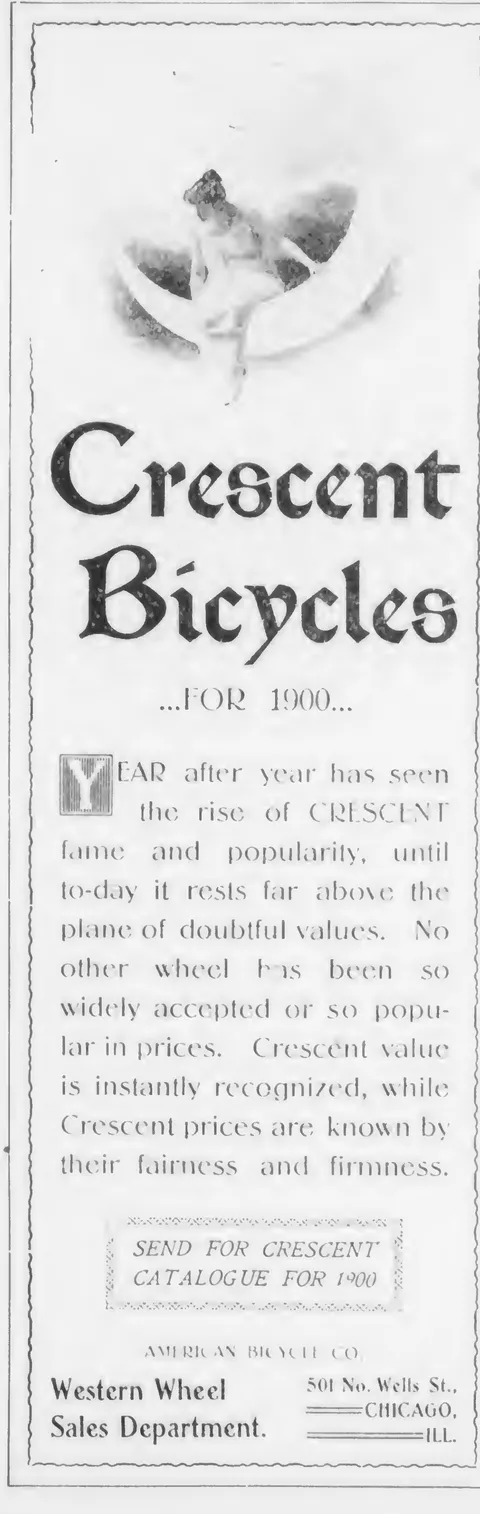 (opens in a new tab)
 Crescent Bicycles 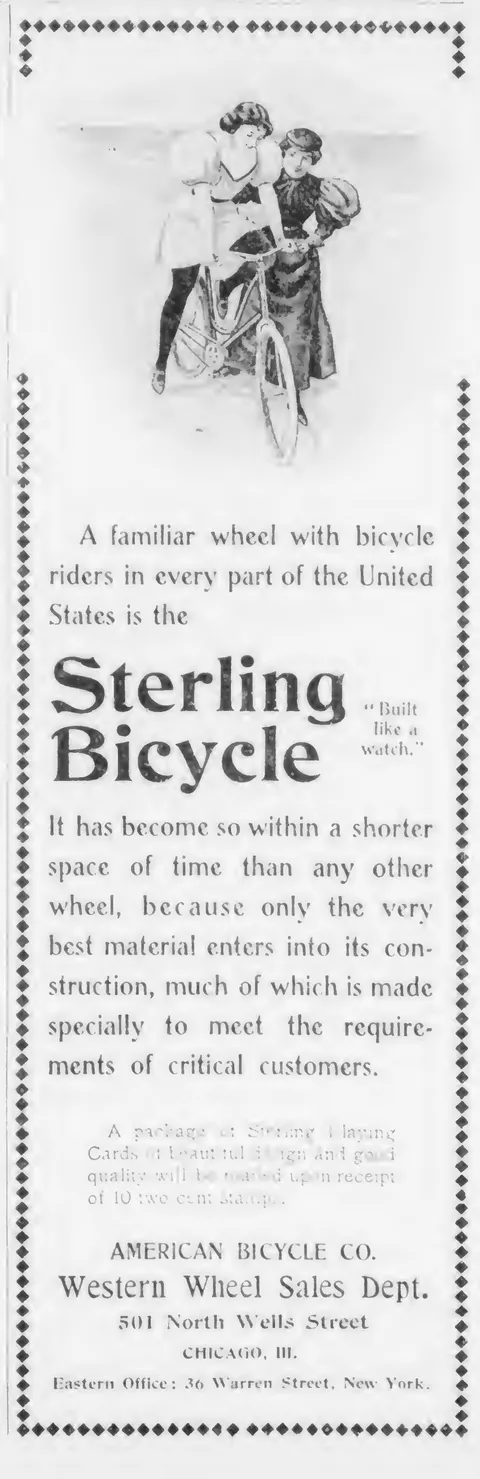 (opens in a new tab)
 Sterling Bicycle 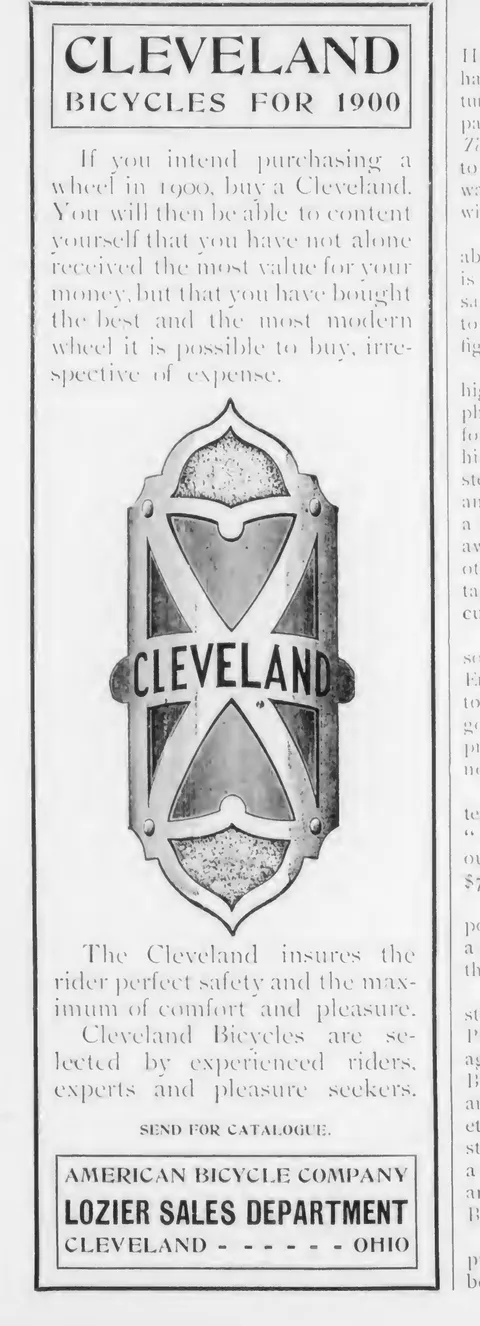 (opens in a new tab)
 Cleveland Bicycles for 1900  (opens in a new tab)
 Solar Cycle Lamps 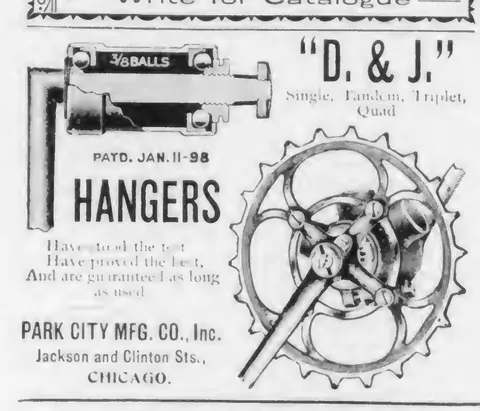 (opens in a new tab)
 "D. & J." Hangers  (opens in a new tab)
 Hold Your Scarf  (opens in a new tab)
 Collar Button Insurance / Krementz 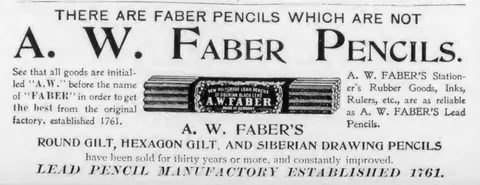 (opens in a new tab)
 A. W. Faber Pencils 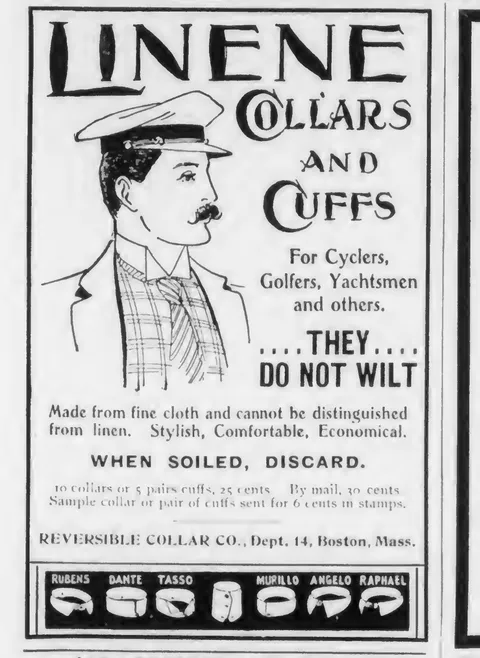 (opens in a new tab)
 Linene Collars and Cuffs 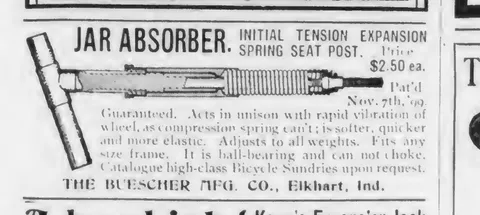 (opens in a new tab)
 Jar Absorber 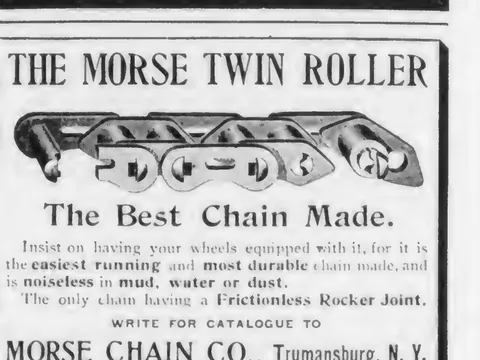 (opens in a new tab)
 The Morse Twin Roller 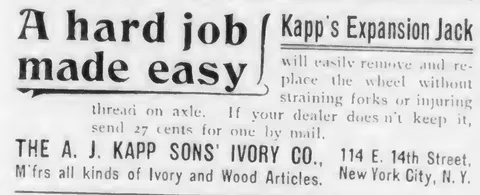 (opens in a new tab)
 A Hard Job Made Easy - Kapp's Expansion Jack 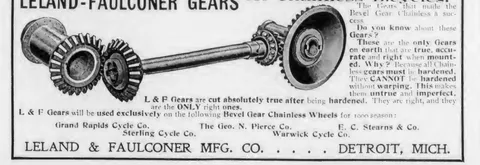 (opens in a new tab)
 Leland-Faulconer Gears 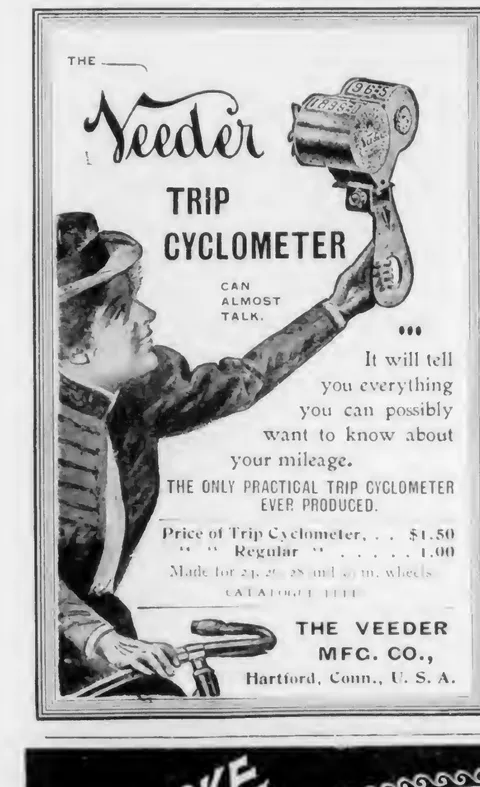 (opens in a new tab)
 Veeder Trip Cyclometer 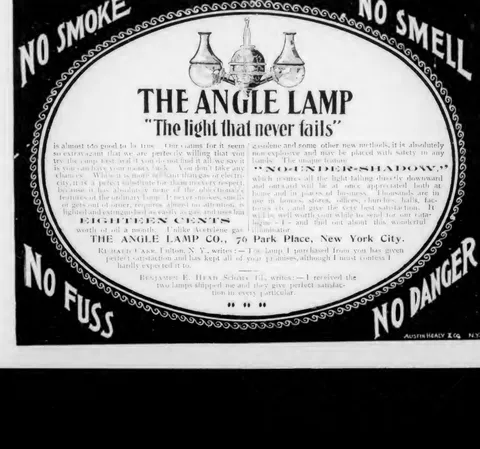 (opens in a new tab)
 The Angle Lamp - "The Light That Never Fails" 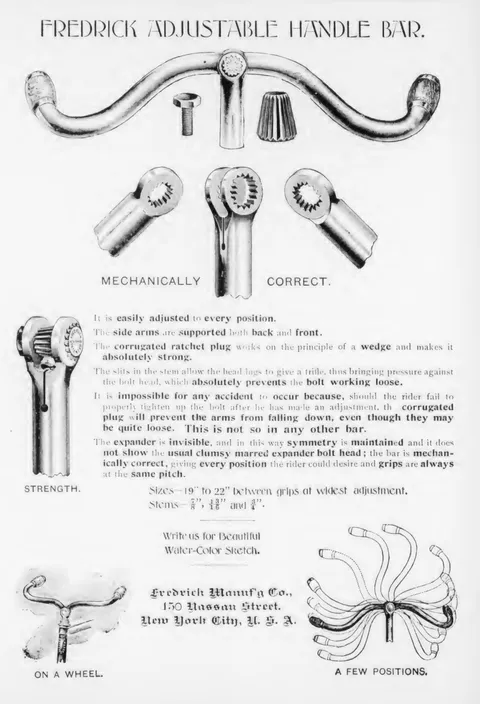 (opens in a new tab)
 Fredrick Adjustable Handle Bar 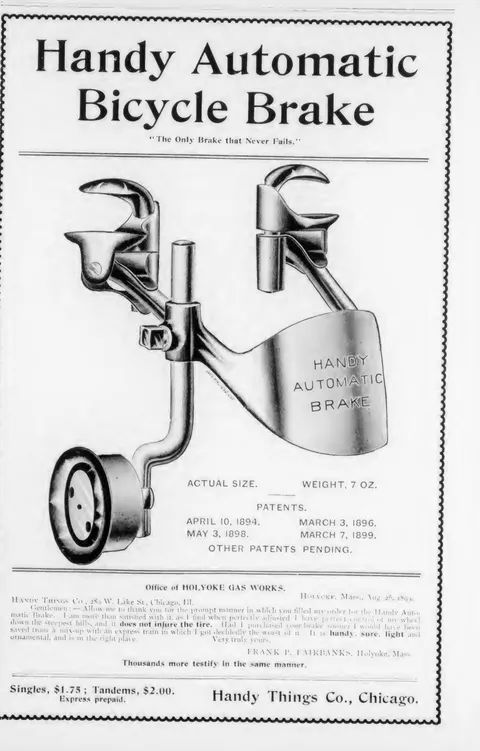 (opens in a new tab)
 Handy Automatic Bicycle Brake 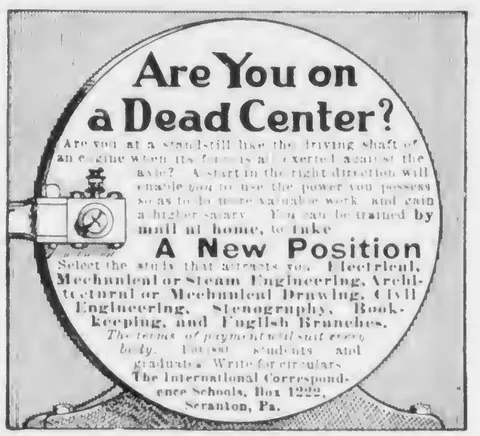 (opens in a new tab)
 Are You on a Dead Center? 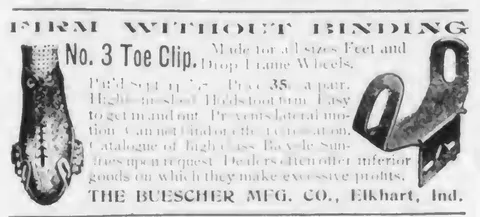 (opens in a new tab)
 No. 3 Toe Clip 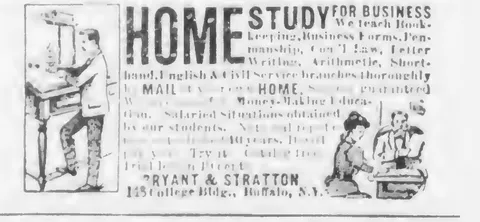 (opens in a new tab)
 Home Study 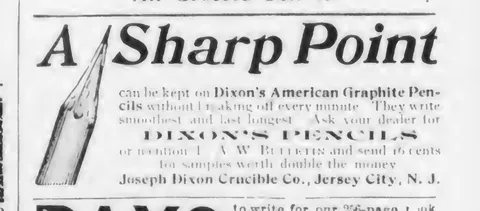 (opens in a new tab)
 A Sharp Point / Dixon's Pencils 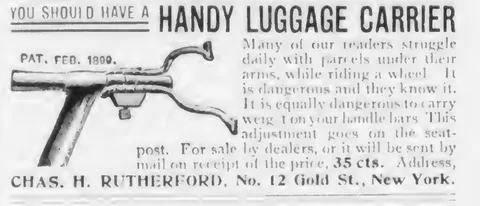 (opens in a new tab)
 Handy Luggage Carrier 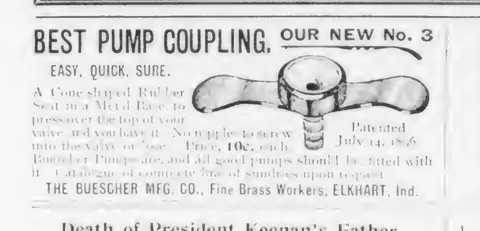 (opens in a new tab)
 Best Pump Coupling 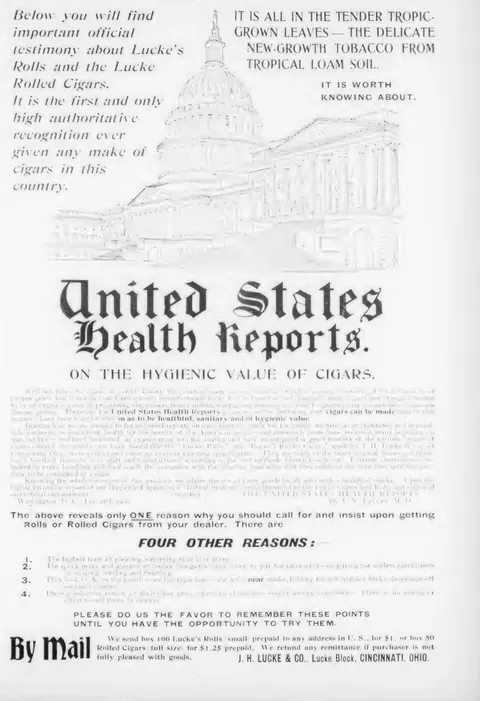 (opens in a new tab)
 United States Health Reports - Lucke's Rolls and Rolled Cigars