Vol 31, No 4
190032 articles34 images
Articles in this issue
- Ballad of the little Wurtemburg hill town famed for rich harvest and grand vintage: when the Emperor Conrad decreed that every man should die, he granted the women leave to carry off in sacks whatever they liked best, and they bore their husbands out on their backs through the open city gates.
- Illustrated appreciation of the Minneapolis waterfall that Longfellow set in "The Song of Hiawatha," quoting the Laughing Water passages and preferring Indian names such as Tonawanda, Wawatoosa and Owatonna to Belcherville, Horton's Crossing and Johnstown. Notes Minnesota's ten thousand lakes and the deep gorge running from the falls down to the Mississippi, with views of the falls from the lower level and from above.
- Account of a winter camp and studio at Miami, Dade county, a three-year-old town of about a thousand on Biscayne Bay at the end of the east-coast railway. Describes frosts and mosquitoes, cocoanuts, limes, guavas and sapodillas, a fifteen-mile sail down to Cutler where land sells at $60 to $100 a farm acre, the Bahama-descended "Conks" of the Keys, manatees seen from a naptha launch on the Miami river, the Riverside Dairy managed by M. Price Williams, and the white limestone road to Cocoanut Grove that is good wheeling wet or dry.
- Two-stanza poem by Nixon Waterman: Love the beggar came sighing at the poet's door, was given first a pittance and then all, and repaid the gift with "an Eden wrought in gold."
- The magazine's editorial miscellany department, opening on p.120 with comment on St. Paul's reputation, Sheldon's week at the Topeka Capital, the 1900 naval appropriation and the working mission of the League of American Wheelmen.
- Argues that St. Paul has been made to look a woman-hater only because people quote half the truth, setting "Husbands, love your wives even as Christ loved the church" against the verses usually cited, and asks the new woman to give him a high place among her saints.
- On Preacher Sheldon's week running the Topeka Capital, said to have made the paper over $40,000, and a defence of the experiment against the papers and pulpits that decried it: glaring headlines, red type, scandals and suicides are a mental dissipation, and many newspapers could stand to be "Sheldonized."
- Attacks the 1900 naval program outlined by the House Committee on Naval Affairs, $62,000,000 for cruisers and battleships at five or six millions each, sixty-one ships already building, and more than $12,810,000 a year in officers' pay, from a nation whose Thanksgiving proclamation calls it "at peace with all the world."
- Editorial on the League of American Wheelmen's living mission, better highways, cycle paths and wheelmen's rights, noting that cycling organizations in England, France and Germany keep growing in size and influence, warning that misshapen laws get on the statute books unless the right force is applied in time, and urging the League badge as a bond of good fellowship.
- Department of epigrams and short verses on p.122, including "A Saving Grace," "Fast and Loose," "Properly Named" (on the eel skirt that costs a good eel), "A Metamorphosis," "Thoughts on Spring" (the early days of spring, when roads are worst of all the year) and "A Fine Combination."
- Masthead of the League's official organ for Vol. XXXI-II, April 1900, No. 4, Elliott's Magazine, published monthly by Sterling Elliott at 53 Atlantic Avenue, Boston, with Sterling Elliott as editor and Nixon Waterman as associate editor.
- Sterling Elliott's valedictory as publisher of the L. A. W. official organ. Recounts his ten-year contract of 1895, the 1897 prize membership contest with $4,000 in prizes and a page of space in six million trade catalogues, the Hundred Dollar Death Benefit paid seven times, his voluntary surrender of the old contract in February 1897, the change from a weekly to a monthly on 1 August 1899 at Chief Consul Sams's suggestion, Mr. Bull's protest to President Keenan that held up subscribers' quarters, and his view that Secretary Abbot Bassett should edit the new organ over sixteen pages rather than the eight the committee calls for.
- Short trade paragraphs: the American House, Boston, European plan at $1.00 a day; Nixon Waterman's "A Book of Verses" from Forbes & Company at $1.25; H. Hegel's European cycle tour to the Paris Exposition; Bi-cy-ka cleaner from Raven Gloss Mfg. Co., 71 Barclay St., New York; and Elwell's cycle tours to Europe and the Paris Exposition from The Columbia, Portland, Me.
- The Bulletin's highway-improvement department on p.128, carrying notes on trolley encroachment, sidepath conventions, and short paragraphs urging readers to build cycle paths, invite friends into the League and keep their wheels in good repair.
- Warns that highways are being given over to trolley companies in a haphazard, wholesale way. At Riverton, N. J., a trolley company tore up the new stone road and laid rails directly in the centre until a protest from property owners made the County Board refuse permission, pushing the tracks eight feet to one side; with the coming army of automobilists added to the cyclists already on the roads, the public highway must come first.
- By resolution of the Lycoming county Board of Sidepath Commissioners, the sidepath commissioners of every Pennsylvania county are invited to convene at Williamsport on May 15th to amend the present Act of Assembly, arrange trunk-line sidepaths from county to county, settle on the best methods of construction and form a permanent state organization.
- The League's official department on p.129, edited by Secretary Abbot Bassett of Russia Building, 53 Atlantic Ave., cor. Congress St., Boston.
- Roster of national officers: President Conway W. Sams, Bank of Baltimore Building, Baltimore; 1st Vice-President Robert T. Kingsbury of Keene, N. H.; 2nd Vice-President A. B. Choate of Temple Court, Minneapolis; Treasurer James C. Tattersall, Box 329, Trenton; and Secretary Abbot Bassett of Boston.
- Chairmen of the League's standing committees: W. A. Howell (Membership), Herbert W. Knight of Newark (Rights and Privileges), Frank P. Van Valkenburg of Milwaukee (Transportation), M. M. Belding, Jr. of New York (Local Organization), George L. McCarthy of New York (Press), C. W. Small of Portland (Auditing) and Albert Mott of Baltimore (Rules and Regulations).
- State-by-state list of chief consuls and secretary-treasurers, from Colorado and Connecticut through to West Virginia and Wisconsin, with Foreign Marshal Joseph Pennell care of J. S. Morgan & Co., 22 Old Broad St., London; consuls and agents are told to draw supplies and application blanks from these officers.
- Notice that the contract with the present publisher of the Bulletin ends with this issue and that a new publisher, as yet unknown, will produce the official organ. Quotes President Sams asking chief consuls and secretary-treasurers to keep him posted on their divisions, and warns that the rumor the League is "running down" has badly hurt its legislative work.
- Chief Consul S. A. Boyle asks every member to write his own congressman, and any others he knows, in support of the bill before Congress appropriating five million dollars for the improvement of public highways, an act the League cordially endorses.
- Foreign Marshal Joseph Pennell explains the C. T. C.–L. A. W. reciprocity scheme giving free entry of cycles into Belgium, Switzerland, Italy and Austria. The C. T. C. ticket, obtainable from Secretary Abbot Bassett, must carry the holder's photograph, a full description of his cycle and the club's official stamp; members sailing for the Continent should apply for C. T. C. membership through E. W. Weston, Savin Hill, Boston.
- F. A. Elwell's circular for a League tour to the Paris Exposition, arranged after a February 9th letter from President Keenan. Berths are reserved on the Holland-American Line's Maasdam out of New York and the Spaarndam home from Rotterdam, held until July 1st on a $25 deposit; the route takes in the national highways of France, the slide down the Juras into Switzerland, the gorges of the Black Forest and the castle-crowned Rhine, at 40 to 50 miles a day and a seven-mile-an-hour gait. Sub-heads cover "Where we Shall Go," "Pace on the Road," "Cost of Tour," "Deposit," "A Word with You" and "Ladies", the tour is for gentlemen only, though ten ladies would secure a chaperoned party travelling by train.
- Pennsylvania Division announcement that the poorest maps in the last road book, those covering the eastern end of the state, are being replaced by new plates. The first edition, due about May 1st, will cover at least eastern Pennsylvania and probably part of the west, and a copy goes free to every member living in the territory it covers.
- List of the division's local consuls town by town, from Ansonia, Avon and Bridgeport through Hartford, Meriden, New Haven and Norwich to Waterbury, Westport and Wethersfield.
- The Ohio Division's executive committee will pay a rebate of 25 cents on every membership application a member sends in. Names and full fees go direct to Secretary Abbot Bassett, 53 Atlantic Avenue, Boston, with notice to the division secretary-treasurer; rebates are remitted on demand once credits reach $1 or more, and recruiting literature can be had from Secretary-Treasurer Walter H. Chubb, Bell Ave., Cleveland.
- Local consul list No. 1 for New Hampshire, running from Andover, Ashland and Bank Village through Dover, Keene, Manchester and Nashua to Portsmouth, Raymond and South Danville.
- Chief Consul M. M. Belding, Jr. notifies members of new appointments: George C. Pennell of 70 Beekman St. as vice-consul in place of the resigned H. B. Fullerton; John B. Uhle of 266 Broadway as chairman of the Rights and Privileges Committee; H. B. Fullerton of Long Island City on highway improvement; C. J. Obermayer of 175 Broadway on rules and regulations; W. M. Meserole of 181 Montague St., Brooklyn, on touring and the road book; and Ralph D. Webster of the Eclipse Bicycle Co., Elmira, as chairman of the Cycle Path Committee.
- Lists Nos. 1, 2 and 3 of new applicants filed at Boston in March 1900, arranged by state from Connecticut, Maryland and Massachusetts through Michigan, Minnesota and New York to Texas and Wisconsin, each with its running membership total; followed by renewal lists Nos. 11, 12 and 13 tabulating renewals by state for March 5 to 23.
- Readers' questions answered on p.134: R. G. is told that rim-brakes for bicycles were invented in 1872, and T. G. B. is referred for information on the Century Road Club to its secretary, C. M. Fairchild, 1,040 N. Clark St., Chicago.
- Milwaukee has already begun work preparatory to the National Meet of the League of American Wheelmen, fixed for July 10-15 because it is one of the most delightful seasons in Wisconsin and because all the star riders of the National Cycling Association will be available then.
Images in this issue 34 pictures from 15 pages
Photographs 7
 (opens in a new tab)
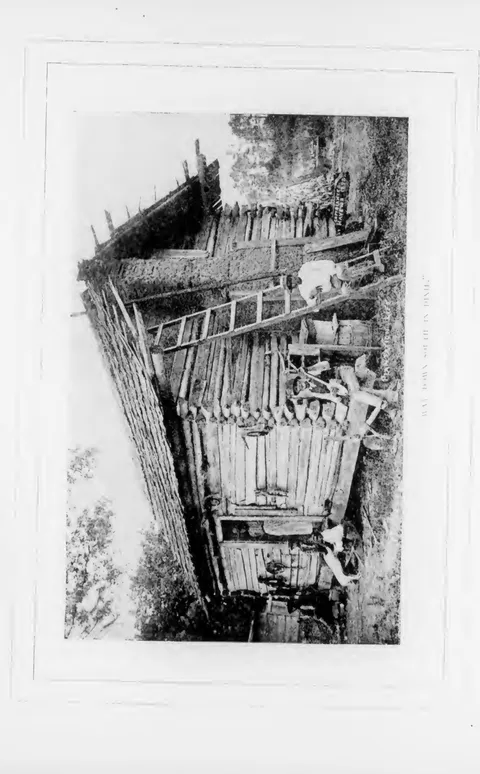
 Way Down South in Dixie 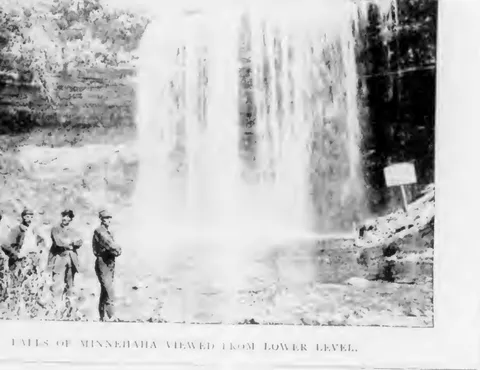 (opens in a new tab)
 Falls of Minnehaha Viewed from Lower Level 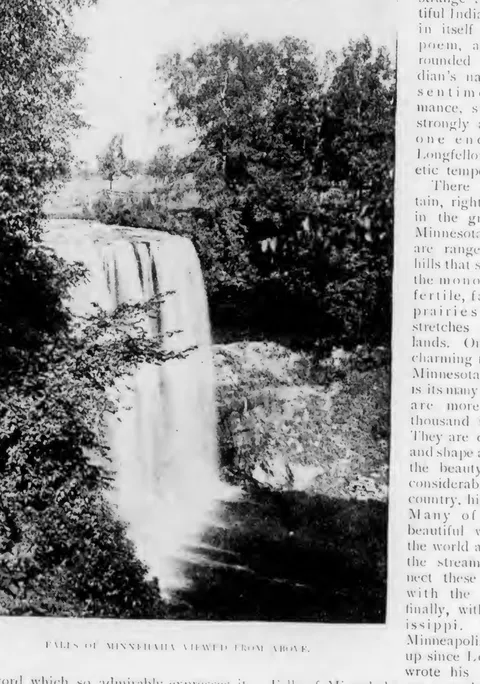 (opens in a new tab)
 Falls of Minnehaha Viewed from Above 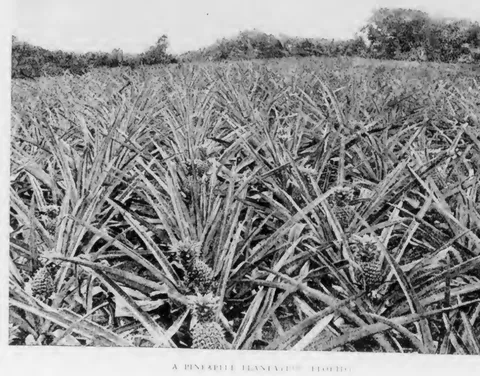 (opens in a new tab)
 A Pineapple Plantation, Florida 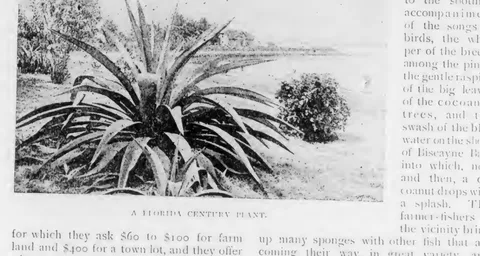 (opens in a new tab)
 A Florida Century Plant 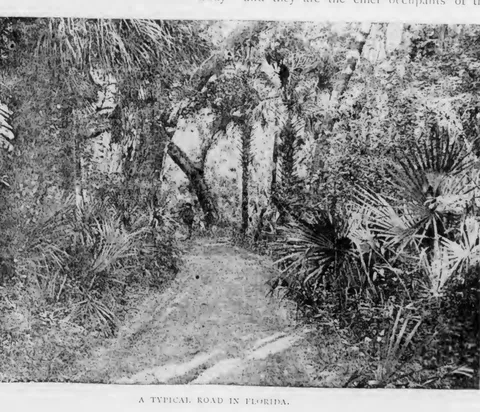 (opens in a new tab)
 A Typical Road in Florida 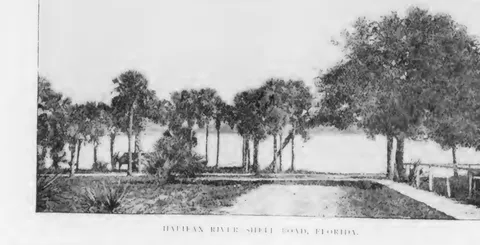 (opens in a new tab)
 Halifax River Shell Road, Florida
Mastheads 1
 (opens in a new tab)
 L.A.W. Bulletin and Good Roads Department
26 advertisements
 (opens in a new tab)
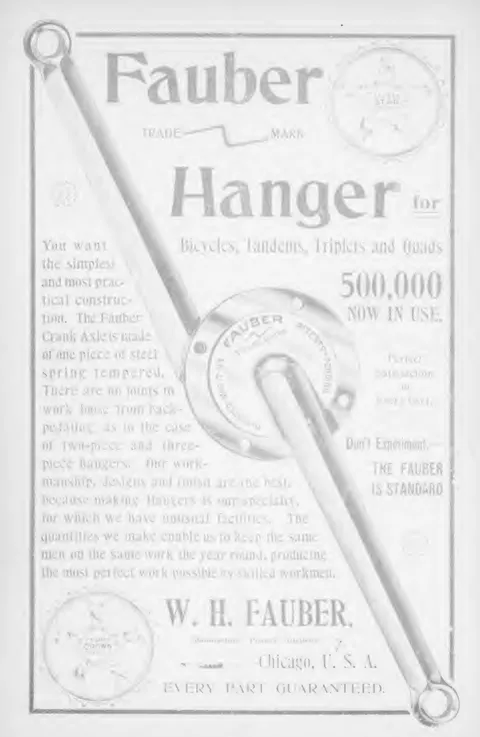
 Fauber Hanger 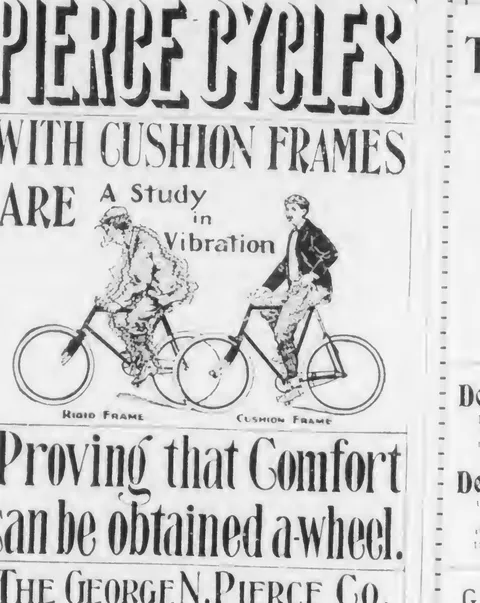 (opens in a new tab)
 Pierce Cycles with Cushion Frames 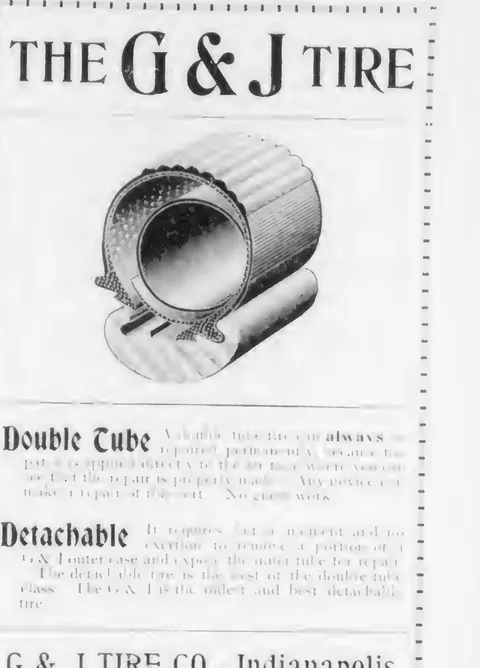 (opens in a new tab)
 The G. & J. Tire 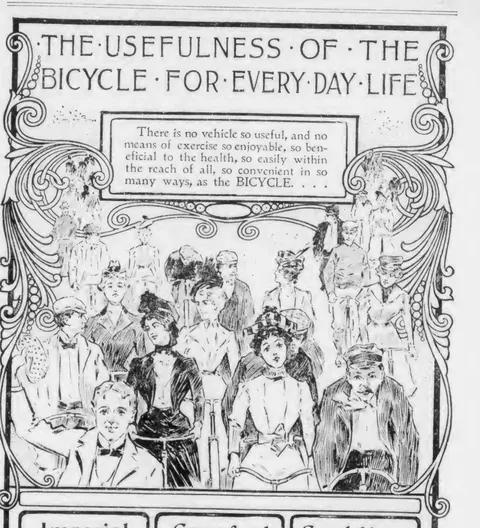 (opens in a new tab)
 The Usefulness of the Bicycle for Every Day Life  (opens in a new tab)
 A. W. Faber Pencils  (opens in a new tab)
 Krementz One-Piece Collar Button 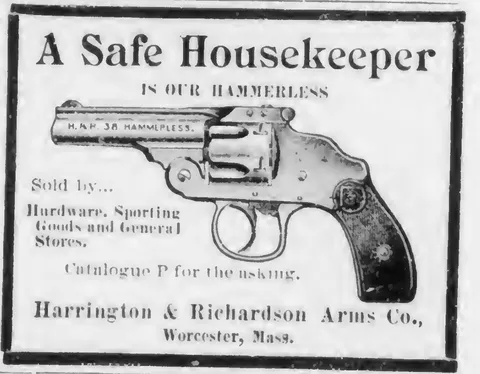 (opens in a new tab)
 A Safe Housekeeper 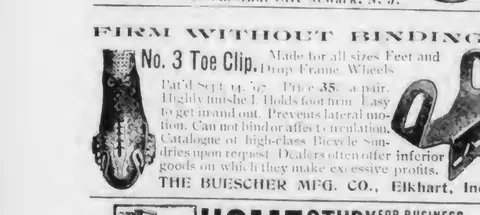 (opens in a new tab)
 No. 3 Toe Clip 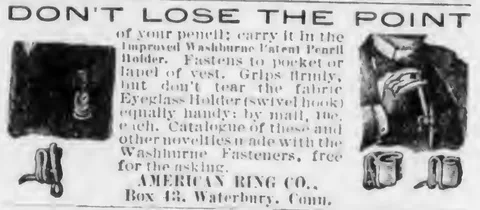 (opens in a new tab)
 Don't Lose the Point 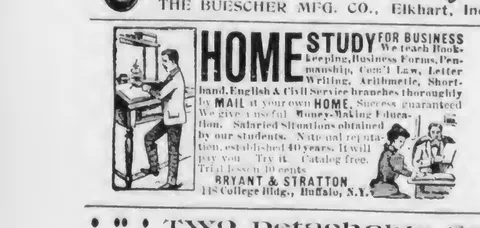 (opens in a new tab)
 Home Study 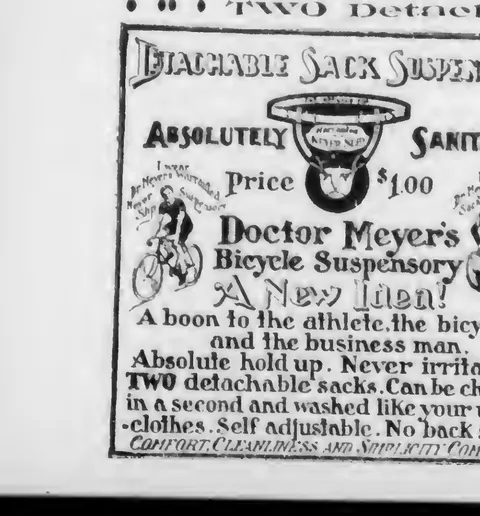 (opens in a new tab)
 Dr. Meyer's Bicycle Suspensory 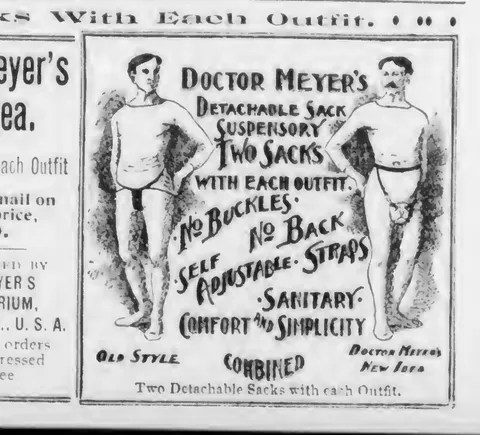 (opens in a new tab)
 Doctor Meyer's Detachable Sack Suspensory (Old Style / Combined) 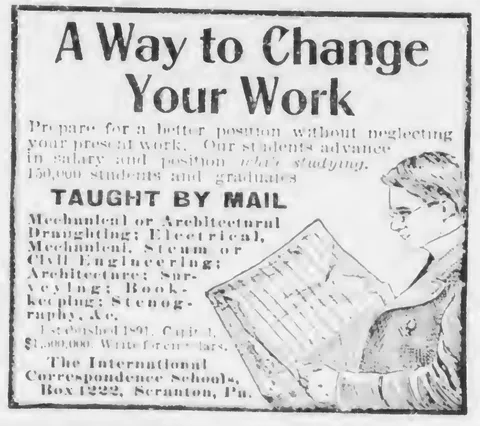 (opens in a new tab)
 A Way to Change Your Work 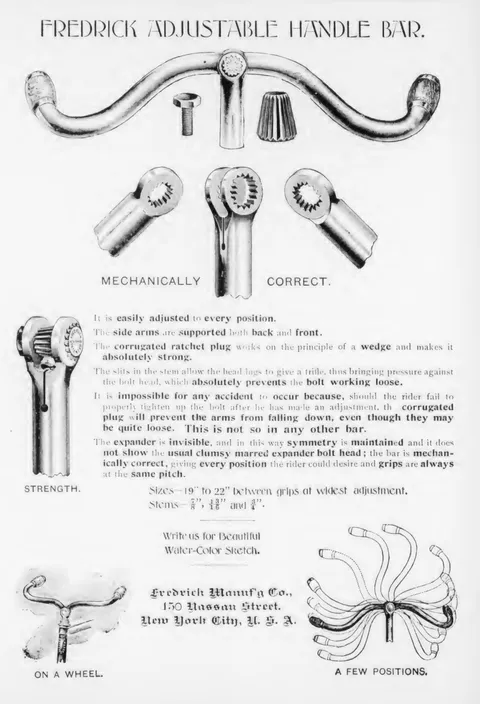 (opens in a new tab)
 Fredrick Adjustable Handle Bar 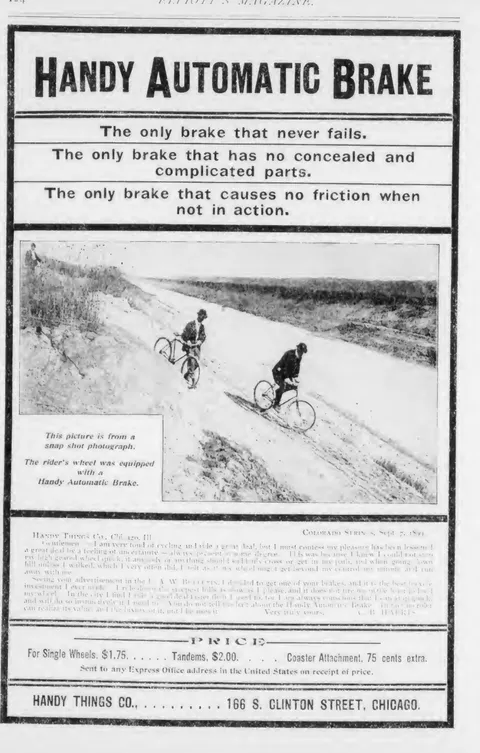 (opens in a new tab)
 Handy Automatic Brake 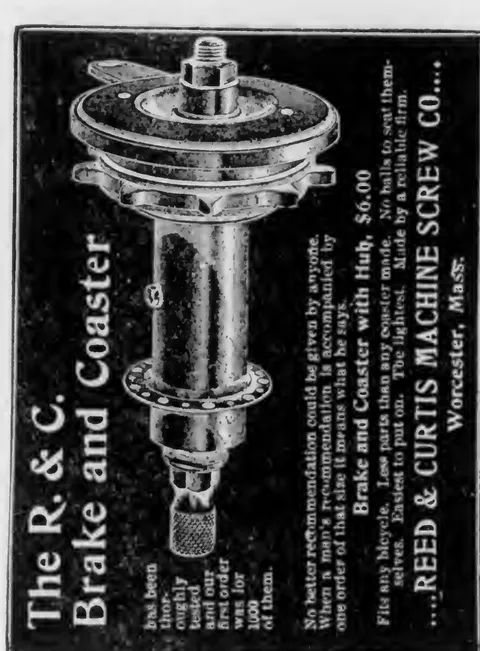 (opens in a new tab)
 The R. & C. Brake and Coaster 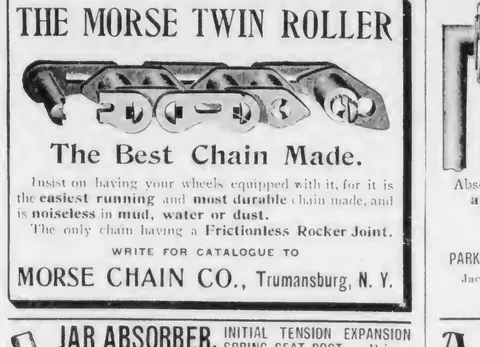 (opens in a new tab)
 The Morse Twin Roller 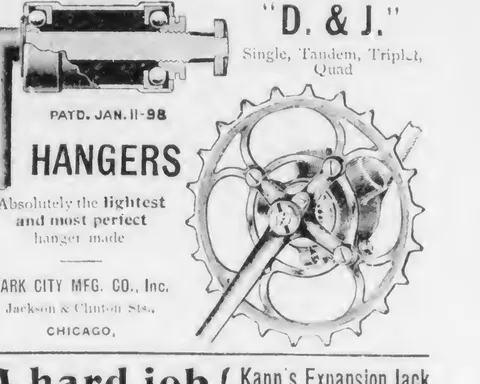 (opens in a new tab)
 "D. & J." Hangers 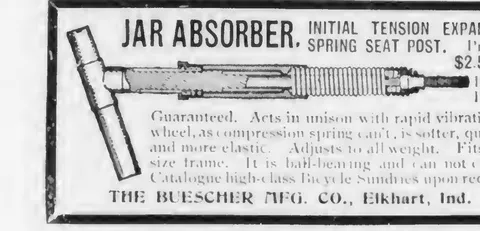 (opens in a new tab)
 Jar Absorber 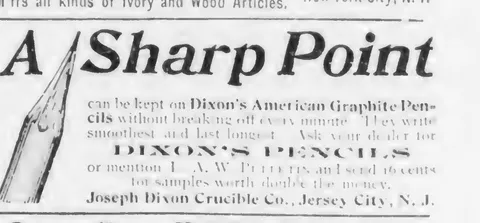 (opens in a new tab)
 A Sharp Point / Dixon's Pencils 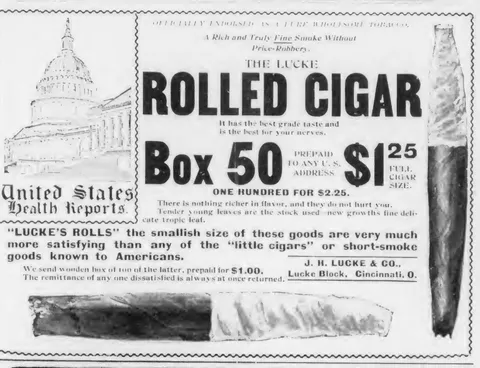 (opens in a new tab)
 The Lucke Rolled Cigar 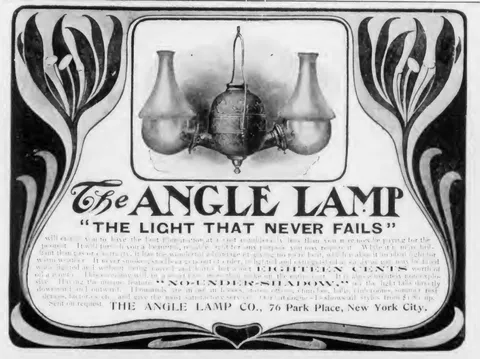 (opens in a new tab)
 The Angle Lamp - "The Light That Never Fails" 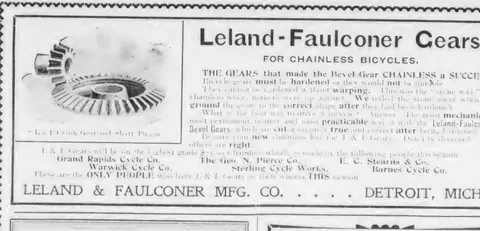 (opens in a new tab)
 Leland-Faulconer Gears 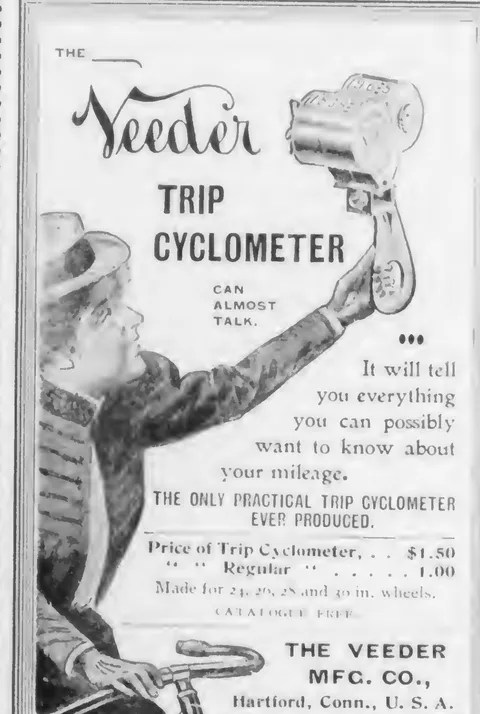 (opens in a new tab)
 Veeder Trip Cyclometer  (opens in a new tab)
 A Beautiful Pair of Lamps - Solar Lamps 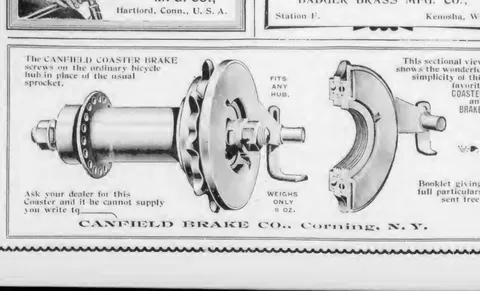 (opens in a new tab)
 The Canfield Coaster Brake