Vol 31, No 12
190170 articles55 images
Articles in this issue
- The monthly news department opening the May 1901 number (Old Series Vol. XXXI, New Series Vol. I, No. 12), collecting League, good-roads, legislative and trade notes under individual side-heads.
- A resolution of the League's Executive Committee will republish the L. A. W. Magazine as "Good Roads Magazine" from the June issue, with a fuller explanation promised on the editorial page.
- The judges of the magazine's $500 prize story competition have not yet reached a decision; a month's delay is preferred to a hasty award and the winners will not be announced until June 1st.
- After a mail vote of the National Assembly the Executive Committee instituted a life membership department at $10, exempting the member from further dues, but capped the issue of life tickets at 1,000.
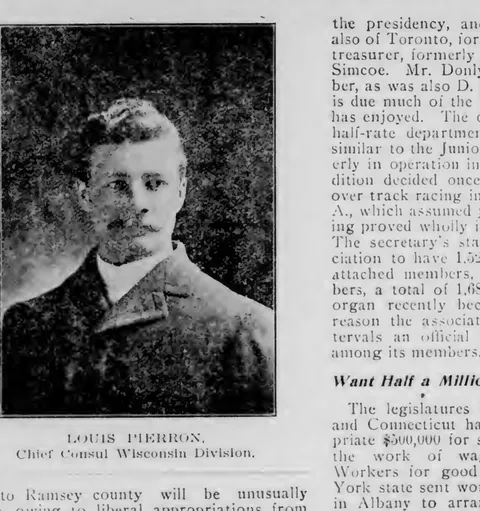
- Percy B. Champagne resigned as chief consul of the Wisconsin division after President Earle refused his proposal to wipe out division loan obligations, and Louis Pierron of Milwaukee succeeded him; in Illinois, Earle named Thos. F. Sheridan chief consul and Burley B. Ayres secretary-treasurer during a visit to Chicago.
- Minnesota's new cycle path law, modelled on those of New York and Ohio, applies only to counties of 50,000 population and legalises the bicycle tax already collected in Minneapolis; the St. Paul Cycle Path Association thinks it too late to collect this year.
- Massachusetts wheelmen welcome the State Supreme Court decision in W. H. Kenney vs. the town of Ipswich, holding a town responsible for injuries caused by defective highways where the rider was in the exercise of due care.
- At its Good Friday annual meeting in Toronto the C. W. A. elected A. E. Walton president and H. B. Howson secretary-treasurer, created a half-rate department for minors, resumed control of track racing in the Dominion, and reported 1,681 members.
- Good-roads workers are asking the New York and Connecticut legislatures for $500,000 each in state aid for wagon roads; at the Hartford hearing Highway Commissioner J. H. McDonald argued that only six Connecticut towns have ever refused the state appropriation.
- The McGillivray resolution to amend the Wisconsin constitution to permit state aid in wagon road building was defeated in the senate on March 27, the constitutional prohibition dating from fifty-three years earlier.
- A bill passed at Lansing fixes maximum wagon loads by tire width on roads built under the Bay county highway system, four tons for four-inch tires down to one and a half tons for narrower, with fines up to $25 and thirty days' imprisonment.
- The Massachusetts State Highway Commission's road-building methods will be demonstrated at the Pan-American Exposition, where civil engineer John McClintock of Boston has secured a 7,000 square foot concession for a model highway and municipal road plant.
- Col. H. M. Chittenden of the U. S. engineer corps has begun extending the Yellowstone National Park wagon road system to nearly 400 miles of crushed-stone highway serving the geyser basins, Yellowstone lake, the Grand Canyon and Tower Falls.
- The rural free delivery mail system now requires petitioners to show that their highways are in good condition year round, after deliveries were interrupted for up to seven days on forty routes in Iowa, seven in Minnesota, five in Wisconsin and several in Illinois.
- A measure making bicycle stealing larceny has become California law by limitation after the governor failed to veto it, closing the gap in states where the article stolen must be worth $35 to make the offence a felony.
- A Chicago Record-Herald item from Fort Dodge, Iowa, reprinted without comment: road traffic at a standstill in the mud, farmers unable to reach the city, and abandoned buggies stuck for miles around.
- The American Bicycle Company demands that E. C. Stearns, Herbert E. Maslin and Mrs. Alvis Van Wagenen of Syracuse cease competing manufacture, and notifies the Bretz Manufacturing Company over the Regal and Holland machines; also A. B. C. stock listed on the New York Stock Exchange, Harry Cassady's move to the Automobile & Cycle Parts Company, the upheld Curlin tire fluid patent, and the Shelby Steel Tube Company's sales offices.
- Major Taylor reached France on March 11 with trainer Buchner and, after losing his first European race to Arend and Ellegaard at Berlin's Friedenau track, beat them and Huber and Seidl on April 11; "Plugger Bill" Martin dominates the Australian path, and the International Cyclists' Union met at Alexandria, Italy.
- The month's racing was confined to the Panama Park training camp at Jacksonville and Prince's coliseums in California: Harry Elkes beat O. W. Brown over five miles, Walthour defeated Caldwell in a ten-mile paced match, and Crooks and Saunders won the motor tandem pursuit from Vetter and Mosher.
- A dated chronology of cycling events from February to April 1901, from "Plugger Bill" Martin's A. N. A. wheel race in Melbourne to Champagne's resignation in Wisconsin, the C. W. A. annual meeting, Taylor's Berlin races and W. R. Pitman's 9:15:00 motor-paced century in New York.
- A Flushing, Long Island story of John McBride of Manhattan, whose punctured tire was mended at McKenna's repair shop and yielded a $10 bill rolled tightly around a spoke, picked up on the road; McBride stood a treat for the shop.
- James H. Shipley's illustrated tour narrative of a ride from Dijon through Champagnole, Morez and the Col de la Faucille in the Jura to Geneva, then up the Arve valley by Sallanches and Chamonix beneath Mont Blanc to Martigny, with elevations, gradients and coasting notes throughout.
- Advice for 1901: a year of conservatism in cycling apparel, with dark colours and genteel styles for men, blue-black sack coat, dark stockings, golf-style cap, and shirt waists, Eton jackets and ankle-length dark skirts for women.
- Subtitled "Facts and Figures Worth Noting," this photographically illustrated survey draws on the New York Tribune and State Engineer Bond's report to tabulate the roads completed, under construction and planned under the Higbee-Armstrong law, with county-by-county mileage, cost and appropriation tables.
- An obituary of Thomas Sparrow, formerly of 89 Piccadilly and Knightsbridge, dead at 78: he introduced the bicycle to London over thirty years ago as agent to a Paris firm, opened a riding school and factory, and bore the expenses of the first Land's End to John O'Groats ride.
- An argument that the cushion frame is to the rigid frame what the pneumatic tire was to the solid, letting a rider cover fifty miles with less fatigue than twenty-five on a rigid wheel; closes with Bismarck's remark that the bicycle is the missing link between a pair of wings and a pair of boots.
- The magazine's general sporting department, covering base ball, golf, shuffleboard and miscellaneous athletics for League members under separate boxed heads.
- The National League opened April 18th, the American on the 24th and the Eastern League and Western Association on the 25th; the club membership of all four organisations is listed, from Baltimore, Boston and Chicago to Columbus, Dayton and Toledo.
- The American League's invasion of Baltimore and Philadelphia and its capture of forty-one former National League stars, McGraw, Robinson, McGinnity, Lajoie, Cy Young and others, against the National's signing of only seven American players.
- A roll of dishonour naming the eleven men who signed with American League clubs and then jumped back to the National for higher salaries, among them Emmet Heidrick, Robert Wallace, Roger Denzer, C. Mathewson and Wm. Dineen.
- The National League has rescinded the rule permitting a pitcher to hit a batsman without allowing him first base, and voted to move the batter's box lines to nine inches from the plate to stop batsmen stepping into slow pitches.
- J. J. Dempsey, secretary of the Toledo Golf Club, has circularised golf club secretaries proposing a national body to rival the United States Golf Association, after the U. S. G. A. refused the Ohio club allied membership because it plays over a public links at Ottawa Park.
- The Intercollegiate golf tournament will be played on the Country Club links at Atlantic City in the week of May 7th under a new scoring system, with Yale and Harvard each holding two wins on the Ardsley Club team trophy.
- George R. Thorne of the Midlothian Country Club has been elected president of the Western Golf Association, with William Holabird of Glen View vice-president, E. P. Martin of Belmont secretary and Alan Leroy Reid of Chicago Golf Club treasurer.
- The Metropolitan Golf Association's handicap committee of A. H. Larken, Mortimer M. Singer and A. DeWitt Cochran classified over 1,500 golfers on April 18th, making W. J. Travis scratch man and leaving 217 eligible for the championship.
- An argument that golfers are among the sportsmen most indebted to the wheel: since country clubs are sited well away from trolley and railway lines, the bicycle is the most convenient and economical vehicle for reaching the links in New Jersey, Long Island and Westchester.
- A description of the indoor game as played in Brooklyn, Paterson, Newark, Philadelphia and Buffalo on 21-foot sanded boards, with G. Ed Morris of Newark rated the greatest shuffler of the past fifteen years; the game's chief fault is the lack of uniformity in boards and weights.
- A short department of general athletic notes covering rowing, yachting and college sport.
- The projectors of the American Henley at New London have decided against a regatta this year and will hold the first in 1902, with Harvard the scheme's heart and soul and Yale favourable.
- The Glasgow exhibition has invited American yachtsmen to race on the Clyde against a British fleet including Shamrock I and Shamrock II on July 6th and August 6th, 1901, for a prize of 500 pounds sterling.
- The University of Minnesota is planning a university-owned railway car for its baseball, football, track, tennis, debating and glee club parties, prompted by the car the glee and mandolin clubs enjoyed and by Iowa's water-related loss of a football championship.
- A humorous account of the writer witnessing a senior newspaper editor of 52 learning to ride a wheel in a secluded suburban spot, both editor and machine ending up laid up for a week's repairs.
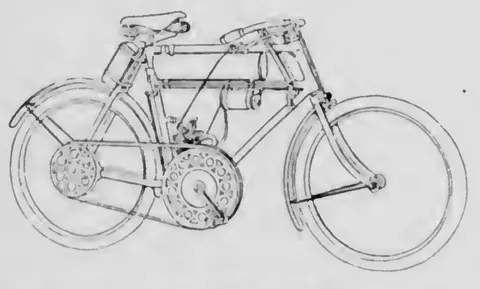
- Four new foreign motor bicycles are illustrated and described: E. Arnault's machine and the Chapelle & Chevallier, both shown at the Salon du Cycle in Paris, the Excelsior of Bayliss, Thomas & Co. of Coventry, and the Minerva of British patent No. 2,323 granted to H. Luthi; with notes on the coming Jacquelin-Taylor meeting of May 16th.
- Reprints from old L. A. W. Bulletins and the Referee, including Samuel L. Clemens (Mark Twain) taking a header while riding with the Rev. Joseph H. Twichell in Hartford, the Massillon Bicycle Club's ten-mile championship medal decided by dice, Squire Jones's mule and Bugville Centre, and Bertie Banks racing an ostrich at the Nebraska fair.
- A New York exporting house representative reports that cycling is far and away the most popular outdoor sport in South America, at its height in the larger cities of Brazil and the Argentine, with Buenos Ayres perhaps the greatest cycling centre on the continent.
- The lead editorial on the masthead page announces that from June 1st the L. A. W. Magazine will appear monthly as "The Good Roads Magazine," still the League's official organ but broadened to serve the good roads movement, with more pages and illustrations at fifty cents a year; followed by short unheaded editorial paragraphs on King Edward's return to the wheel, the Wisconsin senate, the New York bell ordinance and the Chicago-Minneapolis cycle path project.
- Max E. Peltzer's ten-movement course of physical culture for men without apparatus, with sections on exercises, bathing and dieting, reprinted from Mind and Body, Chicago, at the author's request.
- The League of American Wheelmen's official section, running from Secretary Abbot Bassett's column through the rosters of officers and committees, executive committee minutes, touring and division notices, membership records and members' correspondence.
- Secretary Abbot Bassett's rambling column on renewals and the life membership scheme intended to clear the divisions' $6,000 of debt, the revival of Illinois under Sheridan and Ayres, the Chicago Athletic Club as League headquarters, the Transportation Committee and the two good roads trains, the Boston wheelmen's Patriots' Day run over the Paul Revere route to Lexington and Concord, the decline of wheeling blamed on the trolley car, and the Pioneers' dinner at Buffalo.
- The League's national officers: President H. S. Earle of Detroit, First Vice-President George C. Pennell of New York City, Second Vice-President W. A. Howell of Rockville, Treasurer J. C. Tattersall of Trenton and Secretary Abbot Bassett of Boston.
- Postoffice addresses of the chief consuls and secretary-treasurers of every division from Colorado and Connecticut to West Virginia and Wisconsin, to whom members should apply for application and renewal blanks and League literature.
- The League's consuls abroad, including Joseph Pennell in London, Paul Oeker in Paris, Friedrich Schleicher in Duren, Ercole Abrate at Turin, Otto Mayer in Vienna, Raisa Earl in Tokio and Joan Rahusen in Amsterdam.
- Membership of the executive and finance, membership, rights and privileges, rules and regulations, highway improvement and transportation committees, chaired respectively by Edw. N. Hines, Herbert W. Knight, Thos. L. Pogue, Chas. T. Harrison and Burley B. Ayres.
- The press committee under Geo. L. McCarthy, the side path committee under Dr. C. H. Hunter of Minneapolis, and the Pan-American Exposition committee under C. Lee Abell of Buffalo.
- Minutes of a mail vote dated Detroit, April 5, 1901, resolving that the treasurer credit any state division's loan account with twenty dollars for each life membership accompanied by the ten dollar fee until the loan is wiped out; carried by Earle, Pennell and Howell.
- Chairman George M. Schell sets out the seven-man national touring committee and the territory assigned to each, Schell, Alonzo D. Peck, W. S. Bull, L. W. Ryland, W. C. Munro, Carl E. Robinson and A. M. Welles, and lists the thirteen through routes so far prepared, from New York to Chicago to Chicago-Salt Lake City.
- A. M. Meserole, chairman of the New York state division road book committee, corrects the published route for riders heading to the Pan-American Exposition, revising the Syracuse directions and the cinder path through Solvay, Belle Isle, Amboy, Warners, Ionia and Jordan to Weedsport; A. D. Peck adds advice on the Boston-Albany portion.
- Corrections and suggested route changes sent in to the national touring committee for members riding to the Pan-American Exposition, including De Lancey Watkins on the New York-Buffalo trip, the Scotia cycle path near Amsterdam, H. L. Jewett of Bethlehem on the Point Pleasant to Easton and Water Gap roads, and F. B. Robinson of LeRoy on the Mt. Morris-Caledonia-Batavia cinder path.
- Chief Consul C. W. Small reports poor compliance with the state guide board law and asks every member to notify him of any place where a guide board is needed, warning that legal action against delinquent towns may follow.
- The Indiana Division has several hundred copies of its leather-bound, gold-stamped road book giving correct routes over all the roads of the state, available at 25 cents each from secretary-treasurer James A. Allison, 121 West Georgia street, Indianapolis.
- Chief Consul Chas. W. Mears appoints additional local consuls from Cleveland on April 11, 1901: Robert Reed at Delaware, F. B. Craytor at North Kingsville and L. P. Chapman at Oberlin.
- The division's official hotel list, giving a 10 per cent discount and quoting rates at houses from the Vincent House in Albany and Bick's Restaurant in Brooklyn to the Prospect House at Niagara Falls, the Edison at Schenectady and the Wilton House.
- A statement of the League's objects and member benefits: legislative work for good roads and wheelmen's rights, the hotel and consul systems, repair shop discounts, road books and maps, reciprocal C. T. C. membership giving free entry of cycles into France, Germany and other continental countries, and the arrangement with the Canadian government on customs duty.
- The rules of the $10 life membership and the numbered roll of those who have taken it out, headed by Horatio S. Earle of Detroit, Geo. C. Pennell, W. A. Howell and Abbot Bassett, with a schedule showing 79 life members distributed across the divisions, New York leading with 20.
- The full text of Chapter 285, an act providing for state roads and their improvement, approved March 22: towns may petition county commissioners to designate a state road and receive up to $100 a year in state aid, with $15,000 appropriated for 1902.
- Clubbing rates on periodicals supplied through Abbot Bassett at 221 Columbus avenue, Boston, from Ainslee's, the Atlantic Monthly and Bicycling World to Cycle Age, Harper's, Scribner's and the Wide World Magazine.
- A price list of pocket road maps in covers for the touring season, covering Maine, New Hampshire, Vermont, Massachusetts, Rhode Island, Connecticut, New York, New Jersey, Pennsylvania, Nova Scotia and New England cycling routes, with orders to Abbot Bassett in Boston.
- Letters to the editor: Harvey Iredell of New Brunswick, N. J., corrects the April issue on his office; W. G. Reed of Washington compares League life memberships with his college alumni association's fund; Chas. A. Conner of Philadelphia urges President Earle's road train be at Buffalo for the August national meet; and C. Lewis of Baltimore argues at length for a strong central organisation on the model of the Touring Club of France.
- The trade department's notes on the Hartford Rubber Works Company's "Few Words; Many Truths" booklet, the E. R. Thomas Motor Company's Auto-Bi at Buffalo, chainless and cushion-frame Columbias, Rambler bevel-gear chainless machines, Cleveland and Featherstone bicycles, Velox pedals at a dollar to League members, the Morse twin roller chain and the G. W. Cole toeclip.
- The rival claims to the safety bicycle are set out: George Shergold of Gloucester, whose machine is exhibited at the Gloucester Cycle Company and was fitted with rubber tires in 1877; Harry Bate of Southend, who patented in October 1876; and S. Johnson of Fulham, who claims 1870 and a first medal in England, and encloses a letter in which Bate yields him the inventorship.
Images in this issue 55 pictures from 27 pages
Illustrations 5
 (opens in a new tab)
 Arnault motor bicycle illustration 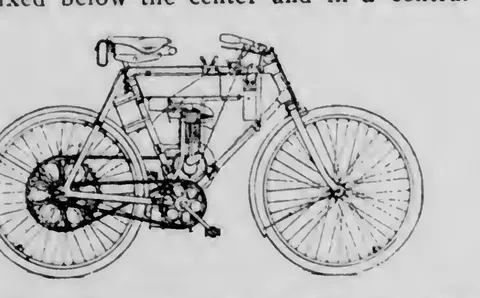 (opens in a new tab)
 Excelsior motor bicycle illustration 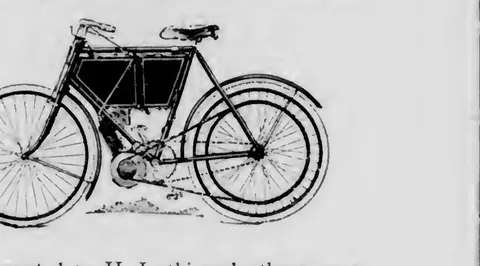 (opens in a new tab)
 Minerva motor bicycle illustration 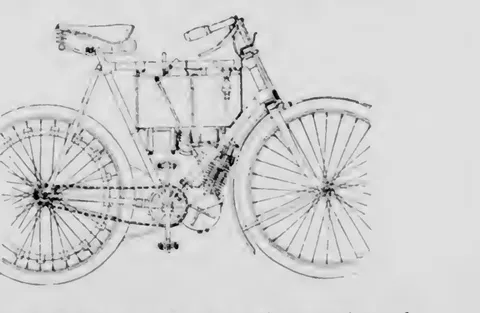 (opens in a new tab)
 Minerva motor bicycle illustration, detail view  (opens in a new tab)
 Hartford Rubber Works cyclist illustration
Photographs 8
 (opens in a new tab)
 Louis Pierron portrait  (opens in a new tab)
 F. A. Amborn portrait 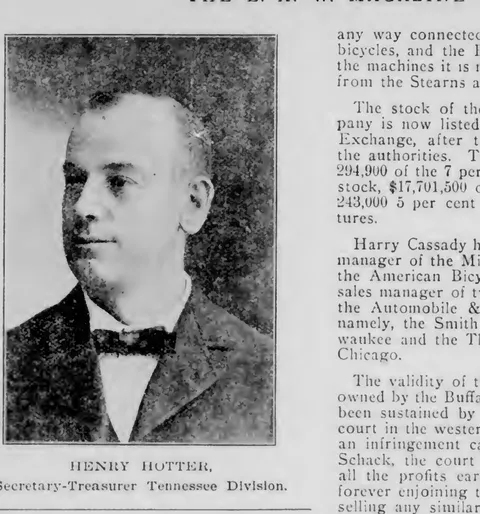 (opens in a new tab)
 Henry Hotter portrait 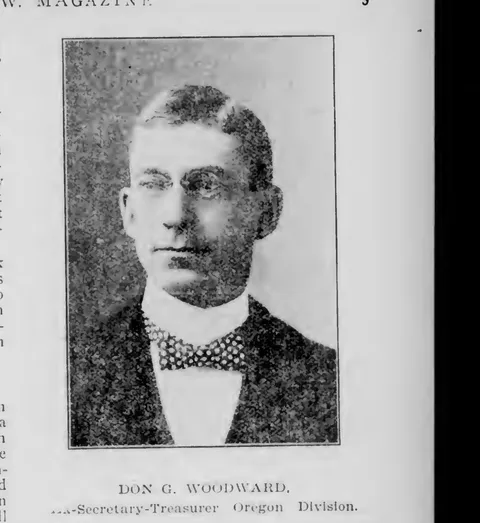 (opens in a new tab)
 Don G. Woodward portrait 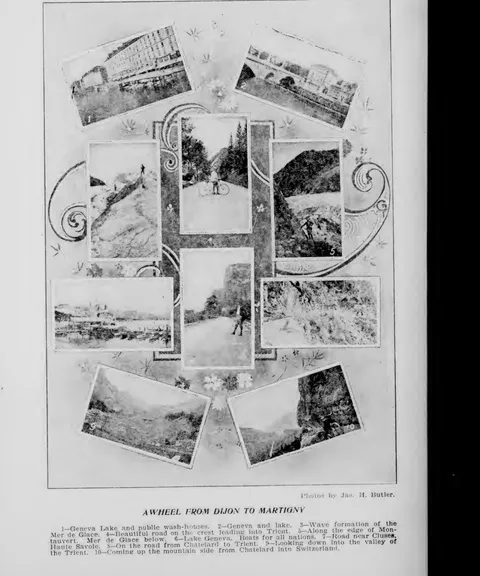 (opens in a new tab)
 Awheel from Dijon to Martigny photo plate 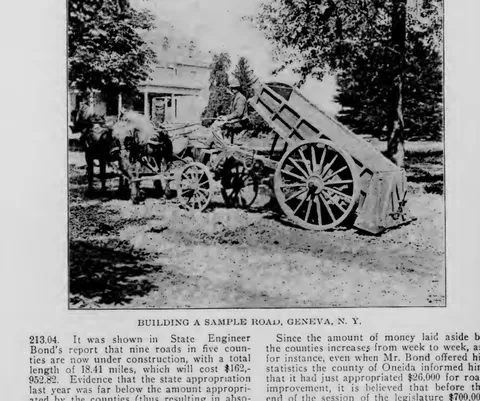 (opens in a new tab)
 Building a sample road, Geneva, N.Y. 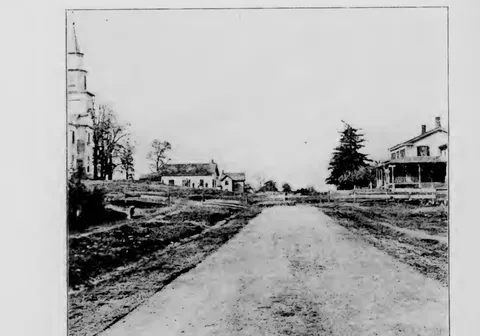 (opens in a new tab)
 Section of state aid road, Monroe County, N.Y. 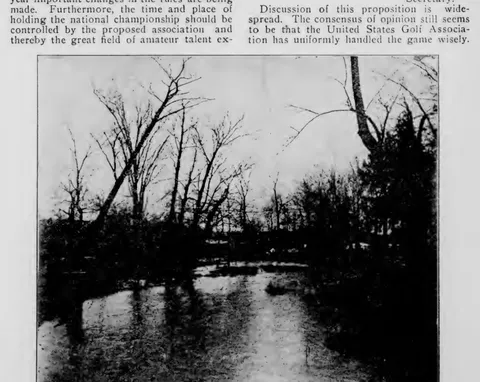 (opens in a new tab)
 Scene on Three-Mile Creek, west of Oswego, N.Y.
Mastheads 2
 (opens in a new tab)
 L.A.W. Magazine cover masthead  (opens in a new tab)
 L.A.W. Magazine interior nameplate
40 advertisements
 (opens in a new tab)
 Hartford Tires advertisement  (opens in a new tab)
 Adams' Pepsin Tutti Frutti advertisement  (opens in a new tab)
 Pierce Cycles and Pan-American Special advertisement 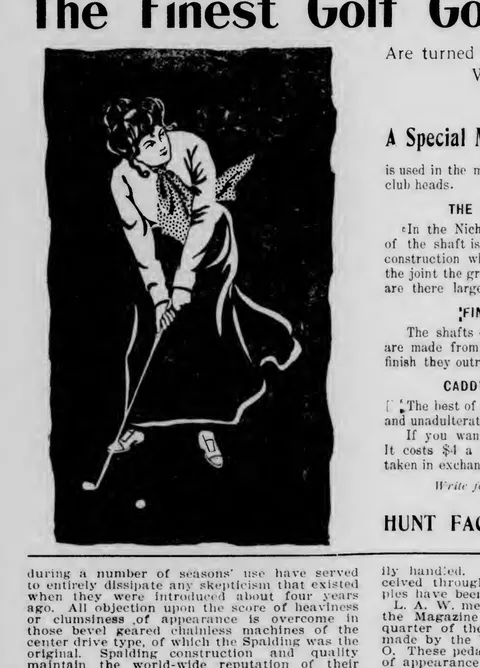 (opens in a new tab)
 Hunt Factory golf goods advertisement  (opens in a new tab)
 Morrow Coaster Brake advertisement  (opens in a new tab)
 Robinson's Bath Cabinet advertisement 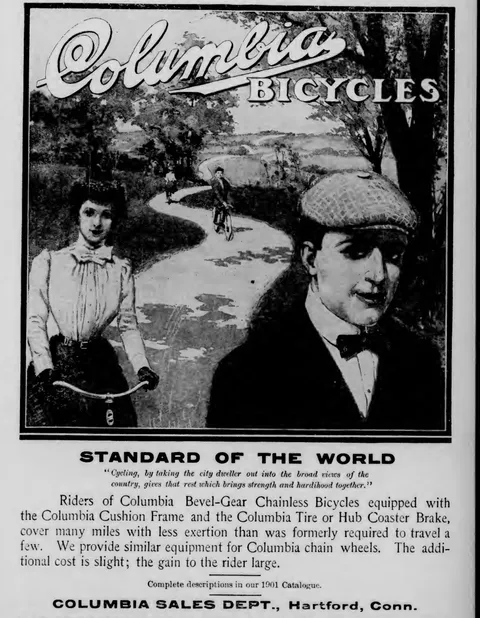 (opens in a new tab)
 Columbia Bicycles advertisement 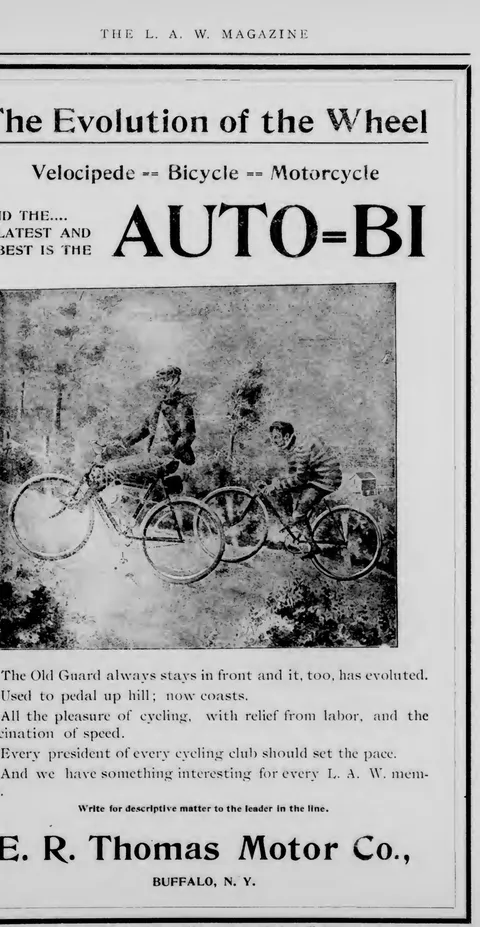 (opens in a new tab)
 E. R. Thomas Motor Co. 'Auto-Bi' advertisement 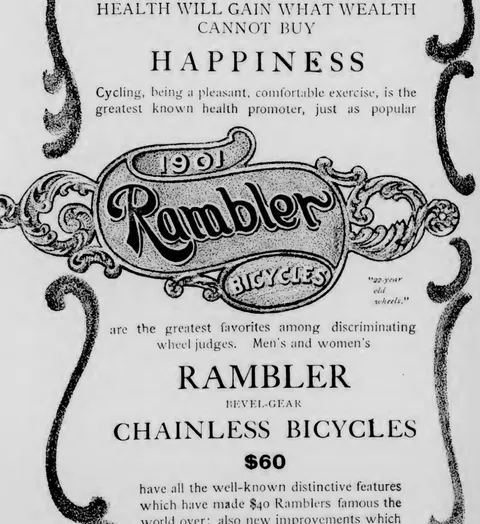 (opens in a new tab)
 1901 Rambler Chainless Bicycles advertisement 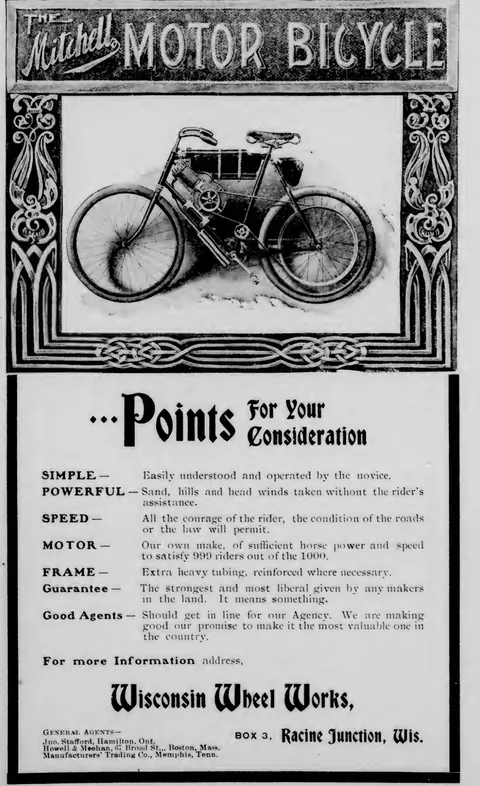 (opens in a new tab)
 Mitchell Motor Bicycle advertisement 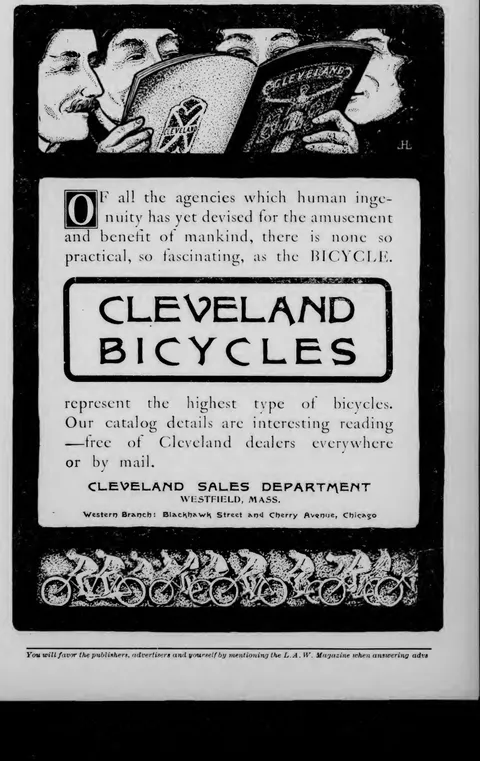 (opens in a new tab)
 Cleveland Bicycles advertisement 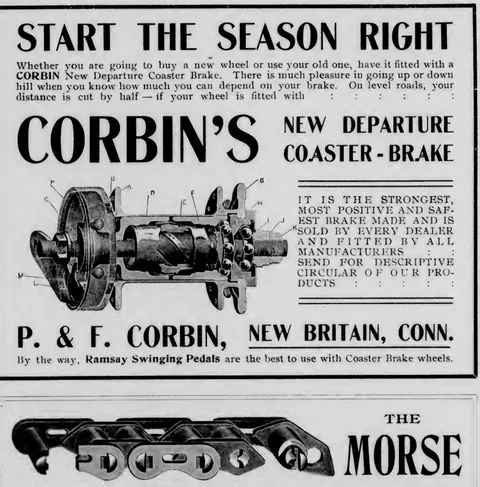 (opens in a new tab)
 Corbin's New Departure Coaster-Brake advertisement 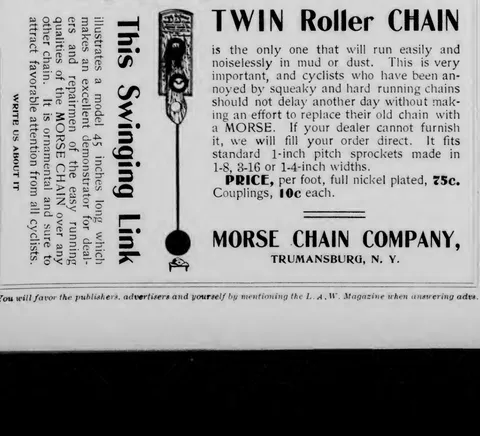 (opens in a new tab)
 Morse Twin Roller Chain advertisement 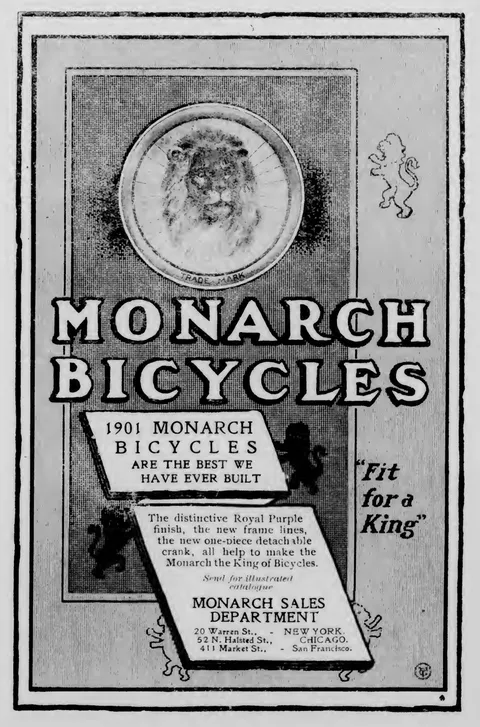 (opens in a new tab)
 Monarch Bicycles advertisement 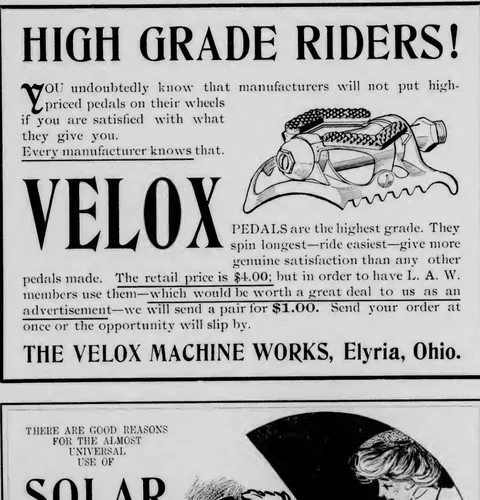 (opens in a new tab)
 Velox Pedals advertisement 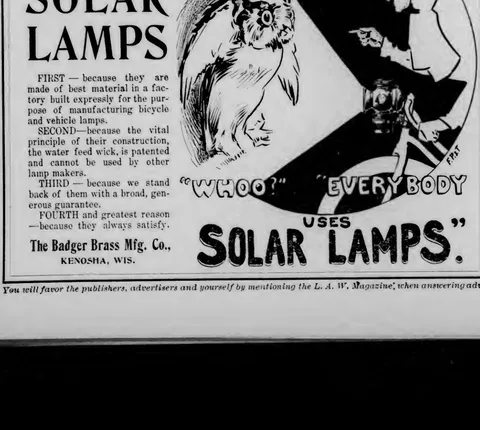 (opens in a new tab)
 Solar Lamps advertisement 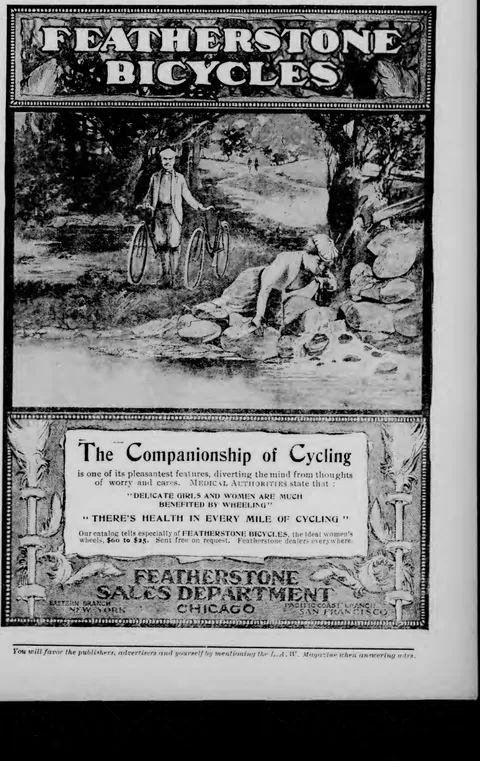 (opens in a new tab)
 Featherstone Bicycles advertisement 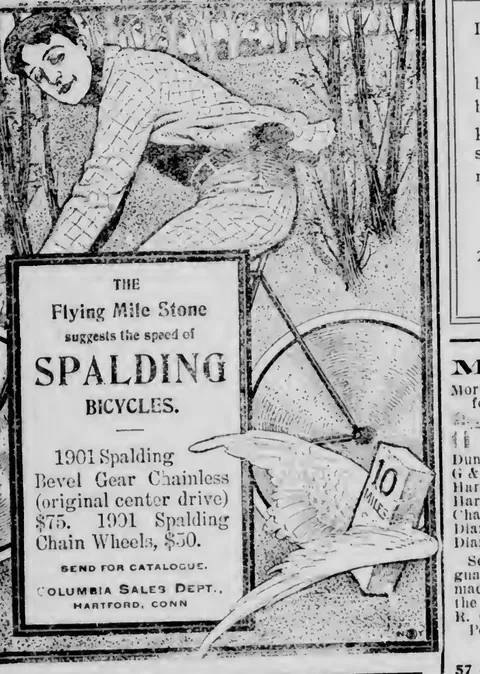 (opens in a new tab)
 Spalding Bicycles 'Flying Mile Stone' advertisement  (opens in a new tab)
 Ideal Spring Seat Post advertisement 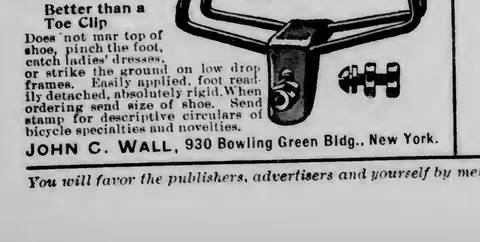 (opens in a new tab)
 A Sole Clip advertisement  (opens in a new tab)
 Mead Cycle Co. bicycle advertisement  (opens in a new tab)
 D. & J. Hangers advertisement  (opens in a new tab)
 Bundy gas lamp advertisement 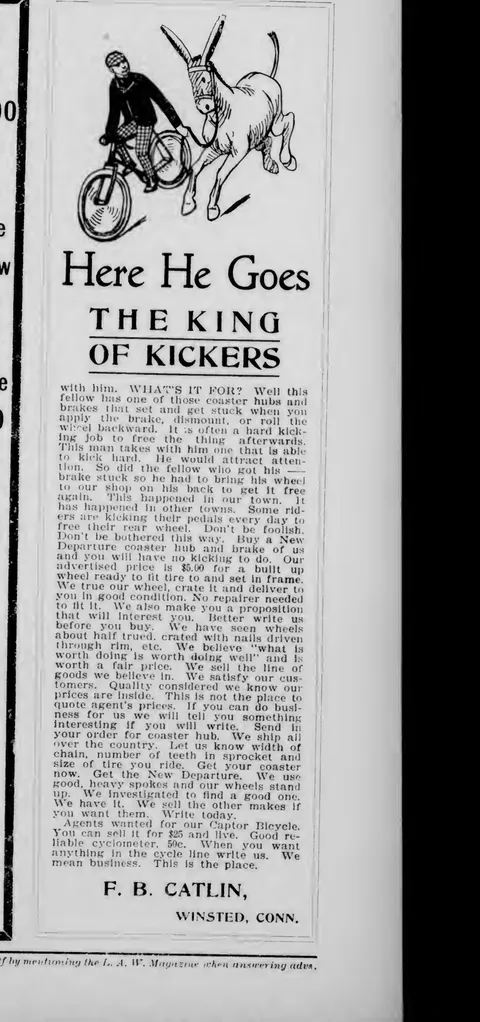 (opens in a new tab)
 'Here He Goes, The King of Kickers' advertisement 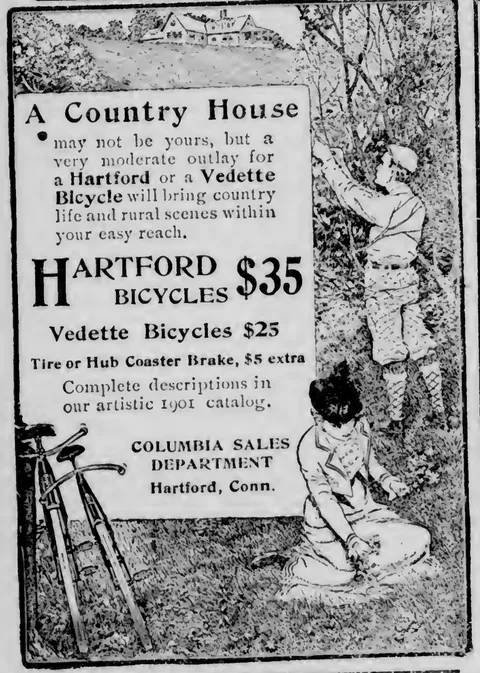 (opens in a new tab)
 Hartford and Vedette Bicycles advertisement 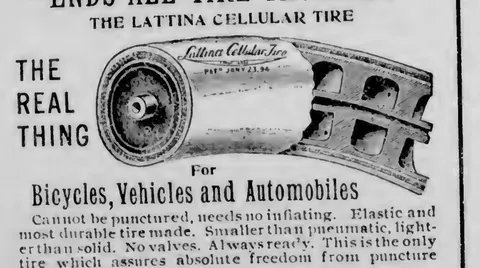 (opens in a new tab)
 Lattina Cellular Tire advertisement 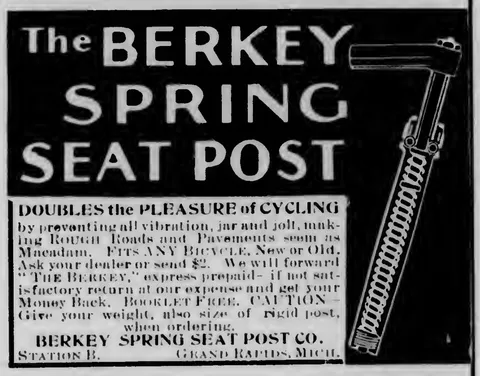 (opens in a new tab)
 Berkey Spring Seat Post advertisement  (opens in a new tab)
 Bernasco Saddle advertisement 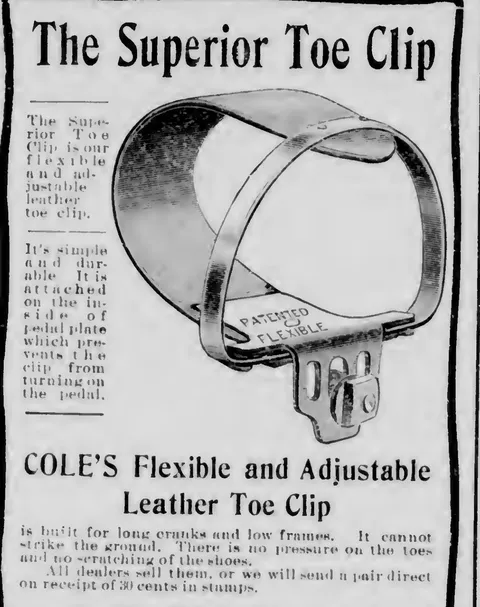 (opens in a new tab)
 Cole's Superior Toe Clip advertisement  (opens in a new tab)
 Fox Typewriter advertisement 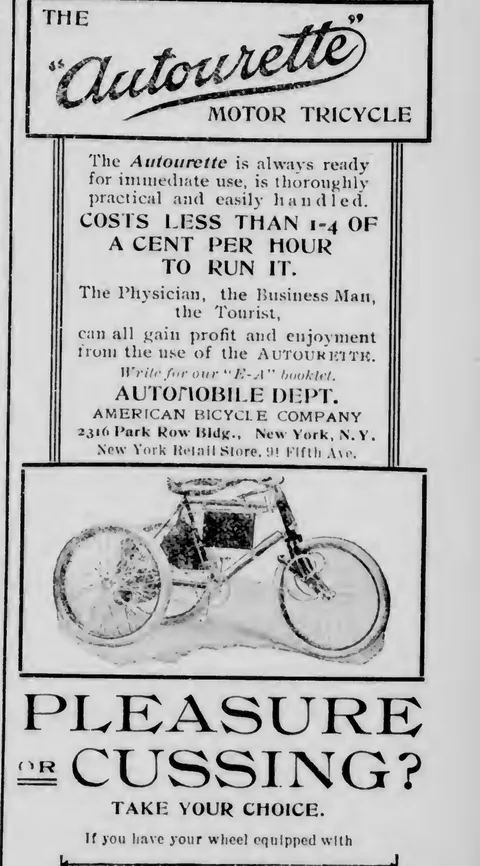 (opens in a new tab)
 Autourette Motor Tricycle advertisement 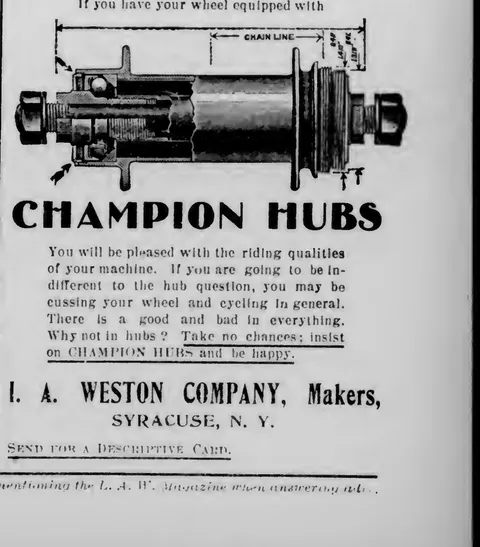 (opens in a new tab)
 Champion Hubs advertisement 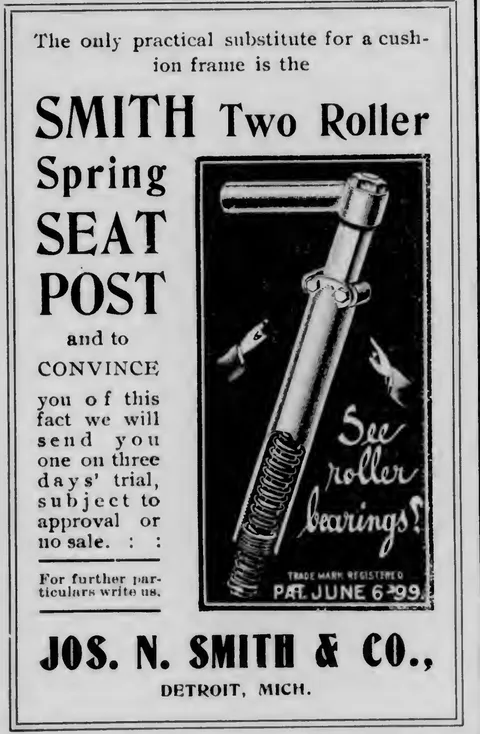 (opens in a new tab)
 Smith Two Roller Spring Seat Post advertisement 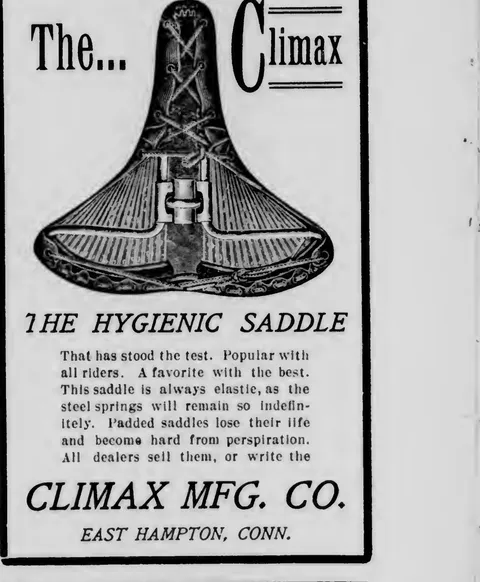 (opens in a new tab)
 Climax Hygienic Saddle advertisement 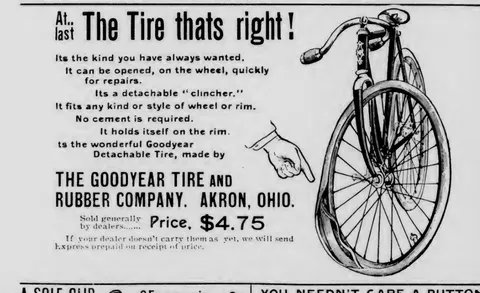 (opens in a new tab)
 Goodyear Detachable Tire advertisement 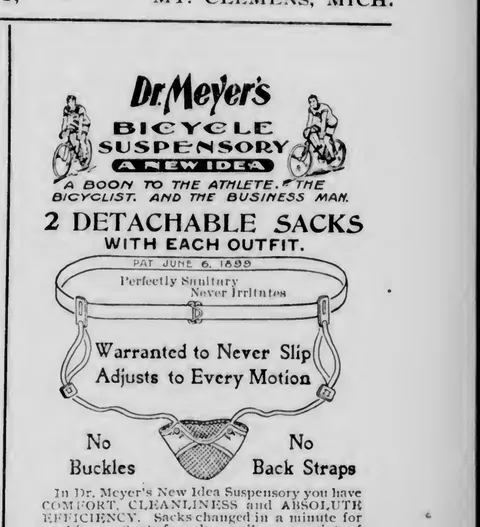 (opens in a new tab)
 Dr. Meyer's Bicycle Suspensory advertisement 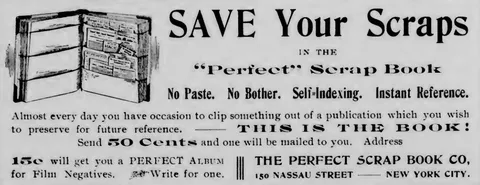 (opens in a new tab)
 Perfect Scrap Book advertisement 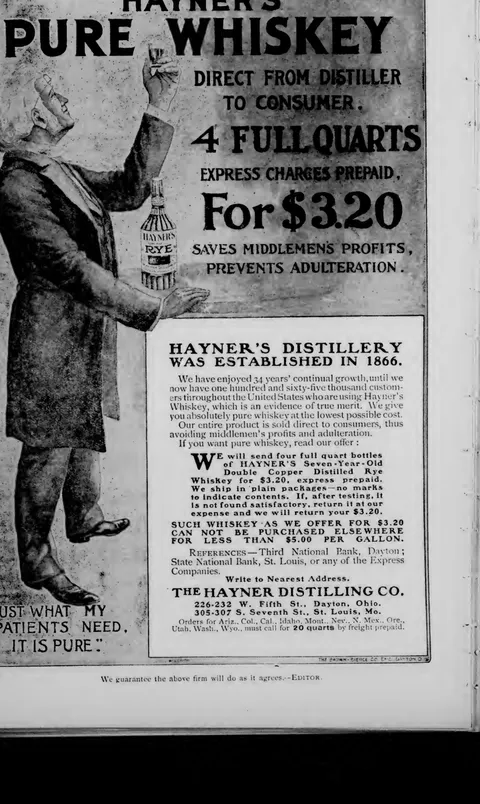 (opens in a new tab)
 Hayner's Pure Whiskey advertisement 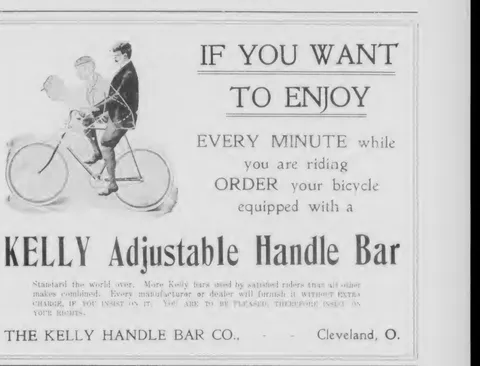 (opens in a new tab)
 Kelly Adjustable Handle Bar advertisement 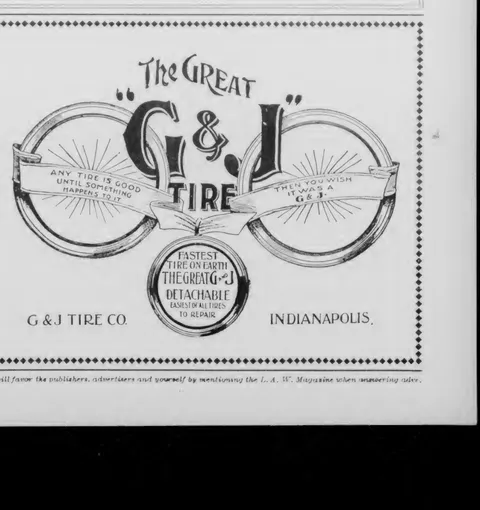 (opens in a new tab)
 G & J Tire advertisement