Vol 31, No 3
190044 articles38 images
Articles in this issue
- The magazine's monthly editorial survey of League and cycling affairs, opening the August 1900 number (Old Series Vol. XXXI, New Series Vol. 1, No. 3) and running under side-heads through the Milwaukee national meet, Michigan's good roads work, side paths, racing and the trade.
- Quotes the good roads plank inserted in the Republican national platform by the Philadelphia convention that nominated William McKinley of Ohio and Theodore Roosevelt of New York, himself an L. A. W. member, and complains that it merely recommends the subject to the people and the state legislatures instead of pledging action. The Democrats at Kansas City ignored roads altogether.
- On the full bench of the Massachusetts Supreme Court declaring the bicycle a "machine" and not a carriage, so that cities and towns need not keep streets in condition safe for riders. The note compares it with the Michigan case in which a Mrs. Leslie sued Grand Rapids over a badly paved street, and observes that more than a hundred decisions have held the bicycle a vehicle.
- The League's twenty-first annual meeting at Milwaukee was poorly handled by the Citizens' Business League, which failed to secure the usual reduced fares on Eastern and Central railroads, failed to advertise, and failed to use the local newspaper correspondents; President Sams had to issue a statement placing the blame. A. D. Meiselbach's efforts and the social events are credited.
- When the expected Eastern delegations failed to arrive, Milwaukee writers telegraphed the country over that the meet was a fizzle, so riders in Chicago, Minneapolis, St. Paul and other Western Passenger Association cities, who did have reduced rates, stayed away. Talk at Milwaukee favoured Buffalo for next year and combining the summer meet with the National Assembly.
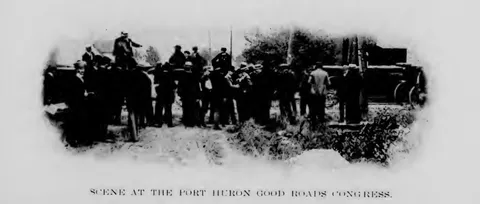
- Chief Consul H. S. Earle's Good Roads Congress and L. A. W. Festival at Port Huron included a mile of sample road built by a government expert and addresses by United States and Canadian officials. One result was the Michigan division's advance from sixth to fifth in membership rank, passing Ohio; a photograph of the scene at the congress illustrates the page.
- President Sams has had to alter the personnel of the Revision Committee elected by the Assembly at Philadelphia, finishing only days before he left for Milwaukee. Among the ideas the committee must sift is the discontinuance of state divisions as now constituted in favour of nominal state organizations governed more closely by the national body.
- The L. A. W. consulate of Pawtucket, R. I. keeps the principal thoroughfares clear of glass, tacks and other substances liable to injure pneumatic tires by employing a man with a push cart; the issue carries a photograph of the employee, his coat lettered "I am working for the L. A. W."
- Side path activity continues unchecked: the Connecticut division will press the next legislature for a law like those of New York and Ohio, Suffolk County has passed Monroe for the honour of leading side-path county in New York, and Ohio alone lags for want of organized agitation, blocking the projected New York-Chicago path.
- John N. Campbell of New York City rode over a boy on Berry Street, Brooklyn, breaking his leg; when the parents demanded money he refused and was arrested for criminal negligence. The L. A. W. defended the case and secured his honorable discharge.
- Chief Consul Geo. D. Locke was removed in June by President Sams on the protest of Chicago members; until the regular election in November the Illinois division is in the charge of the national executive committee, represented in Chicago by Walter Faraday.
- The Maine division has begun war on municipal officers who ignore the state law requiring guide posts at all crossroads. Chief Consul Small has brought suit against the mayor and aldermen of South Portland to recover the statutory penalty, citing the unmarked junction of the Rigby and Sacco roads.
- A letter from L. A. W. member No. 112,739 asking why the magazine discriminates against women century riders, arguing that endurance tests are unwise for either sex, that riding is the easiest of exercises, and urging a neat bloomer costume in place of the present long, full divided skirt.
- The editor's reply to the previous letter: society forgives a man but never a woman, and a woman who indulges in century record riding forfeits her womanhood in the opinion of men, ranking with the jockey and the ball player. Readers are invited to take up the question of a cycling dress.
- The N. C. A. grand circuit has opened; the month's feature was the middle-distance riding of John A. Nelson, a 19-year-old Swede of Chicago. An American team of Tom Cooper, Floyd A. McFarland and Orlando L. Stevens was organized for the I. C. U. world's championships at Paris, and Jacquelin won the Grand Prize of Paris from Momo and Tommaselli.
- Altoona, Pa., with fifty thousand people and only twenty policemen, adopted the plan of Dr. G. A. Ickes of the common council: the mayor appoints experienced riders as special policemen in squads of six, one to each quarter of the city, serving without pay other than witness fees.
- Union Cycle Manufacturing of Highlandville, Mass. and the Chicago Tube Company have gone to the wall, Julius Andrae & Sons of Milwaukee placed itself at the mercy of its creditors, and Louis H. Manson of the Manson Cycle Company sued two trade firms for $50,000; a Wisconsin decision held that wood rims are not covered by patent.
- A dated diary of cycling events for June and July 1900, from the Massachusetts supreme court's carriage decision and the Columbus Bicycle & Typewriter receivership to the national meet at Milwaukee, July 10-15, with results for Jacquelin, Nelson, McFarland, Michael, Major Taylor, Kramer and Elkes at home and in Paris, Berlin and Alexandria.
- Dixie Hines, of the National Highway Improvement Committee, traces the bicycle vote from the first Greater New York mayoral campaign of Capt. W. Connor Towen and Hugh J. Grant, which put Robert A. Van Wyck in office amid parades of 12,000 illuminated wheels, through Carter Harrison's Chicago, to the 1900 Republican good roads plank.
- Rev. Henry Munro Bruen, League member No. 132,672, is now located at Taiku, Korea, and will be glad to be of service to League members there whenever possible.
- The concluding instalment of Louis Geyler's touring article, "Touring Amid the Matchless Grandeur of the Eastern States," running from Boston's Revolutionary landmarks through Lexington, Concord and Salem to the Berkshires (Williamstown, Greylock, Pittsfield, Lenox, Great Barrington), the Delaware Valley between the Water Gap and Port Jervis, and Long Island's side-path network.
- Part II of Second Vice-President A. B. Choate's survey of the legal status of the wheelman's vehicle, quoting Judge Cooley in Macomber vs. Nichols on frightened horses, a Beatrice, Neb. ordinance case, and rulings on sidewalk riding (Mercer vs. Corbin), lamp ordinances, leaving a wheel at the curb (Lacey vs. Winn) and barring teams from cycle paths (State vs. Bradford).
- The motor cycle department, "As They Come and Go," argues that the motor cycle will not displace the bicycle, and reports the eight-day Paris exposition motor-cycle trial over 800 kilometres in which only seven of thirteen competitors finished, plus the French 100-kilometre road race won by A. Bouquet in 2:17:11 on a 94-pound machine.
- The unheaded August editorial beneath the magazine's masthead holds that the twenty-first annual gathering was far more enjoyable than the press pronounced it, blames the Citizens' Business League for not supplying the newspaper correspondents with information, and notes that President Sams's dignified corrective note came too late to offset the criticism.
- Reprints "Events of Other Days As Related When They Occurred": Col. Pope's address at the opening of the first American bicycle show in Philadelphia, counting at least 75 makers and importers where 36 had entered the business since 1877, with notes on Tims & Lawford of Baltimore, Buzzell of Lynn and Cunningham, Heath & Company, from the L. A. W. Bulletin of 1890.
- Frank A. Egan tells how Thomas L. Wilson of St. Catharines, Ontario, smelting rock salt with limestone as a flux, noticed that the grey slag dumped in the stream burst into brilliant white flame, and how a lighted match thrown on a wetted heap led him to calcium carbide and the acetylene gas that now lights cyclists' lamps.
- The League's own department, carrying its statement of objects and benefits, the roll of officers and national committees, division and foreign consul addresses, the secretary's notes and reports from the state divisions.
- A statement of the League's objects and member benefits: legislation and agitation for high-class roads, the hotel, consul and repair-shop systems, free carriage of wheels as baggage, a Cyclists' Touring Club ticket for Great Britain and the Continent, and duty-free entry of wheels into Canada, for two dollars the first year and one dollar thereafter.
- President Conway W. Sams, Bank of Baltimore Building, Baltimore; First Vice-President Robert T. Kingsbury, Keene, N. H.; Second Vice-President A. B. Choate, Temple Court, Minneapolis; Treasurer J. C. Tattersall, Trenton, N. J.; Secretary Abbot Bassett, Russia Building, Atlantic Avenue, Boston.
- Rosters of the League's standing committees: Membership under W. A. Howell, Rights and Privileges under Herbert W. Knight of Newark, Rules and Regulations under Albert Mott, Improvement of Highways under H. B. Fullerton of Hollis, Transportation under Frank P. Van Valkenburgh of Milwaukee, Touring under Geo. M. Schell of Philadelphia and Press under Geo. L. McCarthy of New York.
- Postoffice addresses of the chief consuls and secretary-treasurers of every state division to whom consuls and agents should apply for application blanks and League literature, beginning with Colorado, Connecticut, Delaware and the District of Columbia.
- The League's consuls abroad, among them Ercole Abrate at Turin, Otto Mayer at Vienna, James M. Erwin in the Rue Beunel, Paris, W. P. Purvis at Southampton, J. Lennox at Dumfries, Rev. Thos. H. Orpen at Cambridge and Raisa Eari at Nihonbashi, Tokio.
- Secretary Abbot Bassett's chatty review of the Milwaukee meet: A. D. Meiselbach's press banquet, the pioneers' plank-broiled whitefish dinner at Whitefish Bay, and the Sunday race meeting the Germans deserted for the beer gardens. He also reports the Sherman House conference of July 17 that put the Illinois division under national direction, sets Saturday, October 6 as L. A. W. day, and cites 4,258 bicycle accidents reported in one month.
- The seven members of the National Touring Committee and the territory assigned to each, from chairman George M. Schell of Philadelphia to A. M. Welles of Minneapolis, with the rules for requesting routes and a list of the eleven through routes prepared, from New York to Chicago to Philadelphia and Natural Bridge, Va.
- The full text of a proposed agreement between the League and the Deutscher Radfahrer-Bund, signed for the German body by Ernst Richter of Potsdam and Th. Roeder of Schirmeck, exchanging numbered blank membership cards so that touring members of either organization receive the other's hotel, repair-shop and consul privileges.
- A United States Casualty Company policy granted only to L. A. W. members under 65 through the League secretary, paying $1,000 for accidental death and $5 a week for five weeks' disabling injury, valid one year and obtainable for thirty cents.
- Chief Consul F. W. Starr names the committee appointed to protect the division's legal interests in the coming session of the legislature: O. H. Hammond of Torrington, Gilbert S. Raymond of Preston, Nelson J. Ayling of Norwich, Wallace A. Smith of Bridgeport and Henry T. King of Meriden.
- Chief Consul Clarence W. Small reports the revised and reissued state Road Book, asks members to correct its routes and hotels, announces a fall meet on Labor Day at a place on the Maine Central line, and presses the guide-board campaign that produced the suit against South Portland.
- Chief Consul Geo. A. Perkins on the summer meet at New Bedford, August 9, 10 and 11, arranged by Vice-Consul Howland with Mayor Ashley's committee of fourteen bicycle clubs, which has raised five hundred dollars for entertainment; heavy artillery will camp at Fort Rodman and three war vessels will lie in the harbor.
- Capt. A. D. Peck, chairman of the division touring committee, has arranged a tour to the New Bedford meet leaving Copley Square on Wednesday morning, August 8, running about 40 miles to Taunton via Forest Hills, Mattapan, Quincy, Braintree, Holbrook and Brockton, then 23 miles to New Bedford via Caswell's Grove, East Freetown, Lissons and Acushnet.
- Chief Consul H. S. Earle's appeal to his members, claiming the Port Huron Good Roads Congress and L. A. W. Festival set a precedent for every division and the national body, noting that fewer than thirty men brought in the year's four hundred applications, and that Michigan has passed Ohio to become the largest division west of New York and Pennsylvania.
- District Consul Robert A. Kendall reports the gold medal offered for fifteen new members, 58 recruited by the Pawtucket consulate since January 1, and the new state sidepath commission organized under Prof. Homer J. Wheeler with Vernon J. Briggs as secretary, funded so far only by the division's $100 for travelling expenses.
- Trade notices for League members: the Voigtlaender & Son Collinear lens fitted to cycle cameras and folding pocket Kodaks, Moxon liniment, the Hygienic Wheel Co. cushion frame, the Lattina cellular tire, George K. Shaw's ball-bearing political badges, the Schrader universal valve, F. B. Catlin's Morrow coaster-brakes and J. G. Swindeman & Co.'s $15 Centennial bicycle.
- Julius G. Linsley of Oswego, N. Y. warns that members, including consulate officers, paid an outside agent $1 a year for accident insurance obtainable through the League secretary for thirty cents; T. E. Longden of the depot quartermaster's office, Chickamauga National Park, calls the July number the best L. A. W. publication he has seen.
Images in this issue 38 pictures from 18 pages
Photographs 9
 (opens in a new tab)
 Scene at the Port Huron Good Roads Congress 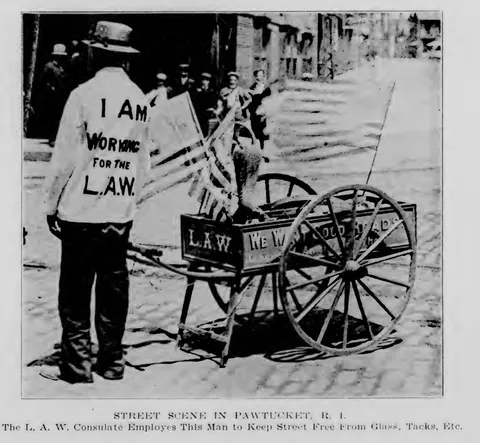 (opens in a new tab)
 Street Scene in Pawtucket, R.I. 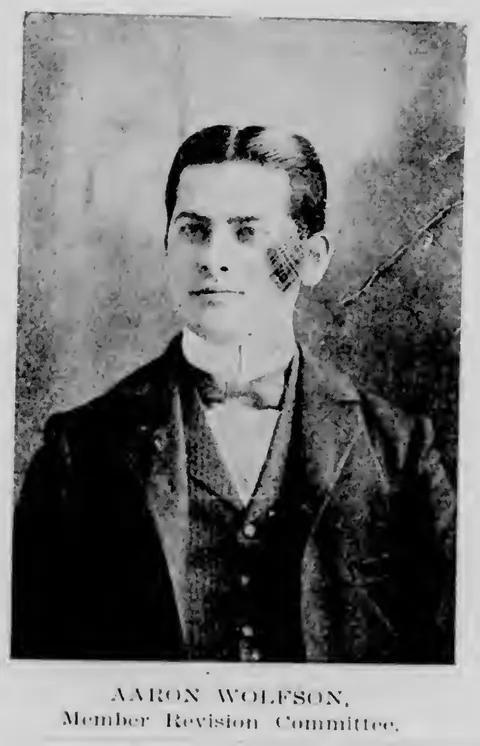 (opens in a new tab)
 Aaron Wolfson, Member Revision Committee 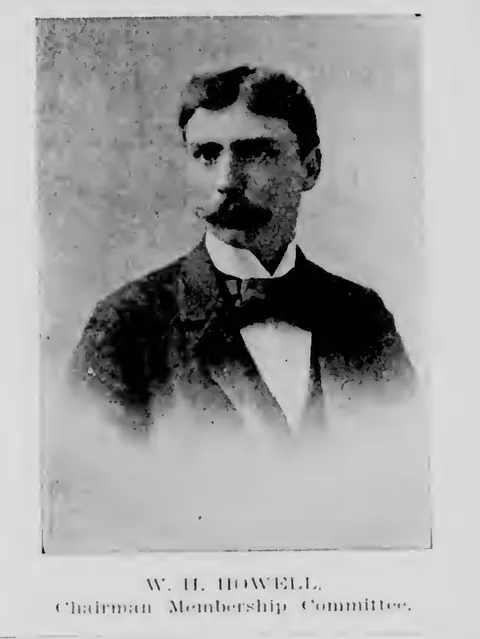 (opens in a new tab)
 W. H. Howell, Chairman Membership Committee 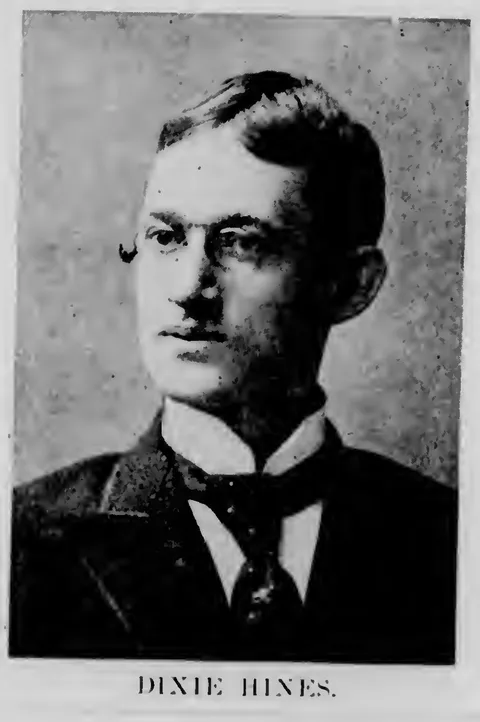 (opens in a new tab)
 Dixie Hines 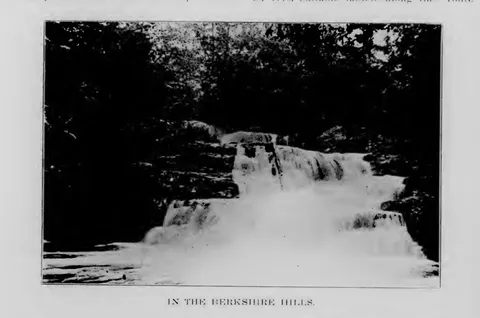 (opens in a new tab)
 In the Berkshire Hills 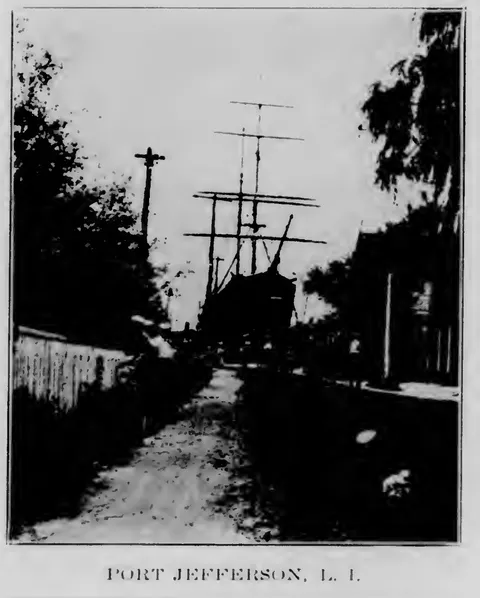 (opens in a new tab)
 Port Jefferson, L.I. 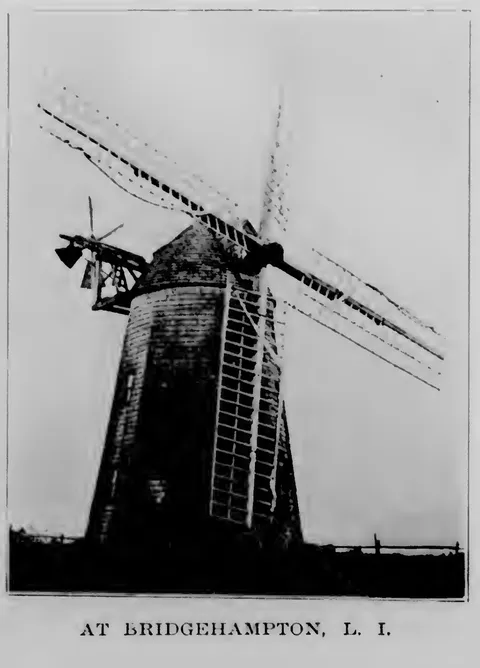 (opens in a new tab)
 At Bridgehampton, L.I. 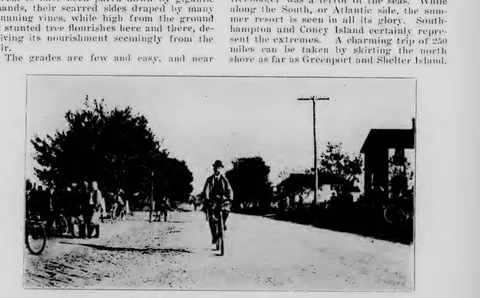 (opens in a new tab)
 On the Merrick Road, Long Island
Mastheads 2
 (opens in a new tab)
 L. A. W. Magazine, front-cover masthead  (opens in a new tab)
 L. A. W. Magazine, inside title-page masthead
27 advertisements
 (opens in a new tab)
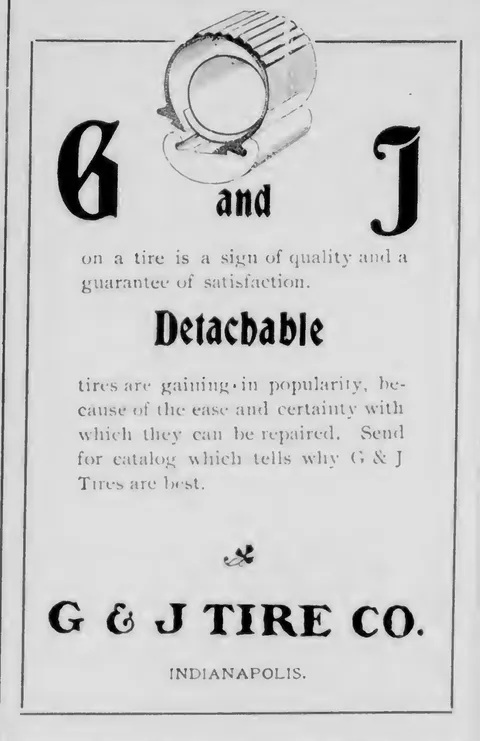
 G & J Tire Co., Detachable Tires 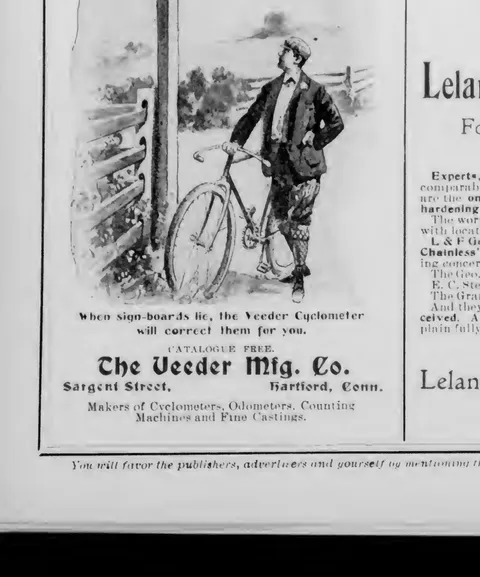 (opens in a new tab)
 The Veeder Mfg. Co., cyclometer 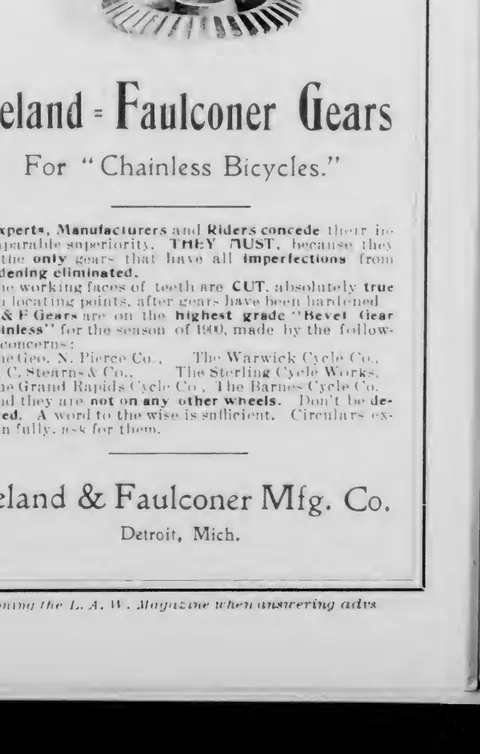 (opens in a new tab)
 Leland & Faulconer Gears for "Chainless Bicycles" 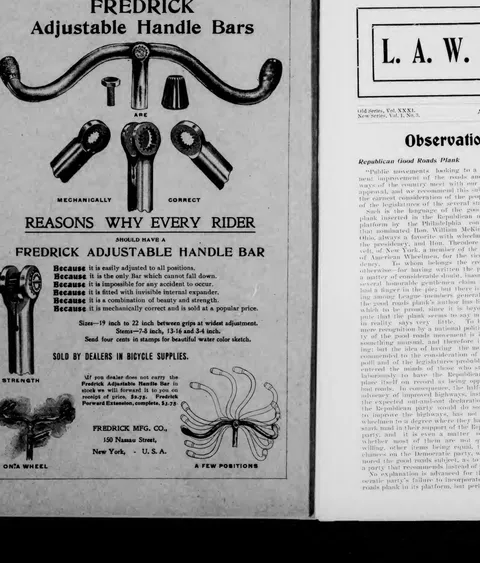 (opens in a new tab)
 Fredrick Adjustable Handle Bars 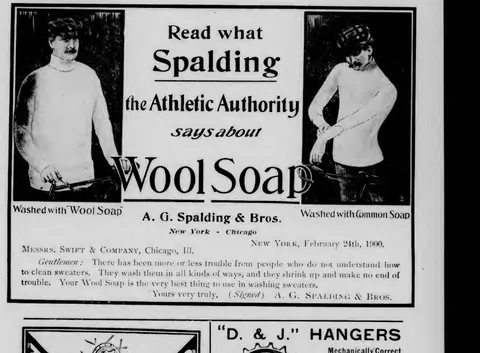 (opens in a new tab)
 A. G. Spalding & Bros., Wool Soap  (opens in a new tab)
 The Nester Coaster Brake Co. 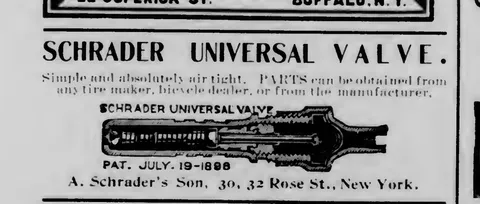 (opens in a new tab)
 Schrader Universal Valve 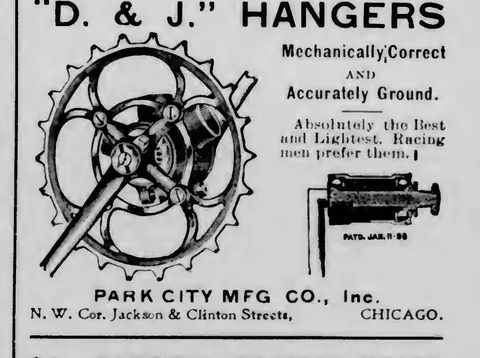 (opens in a new tab)
 "D. & J." Hangers 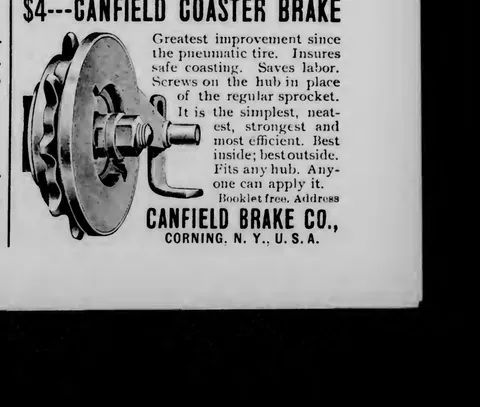 (opens in a new tab)
 $4 Canfield Coaster Brake 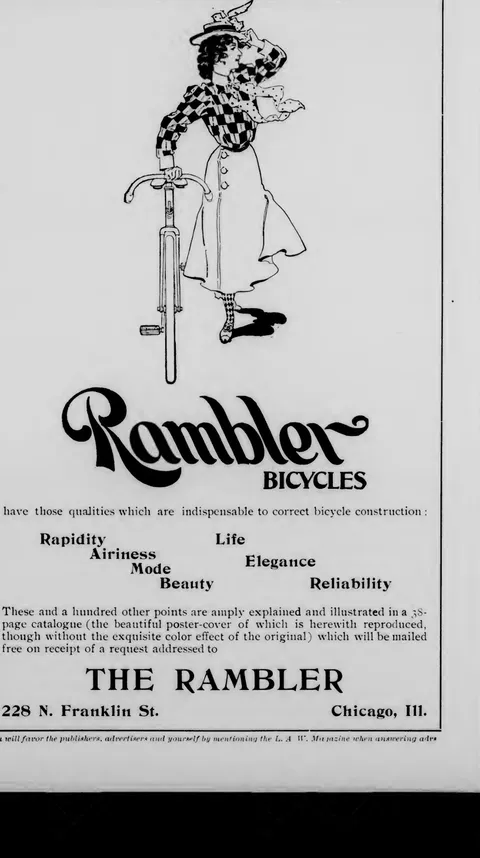 (opens in a new tab)
 Rambler Bicycles 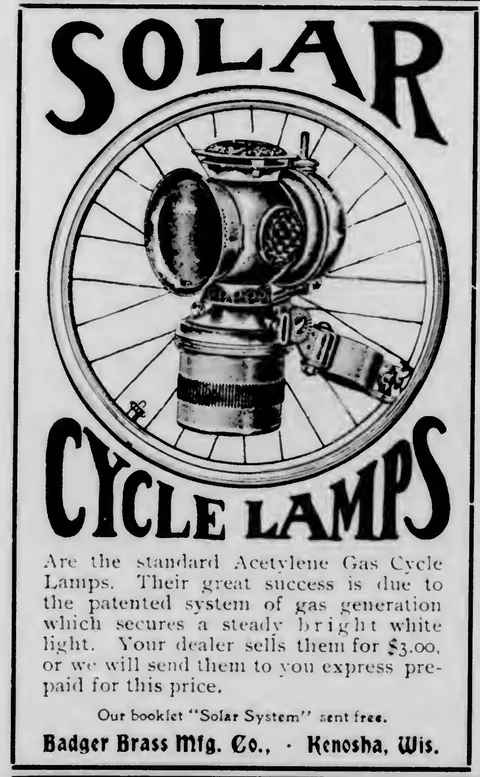 (opens in a new tab)
 Solar Cycle Lamps 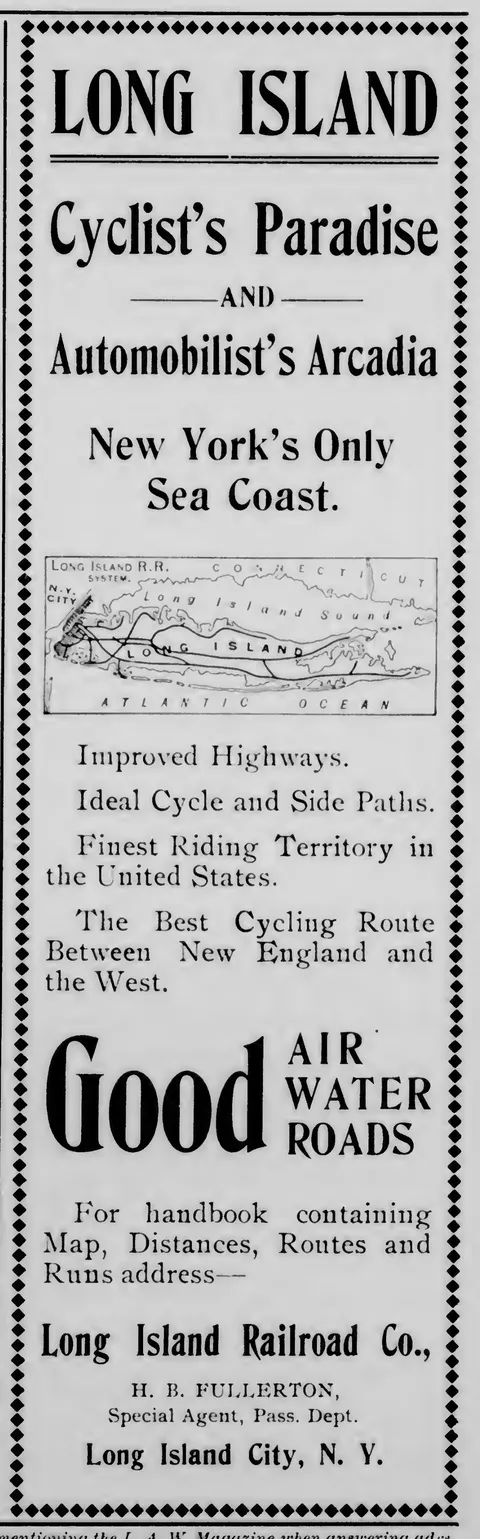 (opens in a new tab)
 Long Island Railroad, Cyclist's Paradise 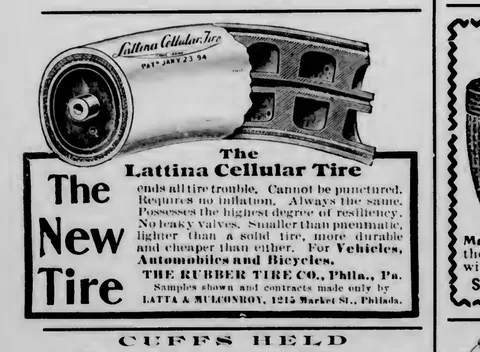 (opens in a new tab)
 The New Tire, Lattina Cellular Tire  (opens in a new tab)
 Bike Jockey Strap Suspensory, Sharp & Smith  (opens in a new tab)
 Cuffs Held, American Ring Co. 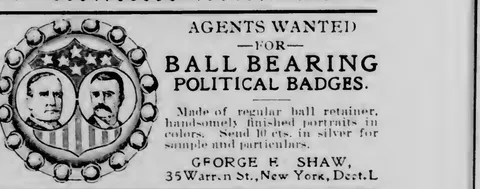 (opens in a new tab)
 Ball Bearing Political Badges 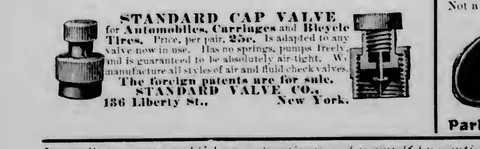 (opens in a new tab)
 Standard Cap Valve 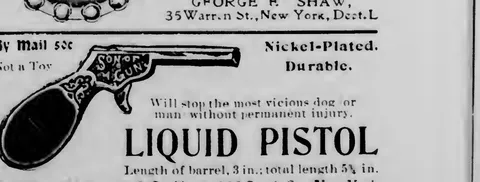 (opens in a new tab)
 Liquid Pistol 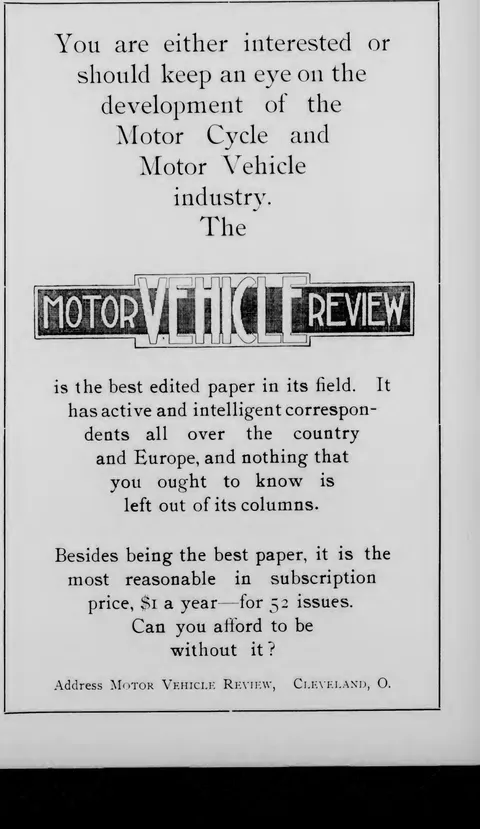 (opens in a new tab)
 Motor Vehicle Review  (opens in a new tab)
 Cycling Gazette, "We Make Them All Hustle" 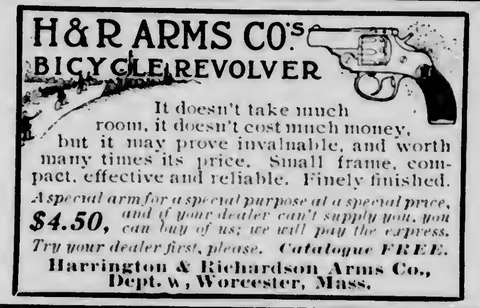 (opens in a new tab)
 H. & R. Arms Co., Bicycle Revolver 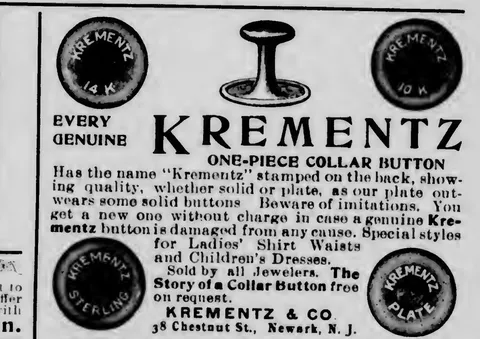 (opens in a new tab)
 Krementz One-Piece Collar Buttons 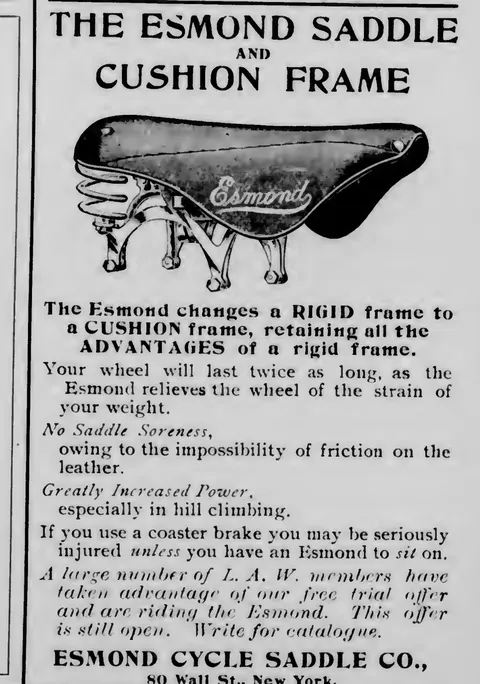 (opens in a new tab)
 The Esmond Saddle and Cushion Frame 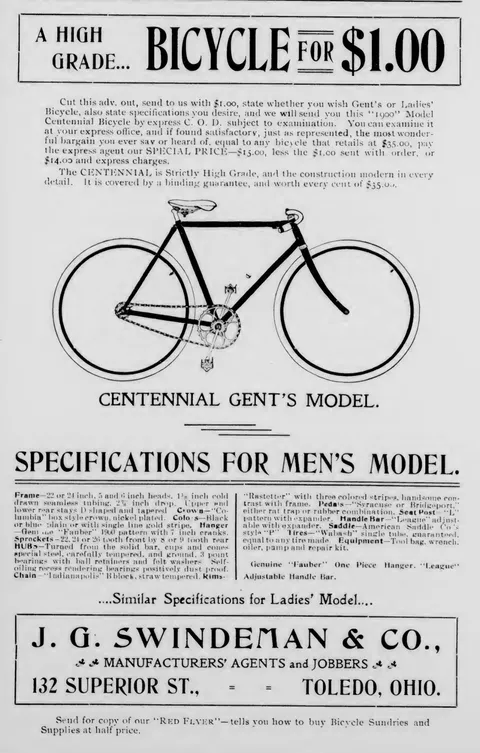 (opens in a new tab)
 A High Grade Bicycle for $1.00, Centennial Gent's Model 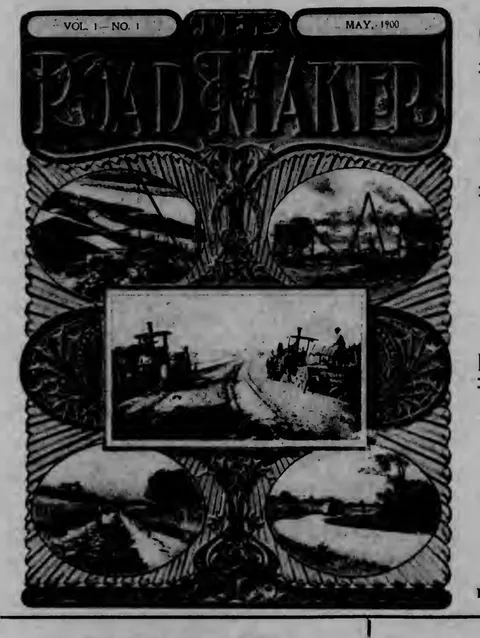 (opens in a new tab)
 The Road Maker, magazine cover  (opens in a new tab)
 The Collinear Lens, Voigtlaender & Son 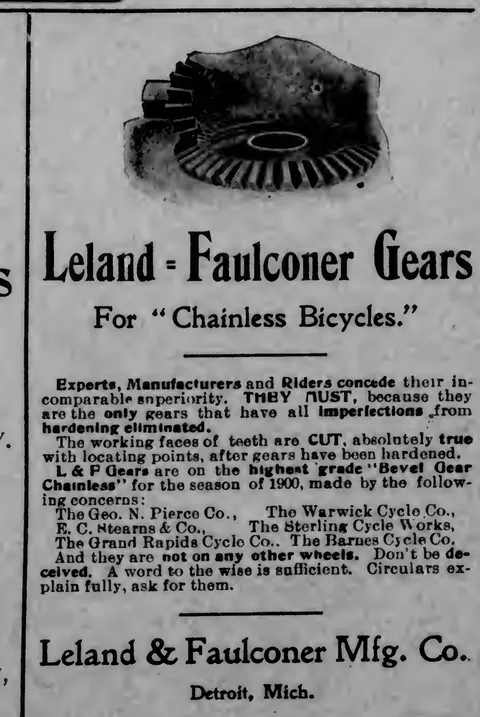 (opens in a new tab)
 Leland & Faulconer Gears for "Chainless Bicycles"