Vol 31, No 4
190052 articles30 images
Articles in this issue
- The magazine's monthly editorial news department, opening the September 1900 number with good-roads politics, League affairs, racing and trade notes. Runs under this banner through printed pages 1-5.
- The Wisconsin wing of the Republican party adopts a good roads plank declaring that "the demand for better highways, made by the farmers of Wisconsin, should be encouraged by the State." The magazine calls it the first such plank in any state platform since the Republican National Convention's recommendation, but attacks its circumlocution and ambiguity.
- Following the precedent set by Mr. Earle at Port Huron in July, a good roads congress was held on 21 August at Saginaw, Mich., under the patronage of the Office of Public Road Inquiries, with another scheduled for Topeka, Kans., on 25 September. Both are open to all advocates of better roads rather than to wheelmen's or farmers' bodies alone.
- Rural free mail delivery is pushing road improvement forward because good roads are a prerequisite to establishing the service. Cites an article by former First Assistant Postmaster General Perry S. Heath in the Saturday Evening Post on the system's unexpected popularity.
- The Birmingham, Ala., Herald printed figures showing that Alabama counties with the best roads were the most prosperous and gained most in population over the last decade. It also stressed that nearly all Alabama's good roads were built with borrowed money without distressing the borrowers.
- Three pamphlets received from Hon. W. W. Armstrong, New York State Senator for the 44th district, who with the late Senator Higbie wrote and fought through the Higbie-Armstrong good roads law. Also notes plans in California for a wide tire law at the next legislature.
- Chief Consul H. S. Earle of Michigan is named one of four Office of Public Road Inquiries representatives, taking charge of the central western district from Ohio to the Missouri valley. A well-directed effort is also under way in Michigan's third senatorial district to send him to the State Senate.
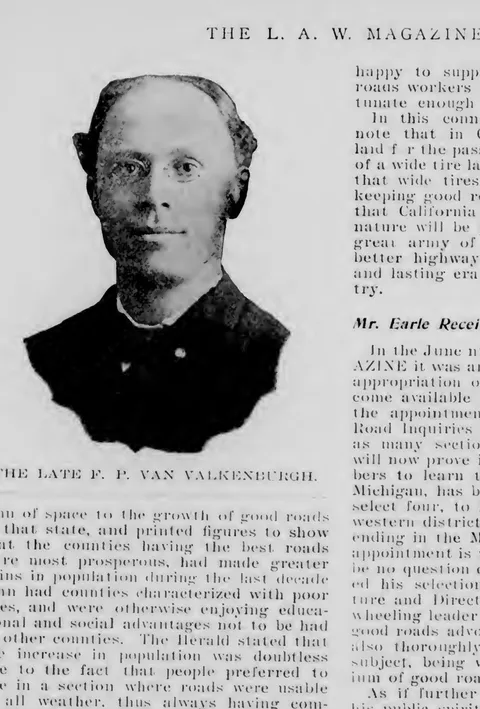
- Frank Pratt Van Valkenburgh, chairman of the national transportation committee and treasurer of the Milwaukee meet committee, died at Milwaukee aged 37 of a brain hemorrhage brought on by hay fever and heat. An Amherst graduate and lawyer, he first came to prominence by nominating Isaac B. Potter at the 1898 St. Louis National Assembly and fought for the Wisconsin baggage bill.
- The Rev. John Coleman Adams of the Universalist church of Brooklyn files a protest with the League against the Boston & Albany and New York Central railroads, which charge for carrying bicycles taken across the state line despite free-carriage laws in both states. Unless the New York Railroad Commissioner settles it, the League will go to court.
- Introduces the month's contributed article by Mr. A. L. Bancroft of California, whose scheme for numbering country roads is called eminently practical and worthy at a time when cycling and rural free delivery are drawing city and country together.
- The first world's championships under the new International Cyclists' Union were contested at Paris on 12, 15 and 19 August. French riders took every one of the five prizes: Jacquelin (professional and match short distance), Didiers (amateur short distance), Bastien (amateur long distance) and Huret (professional long distance); Lake was the only American to reach a final, riding second to Didiers.
- The Monroe County Side Path Commission's Superintendent of Construction A. P. Dean settles on crushed stone from the quarries near Lime Rock, rolled and sprinkled to set as hard as cement. All three hundred miles of Monroe County side paths are to be treated with it.
- The New York division issues another road book, covering western New York territory and prepared by Mr. Walter M. Meserole. Division members in good standing get a free copy from Secretary-Treasurer Clark.
- A postal card from an unnamed New York Division member urging that the League incorporate so there is no personal liability, which he says is keeping thousands from joining. The editors note the League has already decided to become an incorporated body.
- A bicycle ordinance in Nottingham, O., a suburb of Cleveland, permits sidewalk cycling on all days but Sunday, because Cleveland century riders had thronged through the village on Sunday mornings and evenings. The magazine asks League members to send in the exact wording of other strange bicycle ordinances.
- Reprints the India Rubber World's traveling editor on the "bicycle bug" of Evanston, Ill., which Professor William A. Locy of the Northwestern University biological laboratory identified as an ichneumon that bores pneumatic tires to lay its eggs, and on a stag-beetle-like antidote whose gutta-percha-like fluid repairs the puncture.
- Pittsburg, Philadelphia and Chicago are the only American cities with near-universal lights ordinances. Pittsburg's excepts delivery wagons, and a movement is afoot there to repeal it; the magazine warns that anything short of a genuinely universal ordinance would be a backward step.
- The Massachusetts Division held its annual mid-summer meet at New Bedford during August, drawing seven hundred - as large an attendance as the Milwaukee national meet - which the magazine takes as proof that properly advertised meets succeed.
- An Erie, Pa., ordinance permits sidewalk riding on unpaved streets and forbids it on paved ones. A wheelman arrested on a paved street was dismissed by the Mayor, who held that pedestrians on paved streets are entitled to no more privileges than those on unpaved streets.
- The month's trade events: further consolidation by the American Bicycle Company; a single-tube tire infringement suit against Whitman & Barnes of Akron and Goodyear's contract-suit victory over the Single Tube Company; Kelly Handle Bar Co. suits against the Cooper Handle Bar Co. of Detroit and the Marion Cycle Works; Chas. T. Boynton elected president of Shelby Steel Tube; and Waltham Manufacturing's motor bicycles at $250 to $300.
- Dated diary of cycling events from 22 July to 19 August 1900: Elkes, Cooper, McFarland, Taylor, Kramer, Nelson, McEachern and Michael on the track; the Paris world's championship heats and finals; N.C.A. fines and the permanent suspension of Eaton and Stevens for fixing a race; Van Valkenburgh's death; and coliseums opening at Omaha, Hartford and Worcester.
- An alliterative comic poem reprinted from London Truth in which a coasting curate collides with Clarissa's carriage and Captain Corker, every word beginning with the letter C.
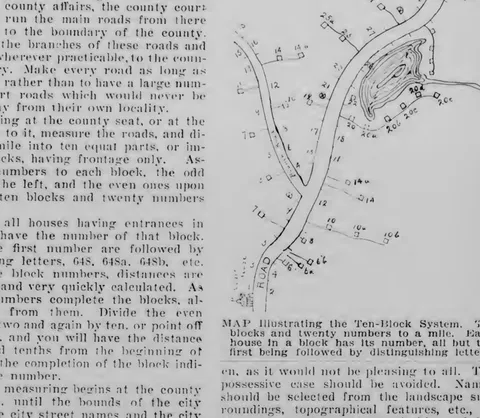
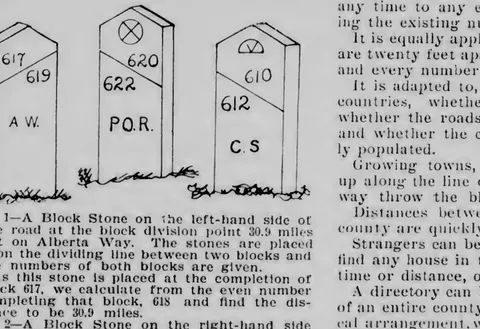
- A. L. Bancroft of California sets out his illustrated ten-block system: each mile of county road divided into ten imaginary 528-foot blocks, odd numbers on the left and even on the right, so any house number gives its distance from the county court house. Covers road naming, block stones, guide boards and the system's advantages for wheel and automobile tourists; concludes on printed page 10.
- Albert Mott marshals the words of William Windom, Daniel Webster and President Madison in favour of national highway building, arguing that federal funds spent on roads are an investment the Treasury recovers and that the government already has trained engineers to build them. Subtitled "Madison, Webster and Windom Favored Good Roads".
- A short squib mocking Professor Lombroso, the criminologist, who had argued in a magazine article that a cyclist stood a strong chance of taking to picking pockets and ending on the gallows.
- A translated forecast from the Parisian paper La Presse of the bicycle of the future: a third smaller, eleven pounds, twelve-inch wheels with puncture-proof tires, folding handle bar, telescopic saddle pin, chainless two-speed gear - and today's machine relegated to the ancient history exhibit at the Exhibition of 1911.
- Part III of A. B. Choate's series on the legal status of the wheelmen's vehicle, covering the law of the road, the opposite rule in England, conflicting Massachusetts, New York and Michigan decisions on the "traveled part of the road," a Minneapolis Municipal Court ruling applying the rule to a bicycle path, and the validity of class legislation for cyclists.
- Dr Samuel W. Abbott, secretary of the Massachusetts State Board of Health, on the wheel as pleasurable open-air exercise that counteracts sedentary and indoor work, and on its use in consumption (short rides, no hill-climbing) and in functional heart disease, illustrated by a 58-year-old rejected for life insurance whose intermittent pulse became regular after two seasons' riding. To be concluded next month.
- The Galveston Daily News reports that "strawing" the sandy roads of Denton County has proved an unqualified success on the stretch between Denton and the Pilot Point crossing on Clear Creek, at about half the cost of claying and better in wet weather.
- The press and public of New York and Long Island are disgusted by women's long-distance stunt riding, and the New York Herald suggests the legislature prohibit it if it can be stopped no other way. The magazine says "Amen."
- Three unheaded editorials under the "L. A. W. Magazine and Good Roads" masthead: how the bicycle opened up country roads and created the good roads demand, and why Bancroft's block system for distance marking and house numbering is the next needed improvement; a tribute to the late Frank P. Van Valkenburgh; and former Michigan Chief Consul Hines's argument for employing professional solicitors to build League membership.
- Reprints of items "as related when they occurred": the L. A. W. Bulletin of 18 July 1890 doubting the Catford meet record claims by Ducros, Mecredy, Osmond and the Wilson-Dangerfield tandems; the Illinois Supreme Court holding bicycles cannot be licensed to use sidewalks; Prince Wells of Louisville reinstated as an amateur by Chas. S. Davol's racing board; and Chas. H. Metz of Utica, now president of the Waltham Manufacturing Company.
- The League's official department, conducted by Secretary Abbot Bassett, running from printed page 17 through the division letters, officer rosters, touring routes, supplies list and periodical department.
- Bassett on September as the riding month, the October division elections and his wish that members at large should elect the president; the collapse of the League's cheap accident-policy contract after agents complained of price cutting, and the new contract with the New Amsterdam Casualty Co. at fifty cents; hoped-for theft and health insurance; pioneer dues; and the Bicycling World's removal from Boston to New York after twenty years.
- Standing statement of the League's objects and member benefits: securing road improvement and wheelmen's rights, road books and maps, the hotel discount and consul systems, repair shops at reduced rates, free carriage of wheels as baggage, a Cyclists' Touring Club of Great Britain ticket, and the Canadian customs guarantee that saves non-members a $25 deposit.
- President Conway W. Sams of Baltimore, First Vice-President Robt. T. Kingsbury of Keene, N. H., Second Vice-President A. B. Choate of Minneapolis, Treasurer J. C. Tattersall of Trenton and Secretary Abbot Bassett of Boston.
- Membership under W. A. Howell of Rockville, Conn.; Rights and Privileges under Herbert W. Knight of Newark; Rules and Regulations under Albert Mott of W. Arlington, Md.; Improvement of Highways under H. B. Fullerton of Hollis, Long Island; Touring under Geo. M. Schell of Philadelphia; and Press under Geo. L. McCarthy of New York.
- Post office addresses of the chief consuls and secretary-treasurers from whom consuls and agents should draw application blanks and League literature, running alphabetically from Colorado to Maryland on this page and continuing overleaf.
- The League's consuls abroad, including Joseph Pennell in the Strand, London, and representatives in Liverpool, Southampton, Cambridge, Tiverton, Paris, Dieppe, Duren, Berlin, Munich, Turin, Vienna, Dublin, Dumfries, Tokyo and Cienfuegos, Cuba.
- How the seven members of the national touring committee divide the country by territory under chairman George M. Schell, the twelve prepared through routes (New York to Chicago, Boston to Albany, Philadelphia to Natural Bridge, Boston to Montreal and others), W. W. Randall's Atlantic City to Point Pleasant route, John B. Uhle's advice on avoiding Ten Mile Mountain, and Theodore Ayres, Jr.'s praise of the trans-New York cycle paths.
- The special New Amsterdam Casualty Company policy open to League members under sixty-five: $1,000 for accidental death in general travel accidents and $5 a week for five weeks for disabling injuries, including a bicycle's collision with another vehicle, for fifty cents from Secretary Abbot Bassett.
- Chief Consul F. W. Starr urges members to recruit before the legislature assembles, names N. J. Ayling of Norwich as legislative committee chairman, offers trip cyclometers and the accident policy at low rates, and asks members to watch the town elections for candidates favourable to good roads.
- Chief Consul M. M. Belding, Jr. on the revised official hotel and restaurant list, the ten per cent members' discount, the division's fourteen-by-twenty-inch blue-on-white enamelled official signs, the warning that all other signs are fraudulent, and the responsibility resting on members who recommend a hotel for appointment.
- Alphabetical list of the division's appointed hotels and restaurants with rates, from the Vincent House at Albany and the Avon Beach Hotel at Bath Beach to Wilton House, including Rick's and the Parkway House restaurants in Brooklyn and the Prospect House at Niagara Falls.
- District Consul Robert A. Kendall reports the Pawtucket consulate's interest in the proposed Chicago to New York cycle path and hopes to see it extended to Boston through Rhode Island; three L. A. W. honor medals received in the city by A. H. Sanborn, F. T. Sibley and Kendall for securing fifteen new members each; and a good roads lecture with lantern slides postponed to the fall.
- P. S. Collins of the Pennsylvania Division asks for help finding the L. A. W. member who, on the night of 6 August 1897, took charge of Miss Rosina E. Payne of Philadelphia after Mr. Britton's wheel broke down; she struck an obstruction at 18th and Mt. Vernon streets and later died of the fall. Her father, T. H. L. Payne, is anxious to trace him.
- Priced list of the official amethyst badge, veteran and local consul pins, lapel buttons, dated cap pins, handle bar ribbons, rubber stamps, ticket holders, back tickets, electrotypes and the hotel and "Helping Hand" signs, together with the Good Roads Library handbooks - Isaac B. Potter's "Country Roads," "Macadam Roads," "Cycle Paths" and "Wide Tires" - free to members for postage.
- Two years on, the League's magazine subscription bureau publishes its rules - remittance to Secretary Bassett, postage stamps in ones and twos, no use of the privilege for friends - and a long table of regular and members' prices for periodicals from Ainslee's and the Bicycling World to the Wheel, Wheelman's Gazette and Youth's Companion.
- Chief Consul C. B. Whelpley of Cedar Rapids calls for nominations to reach Secretary-Treasurer F. A. Amborn at Fort Madison by 1 October, and names the ticket already in nomination: Amborn for chief consul, M. C. Parsons of Iowa City vice-consul, Edward F. Carter of Keokuk secretary-treasurer and C. H. Prior of Guthrie Center representative.
- Short riding advice and humour: not every man in a jersey is a racing man, and don't test your speed down a steep hill without knowing what waits at the bottom - closing with a Cleveland Plain Dealer joke about barred bicycle skirts and a Washington Star verse warning the scorcher.
- Trade notes for readers: the Badger Brass Co. of Kenosha's "Fortis" electric exerciser first shown at the Milwaukee meet, a special end-of-season tire offer from the Goodyear Tire & Rubber Co. of Akron, the Nelson Manufacturing Co.'s toe clips at 25 cents, the Angle Lamp Co.'s side line for dealers, Adams' Pepsin Tutti Frutti, and the Esmond Saddle Co.'s renaming of its "cushion frame" to "pensile frame" at the Hygienic Wheel Co.'s request.
- Letters from T. J. Torrance of East Toledo urging a strong central organization, paid solicitors and a dated button for every member; Edward B. Warman, aged fifty-three, prescribing oiled silk and muslin lining in the pantaloons against saddle soreness; and H. S. Earle, special agent of public road inquiries, proposing short sample roads built in middle-western states under a United States engineer with Martin Dodge attending.
Images in this issue 30 pictures from 18 pages
Illustrations 1
 (opens in a new tab)
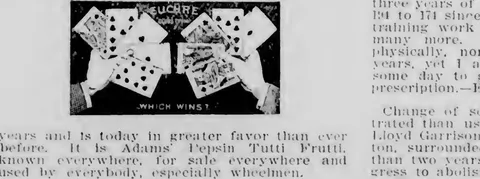
 Which Wins?
Photographs 4
 (opens in a new tab)
 The Late F. P. Van Valkenburgh 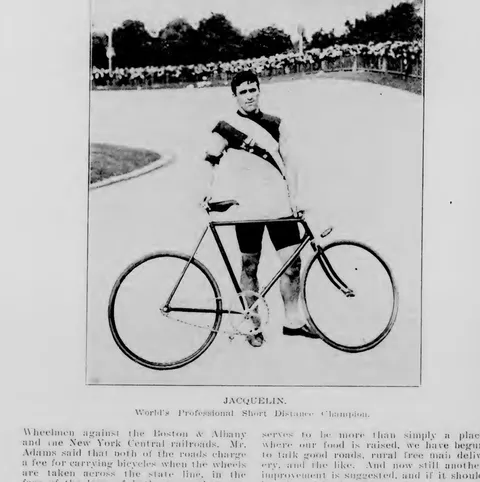 (opens in a new tab)
 Jacquelin, World's Professional Short Distance Champion 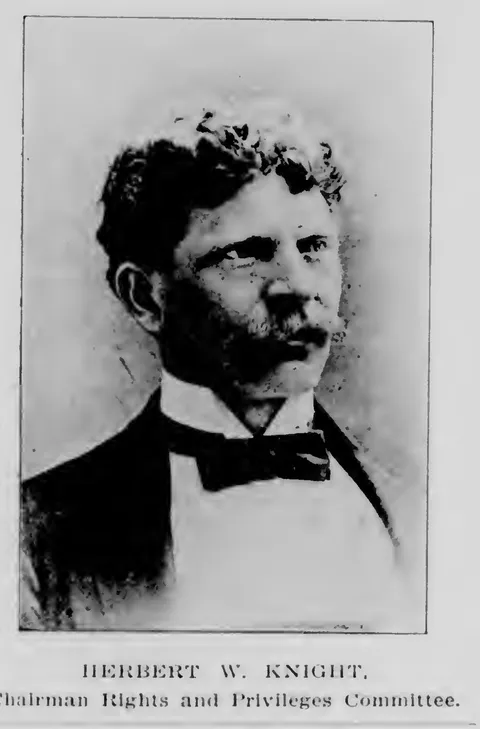 (opens in a new tab)
 Herbert W. Knight 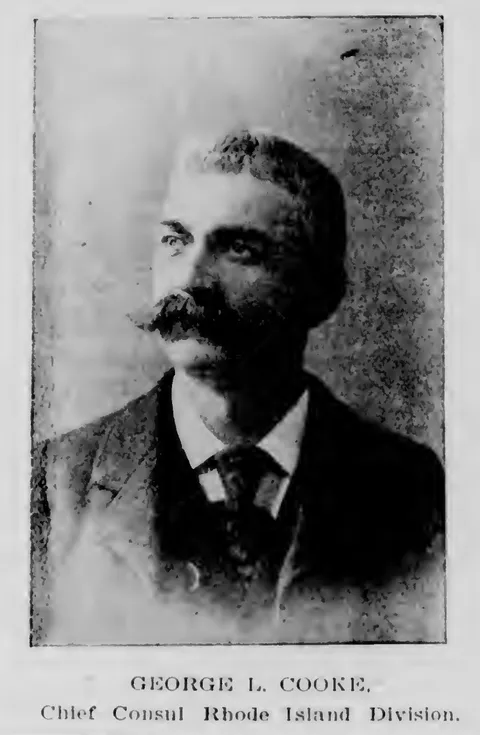 (opens in a new tab)
 George L. Cooke
Maps 1
 (opens in a new tab)
 Map Illustrating the Ten-Block System
Diagrams 2
 (opens in a new tab)
 Ten-Block System Block Stones 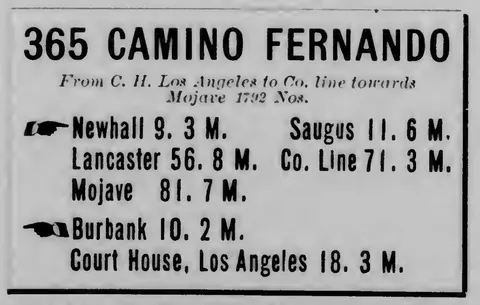 (opens in a new tab)
 Ten-Block System Guide Board
Mastheads 1
 (opens in a new tab)
 L.A.W. Magazine, September 1900
21 advertisements
 (opens in a new tab)
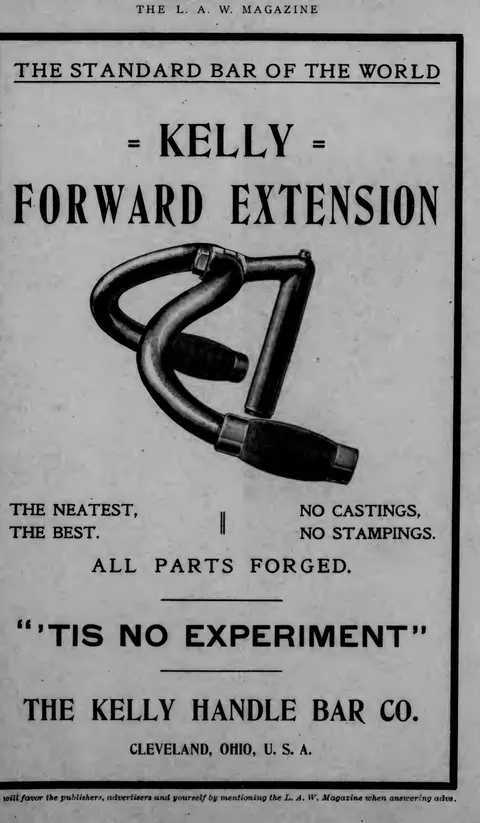
 Kelly Forward Extension 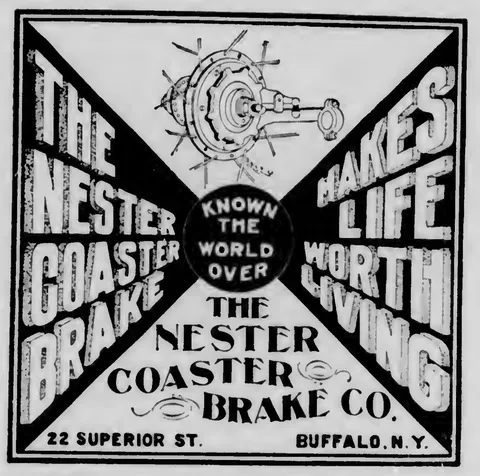 (opens in a new tab)
 The Nester Coaster Brake 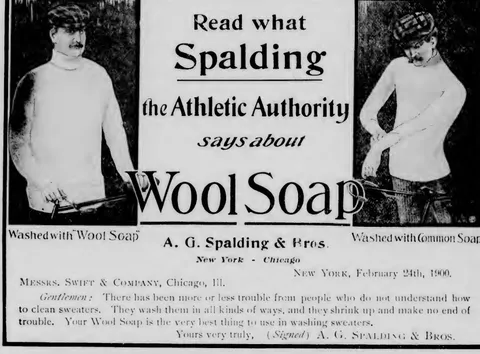 (opens in a new tab)
 Spalding Wool Soap 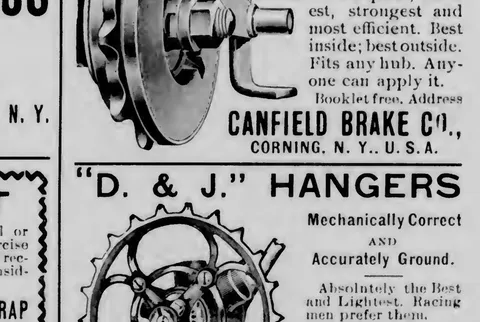 (opens in a new tab)
 Canfield Coaster Brake 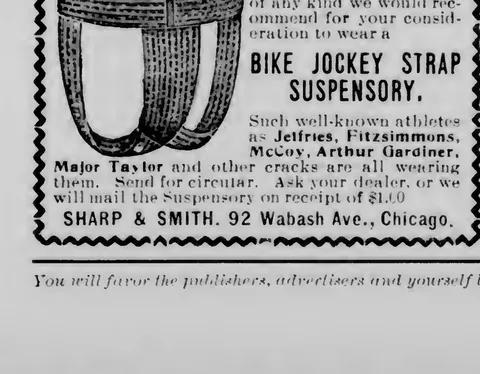 (opens in a new tab)
 Bike Jockey Strap Suspensory  (opens in a new tab)
 D. & J. Hangers 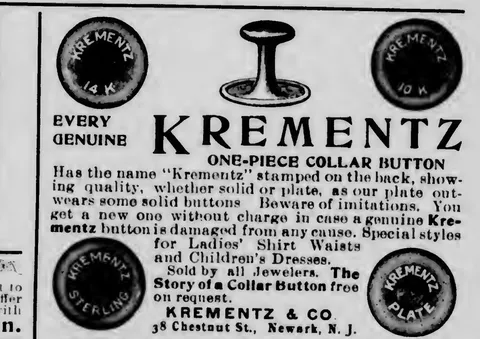 (opens in a new tab)
 Krementz One-Piece Collar Button 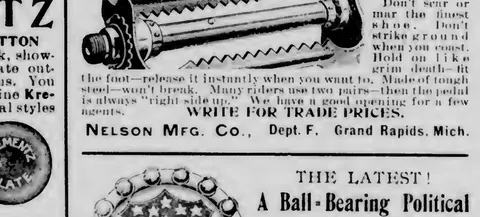 (opens in a new tab)
 Nelson Toe Clips 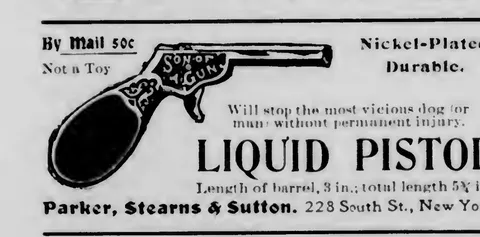 (opens in a new tab)
 Liquid Pistol 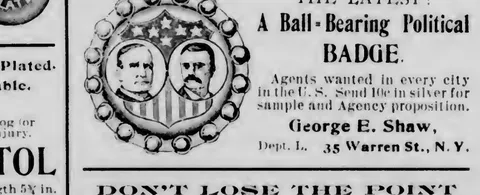 (opens in a new tab)
 Ball-Bearing Political Badge 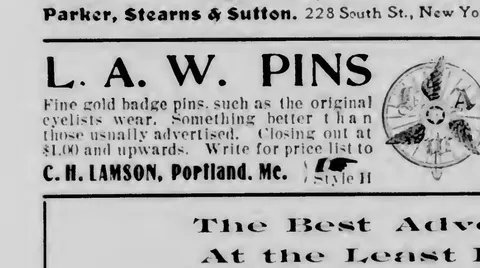 (opens in a new tab)
 L.A.W. Pins 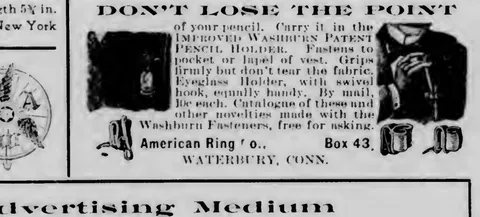 (opens in a new tab)
 Don't Lose the Point 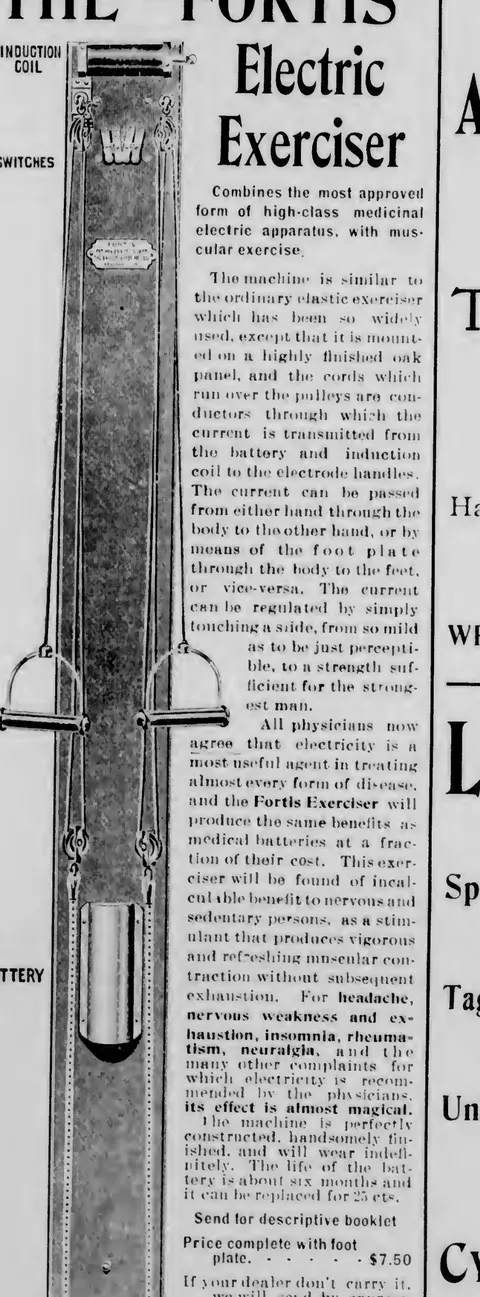 (opens in a new tab)
 The Fortis Electric Exerciser 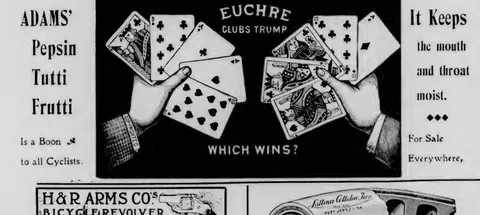 (opens in a new tab)
 Adams' Pepsin Tutti Frutti 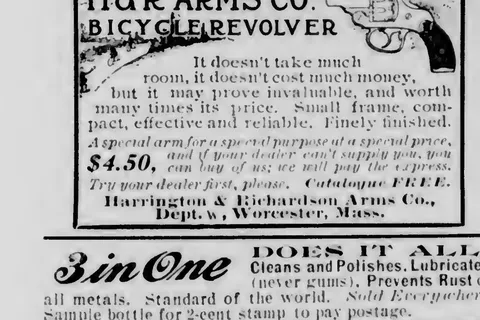 (opens in a new tab)
 H. & R. Arms Co.'s Bicycle Revolver 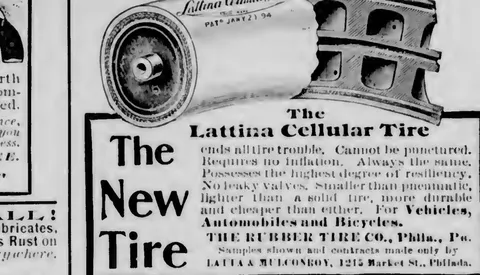 (opens in a new tab)
 The Lattina Cellular Tire 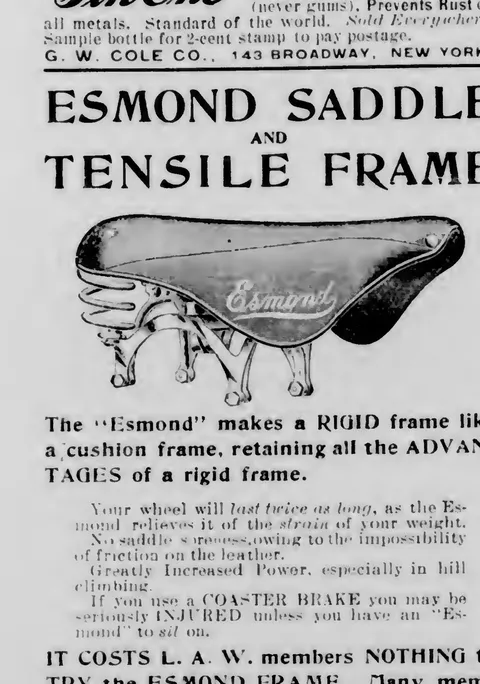 (opens in a new tab)
 Esmond Saddle and Tensile Frame 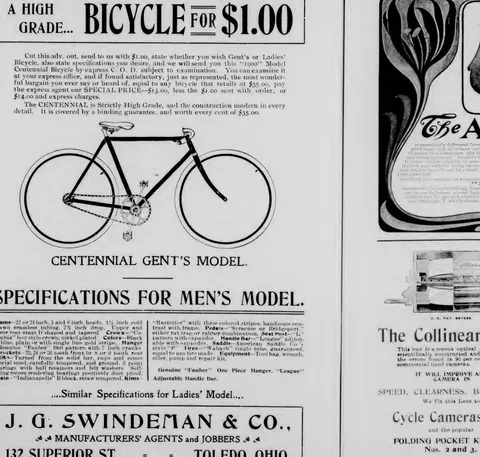 (opens in a new tab)
 Centennial Bicycle for $1.00 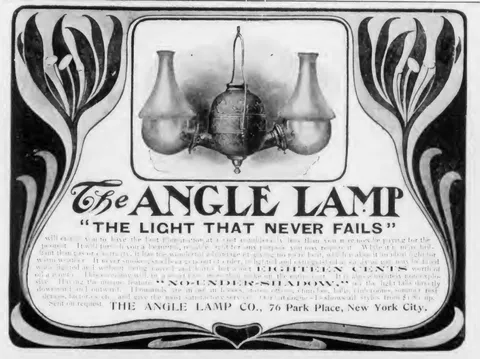 (opens in a new tab)
 The Angle Lamp 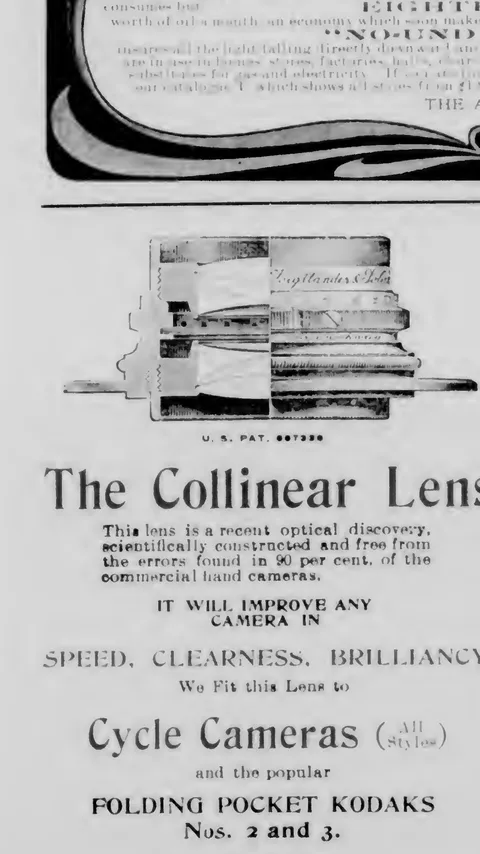 (opens in a new tab)
 The Collinear Lens 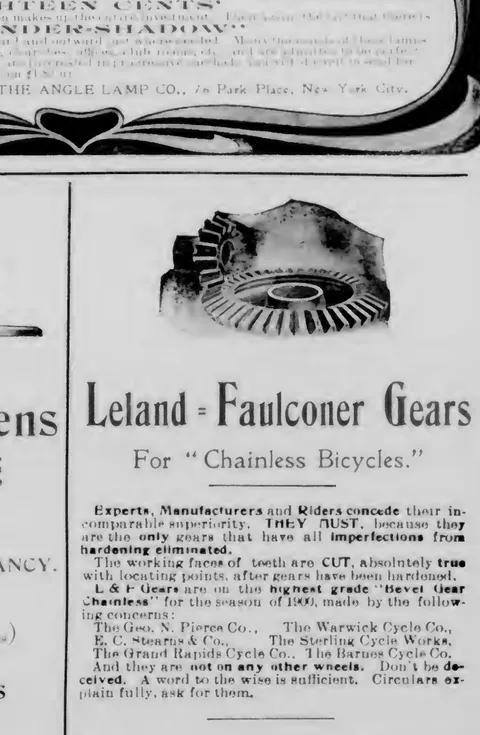 (opens in a new tab)
 Leland & Faulconer Gears