Vol 31, No 8
190155 articles23 images
Articles in this issue
- The magazine's monthly news-and-comment department for January 1901, running from the choice of a League president ahead of the National Assembly through the Massachusetts resolutions, the new National Good Roads Association, six-day racing and the Dunlop trade suits.
- With the National Assembly convening 13 February, the magazine offers an unsolicited alphabetical list of thirteen presidential possibilities, Milo M. Belding Jr., S. A. Boyle, A. B. Choate, George L. Cooke, Horatio S. Earle, Sterling Elliott, H. B. Fullerton, George D. Gideon, Robert T. Kingsbury, George A. Perkins, Col. Albert A. Pope, Isaac B. Potter and Conway W. Sams.
- Sketches of Milo M. Belding Jr., serving his third term as New York chief consul since succeeding Chief Consul Jenkins in December 1898; S. A. Boyle, the long-serving Keystone State chief consul and attorney who has repeatedly declined presidential nomination; and Judge A. B. Choate of Minnesota, now the League's second vice-president.
- George L. Cooke of Rhode Island made a success of a limited field before standing down, while Michigan pins its faith to State Senator-elect Horatio S. Earle, an ardent good roads worker appointed representative in the central west of the Agricultural Department's office of Road Inquiries.
- New York may present H. B. Fullerton, railroad man and chairman of the national committee on Highway Improvement, who secured the good roads plank in this year's Republican platform; Pennsylvania offers George D. Gideon, former master of the racing department, and Thos. J. Keenan Jr. of the Pittsburg Press.
- Robert T. Kingsbury of New Hampshire has twice held national office; George A. Perkins of Massachusetts, in his second term as Bay State chief consul, is credited with reducing the division's indebtedness and will be that state's candidate; Colonel Albert A. Pope of Massachusetts will be a delegate to the Assembly.
- Isaac B. Potter, former president, chairman of the Highway Improvement Committee and chief consul of the New York Division, retired two years ago for his law practice; Judge Conway W. Sams of Maryland, unanimously chosen president last February, has faced many discouraging conditions this year.
- Horatio S. Earle of Michigan states his platform: an L. A. W. Festival and Good Roads Convention in every state with 100 members, May to October, funded from his own salary, and pressure on the United States government to issue an up-to-date sectional road book. Portraits of Fullerton, Choate, Kingsbury and Earle appear as "Possible Presidential Candidates."
- The December meeting of the Massachusetts division Board of Officers put Mr. Perkins in nomination for the presidency and voted to oppose any move to depose Secretary Bassett, to shift headquarters to New York City, or to incorporate the League under the laws of any state but Massachusetts.
- The National Good Roads Association was permanently organized at Chicago, its legislation report urging repeal of statute labor laws, convict labor on road material and non-partisan state highway commissioners; $150,000 is to be asked of Congress for the bureau of public road inquiries, against $14,000 last year, and President McKinley gave under fifty words to roads in his annual message.
- Elkes-McFarland won the Madison Square Garden six-day team race on 15 December with 2,628 miles and 7 laps, Pierce-McEachern second; the N. C. A. reinstated trainer Tom Eck; "Plugger Bill" Martin won eight of nine events at Melbourne; and W. C. Stinson, Tom Cooper and Floyd McFarland plan to ride in France.
- The British Dunlop Tire Company has sued the Canadian and American Dunlop firms for $250,000 over goods shipped to Australia in breach of contract, while the Goodyear Tire & Rubber Company of Akron has secured an injunction stopping the Single Tube Automobile & Bicycle Tire Company revoking its licence under the Tillinghast patents.
- A state-by-state compilation, Alabama to Wyoming, of the bicycle laws then in force, gathered with the aid of the various state secretaries: baggage rules, sidepath and tag laws, lamp and bell requirements, speed limits and theft penalties, with several states, Utah, Rhode Island, North Carolina and Colorado among them, flatly refusing information. Illustrated with the Oswego-Fulton (N.Y.) sidepath at Minetto.
- The magazine's general sporting department for January 1901, carrying base ball, the America's Cup yachts, foot ball, golf, basket ball and lawn tennis.
- By Elmer E. Bates. The National League club owners' annual meeting at the Fifth Avenue Hotel fixed a 140-game schedule from 18 April to 6 October but rebuffed the Players' Protective Association delegation of Charles L. Zimmer, Hugh Jennings and Clark Griffith, while Ban Johnson's American League plans to place clubs in Philadelphia, Washington and Baltimore.
- President Powers' 1900 Eastern League figures: Bransfield of Worcester led the batting at .371, Brown of Syracuse second and Davis of Providence third; in fielding Urquhart of Hartford led the catchers, Dooley of Montreal the first basemen and Woods of Springfield the pitchers.
- By W. P. Stephens. Defender was sold as junk for $15,000 to Mendel, Samuels & Sons of Newark; at Bristol the Herreshoffs rebuilt Yankee and Rainbow with sheet steel plating and poured the new defender's ninety-ton lead keel on 22 December, while Thomas W. Lawson is building the rival Bostonian to Bowdoin B. Crowninshield's design at the Lawley yard.
- The New York Sun's two representative "All-American" elevens, with Daly of West Point at quarter back and Weekes of Columbia and McCracken of Pennsylvania in the backfield, followed by honorable mentions for Van Hoevenberg, Alexander, Dana, Olcott, Sykes and others.
- Yale's 28-to-0 defeat of Harvard on 24 November settled the eastern championship, while Princeton fell to sixth after successive defeats by Cornell, Columbia and Yale; in the west honors were even between Minnesota and Iowa with Wisconsin third, and full statistical tables are given for the "Big Six" of each section.
- The season produced eleven fatal accidents on the gridiron, 62 serious injuries, including 14 broken collar bones and 10 broken legs, and at least 150 minor ones; Williamson Pell has been re-elected captain of the Princeton Tigers with Robert C. Gordon of Waynesboro, Pa., as manager.
- Obituaries of two golf professionals: Willie Campbell, who died at Dorchester, Mass. on 25 November, a Musselburgh caddie who beat three-times champion Bob Ferguson at Prestwick in 1870 and came to America at W. B. Thomas's invitation; and Thomas Hutchinson, thrown from a pony and killed at Cumberland Island on 12 December.
- The Field (England) comments good-naturedly but fearsomely that American influence will soon dominate golf in both the north and south of Great Britain, bringing bogey scores, handicapping and medals for prizes to vex players of the old school.
- A short department covering the season's rule changes and rankings in basket ball and lawn tennis.
- The A. A. U. Basket Ball Committee's revisions: a player who dribbles with both hands may not touch the ball again until another player has played it, nor throw for goal himself; a goal thrown from outside the boundary line does not count; and the ball must remain in the basket, so the bottom may not be cut out.
- The United States Lawn Tennis Association ranking committee's 1900 classes and handicaps for next year: M. D. Whitman alone in Class 1 owing 3-6, with D. F. Davis, W. A. Larned and Beals C. Wright at scratch in Class 2.
- A dated chronology of November and December 1900: Elkes and McFarland's ten-mile pursuit at Baltimore, the Ohio supreme court's wide tire ruling, Saml. M. Warns elected president of the Century Road Club, the $70,000 Fowler Cycle Manufacturing plant fire at Chicago, the six-day team race result and Major Taylor signing to ride in France during 1901.
- By W. H. Hale, Secretary of the New York City Consulate. Argues against centralizing League affairs by abrogating the state divisions, citing the Connecticut State Federation of Cyclists, which reached five or six times the membership of the Connecticut Division and shamed it back into activity.
- An anecdote from the cashier of a national bank whose philanthropic relative pressed a glass of milk on a messenger boy who had asked only for water, which he wanted for the carbide in his bicycle lamp.
- Editorial on the 1901 trade outlook, the perfected bevel gear chainless, the coaster-brake, motor bicycles and tricycles, cushion-frame models, made-to-order machines, flush head-sets, cleanable gas lamp tips and ball bearing valves, followed by Secretary Wilson's remarks tying the November corn corner to impassable roads and the Ohio Supreme Court's ruling upholding the wide tire law.
- By Percy F. Megargle of the New York Side Path Commission. How Monroe county built 130 miles of paths, the first twenty funded by the Rochester Post-Express, the rest by the L. A. W. Rochester consulate, whose February 1897 cycle show netted $2,970.07, then sold 25-cent celluloid tags, 40,000 of them for $10,000 in 1898, and how Charles T. Raymond of Niagara county drafted the state sidepath law. Illustrated with the Rochester-Scottsville path entrance and the 1899 state sidepath convention delegates.
- The League's official section for January 1901: Secretary Bassett's editorials, the standing statement of the League's objects and benefits, the national officers and committees, the special committee's proposed constitution and by-laws, and reports from the state divisions.
- Bassett's editorial against reviving the mid-summer annual meeting, quorums failed at New York in 1883 and Boston in 1886, and against abandoning good roads for cycle paths, warning that the sidepath scheme must be kept within L. A. W. control; also notes the Philadelphia assembly, the Perkins and Earle candidacies, and thirty-two western railroads' new twenty-five-cent charge for carrying a bicycle in baggage cars.
- The standing statement of the League's objects and member benefits: the official organ, co-operatively published road books and maps, hotel discounts, the consul and repair shop systems, free carriage of wheels as baggage, a Cyclists' Touring Club ticket good in Britain and on the Continent, and duty-free entry of wheels into Canada. Two dollars the first year, one dollar thereafter.
- President Conway W. Sams of the Bank of Baltimore Building, Baltimore; First Vice-President Robt. T. Kingsbury of Keene, N. H.; Second Vice-President A. B. Choate of Minneapolis; Treasurer J. C. Tattersall of Trenton, N. J.; and Secretary Abbot Bassett of 530 Atlantic Avenue, Boston.
- Membership under chairman W. A. Howell of Rockville, Conn., with Frederick C. Stillson and Chas. W. Mears; Rights and Privileges under Herbert W. Knight of Newark; Rules and Regulations under Albert Mott; Improvement of Highways under H. B. Fullerton of Hollis, Long Island; Touring under Geo. M. Schell of Philadelphia; and Press under Geo. L. McCarthy of New York.
- The special committee's schedule of amendment to the 1900 constitution, article by article: the name and object of the League, local government and the status of divisions, and new sections covering active, contributing, honorary and junior members, suffrage and officers, and membership rights.
- A section-by-section outline of the nineteen proposed by-law articles, from applications for membership, dues and finances through elections, proxies, meetings of the national assembly, the duties of the president, secretary-treasurer and auditor, national committees, litigation and legislation, discipline, the official bulletin, divisions and amendments.
- The annual meeting at the Hotel New Dorn on 19 December named O. H. Hammond, Wallace A. Smith, Wm. A. Wells, Lyman P. Case and John N. Brooks delegates to the Philadelphia assembly, voted unanimously to incorporate the division, backed a larger state good roads appropriation and ordered a sidepath bill drawn; a second notice lists the members who contributed to the special legislative fund.
- Secretary Chas. E. Wood calls the regular division meeting for Thursday 17 January at 8 p.m. in the parlors of the Ebbitt House, corner 14th and F streets N. W., where a general reorganization will be effected.
- Chairman Edwin Perry of the returning board certifies the Kentucky officers elected for the term ending 1 December: chief consul R. F. Pelouze, vice-consul J. W. Brigman, secretary-treasurer Owen Lawson and representative P. E. Allison, all of Louisville.
- Division election results reported by secretary-treasurer H. T. Passmore: chief consul Clarence W. Small of Portland, vice-consul Herbert B. Holland of Waterville, secretary-treasurer Harry T. Passmore of Bath, and representatives Howard L. Burr of Auburn and Leslie P. Lond of Waterville, from 226 ballots cast.
- From 315 ballots returned: chief consul John J. McElroy of Baltimore, vice-consul Royal C. Gillespie of Cumberland, secretary-treasurer Robert H. Carr Jr., and Harry V. Casey, Lewis H. Moore and John H. Robinette as representatives at large on the division board.
- Chief Consul Geo. A. Perkins announces a dinner party at the Revere House, Bowdoin Square, Boston on Saturday 26 January at a dollar a plate and appeals for local consuls, League hotels and repair shops in every city and town; a second notice reports the board's annual meeting at the Revere House on 12 December, where Secretary-Treasurer Wolfson showed receipts of $2,500 and resolutions were passed nominating Perkins for president and opposing removal of headquarters from Boston or the removal of Secretary Bassett.
- Secretary-treasurer J. C. Schneider reports the officers elected for 1900-1901: chief consul John R. Williams, vice-consul M. J. Gilbert, secretary-treasurer C. C. Ziegler and representative H. G. Wolzendorf, all of St. Louis.
- Secretary-treasurer John F. Clark gives notice of the delegates to the national assembly elected at the board meeting in the Grand Union Hotel on 8 December, including L. C. LeRoy, Dr. F. A. Myrick, W. H. Hale, A. M. Meserole and C. Lee Abell; Chief Consul M. M. Belding Jr. then appeals personally for nominations of local consuls, and the full list of New York consuls from Albany to Zena follows.
- Chief Consul M. M. Belding Jr. appoints H. S. Flagg of 828 Flatbush avenue, Brooklyn, chairman of a special committee on hotels and repair shops, and fills board vacancies with W. H. Hale of New York in the first district and H. B. Fullerton of Hollis in the second.
- Chief Consul Chas. W. Mears of Cleveland appoints Meade G. Thraves of Fremont chairman of the division rights and privileges committee and invites members willing to serve on the various committees to write him.
- Report of the annual meeting at the Philadelphia Bourse on 10 December, with Chief Consul Boyle in the chair on his twelfth election: membership is a little short of 5,500, Charles A. Mertens of Erie will chair the legislative committee, F. C. Orr of Pittsburg replaces T. J. Keenan Jr. as vice-consul, and Martin Dodge offers to test road materials at Washington. The secretary-treasurer traces the fall from about 25,000 members to 12,000 and now 5,400.
- The election brought a number of young men into office; the Pawtucket city council has passed the first of a series of ordinances requiring grooved rails for the street railway companies, a complete victory for the L. A. W. district after four months' work; and a free good roads lecture with stereopticon views of Pawtucket roads is set for Music Hall on 30 January.
- The returning board at Tustin reports 61 votes cast and 3 illegal: chief consul A. H. Palmer of Pasadena, vice-consul J. D. Wilder of Tustin with 58, and secretary-treasurer O. S. Barnum of Los Angeles with 56.
- By arrangement with F. A. Elwell of the Columbia Hotel, Portland, Me., League members get 7 per cent off his 1901 European tours, 18 May to Holland, England and France; 8 June to France, Switzerland, Germany, Holland and England; 3 August to England, Scotland and Ireland, plus a Jamaica tour on 14 February.
- Financial statement of secretary-treasurer Henry Hotter for 1 December 1899 to 30 November 1900: receipts of $122.86 including interest from the Memphis Savings Bank, disbursements of $5.00 for postage and printing, and a balance of $117.86.
- Many interesting communications from members, crowded out this month by the volume of official matter, will appear in the February number of the Magazine.
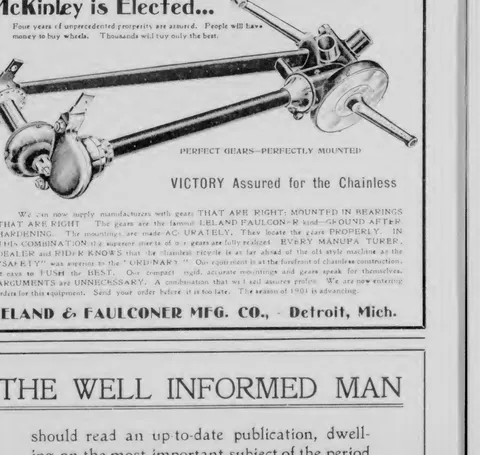
- Trade notes for 1901: the Diamond Rubber Company of Akron's double tube tire with a rubber-coupled continuous air chamber and no inner-tube ends to blow out; Leland & Faulconer of Detroit on bevel gears; J. H. Lucke & Co. of Cincinnati's five-cent "Imports" cigars; J. F. Hayes' bronchial wafers; the Photographers' League; McAllister's stereopticon book; and the American Ring Company's Washburn Bachelor's Button.
- A letter from Geo. L. McCarthy of the press committee, New York, 6 December, urging the League to form a national good roads association taking in farmers, automobilists and horse owners on an equal basis, abolish the initiation fee and cut dues to fifty cents a year, since numerical strength is what the organization most needs.
Images in this issue 23 pictures from 18 pages
Photographs 10
 (opens in a new tab)
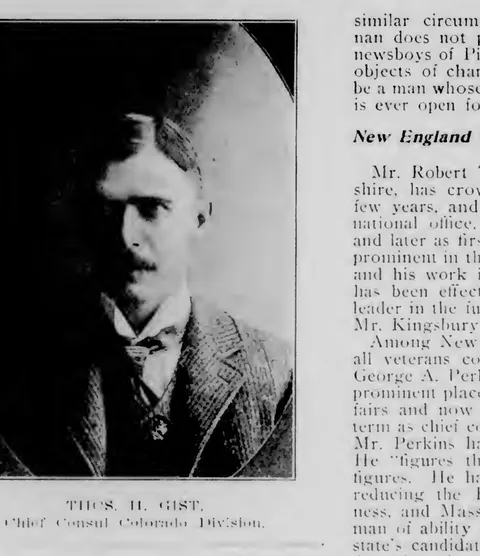
 Thos. H. Gist, Chief Consul Colorado Division 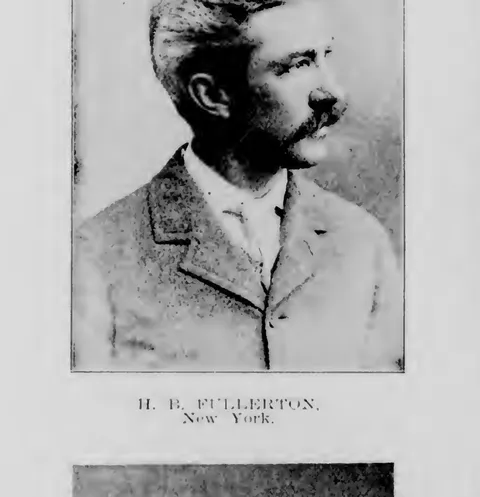 (opens in a new tab)
 H.B. Fullerton, New York, possible presidential candidate 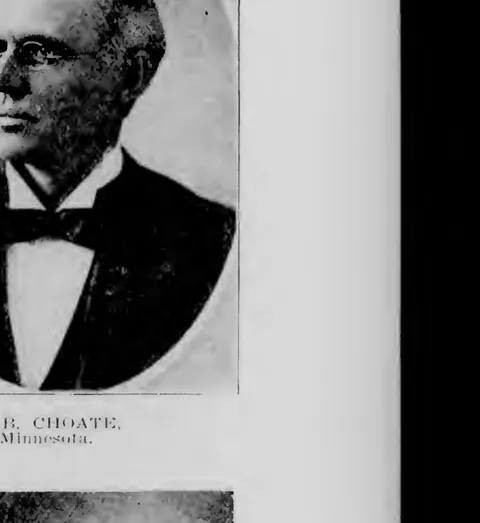 (opens in a new tab)
 A.B. Choate, Minnesota, possible presidential candidate 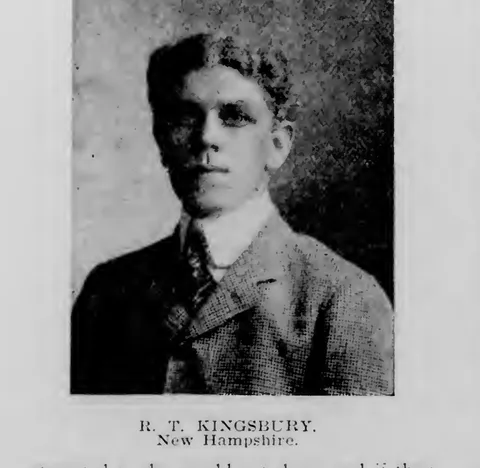 (opens in a new tab)
 R.T. Kingsbury, New Hampshire, possible presidential candidate 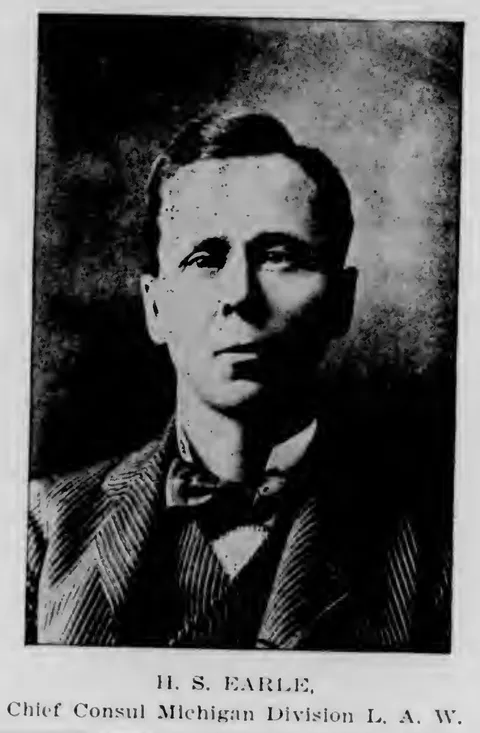 (opens in a new tab)
 H.S. Earle, Michigan, possible presidential candidate 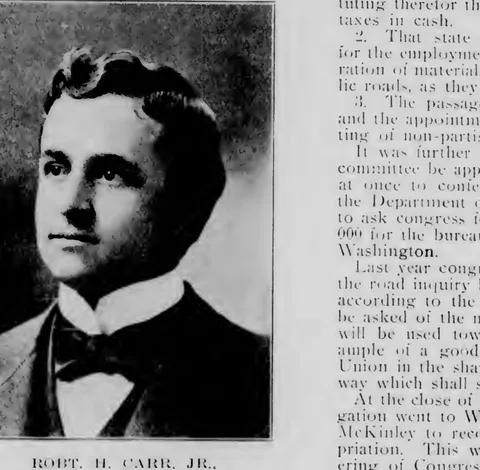 (opens in a new tab)
 Robt. H. Carr, Jr., Secretary-Treasurer Maryland Division 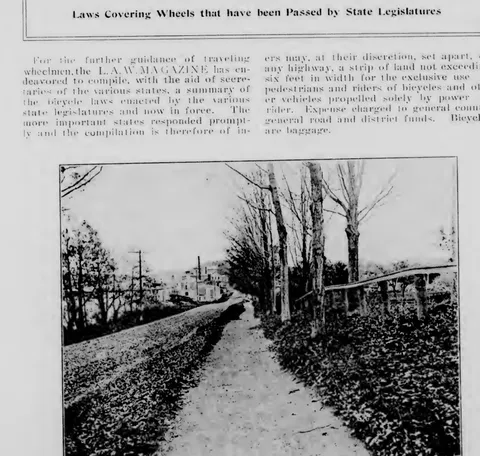 (opens in a new tab)
 On the Oswego-Fulton (N.Y.) sidepath 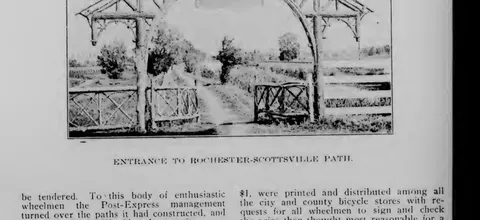 (opens in a new tab)
 Entrance to Rochester-Scottsville Path 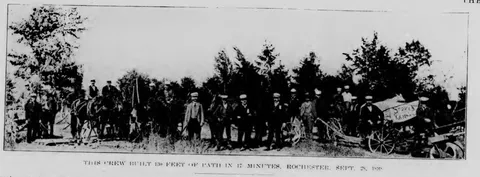 (opens in a new tab)
 Crew that built 130 feet of path in 17 minutes, Rochester 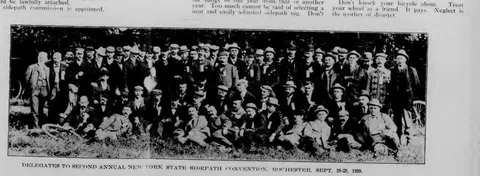 (opens in a new tab)
 Delegates to Second Annual New York State Sidepath Convention
Mastheads 2
 (opens in a new tab)
 L.A.W. Magazine title-piece  (opens in a new tab)
 L.A.W. Magazine title-piece
11 advertisements
 (opens in a new tab)
 McKinley is Elected, Leland & Faulconer chainless gears  (opens in a new tab)
 20th Century Headlights, oil and gas bicycle lamps  (opens in a new tab)
 Wool Soap, A.G. Spalding & Bros.  (opens in a new tab)
 Adams' Pepsin Tutti Frutti, Euchre, with a saddle/sundries advertisement strip 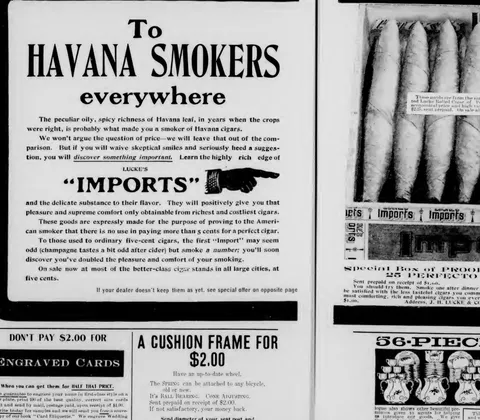 (opens in a new tab)
 Lucke's Imports cigars, To Havana Smokers Everywhere 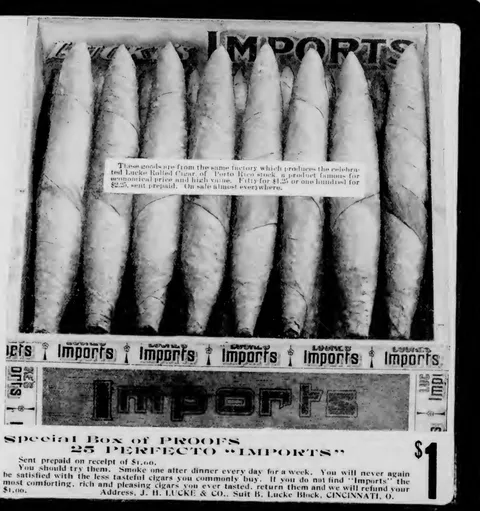 (opens in a new tab)
 Lucke's Imports cigars, Special Box of Proofs  (opens in a new tab)
 56-Piece Tea Set Free, Salvona Soap Co. 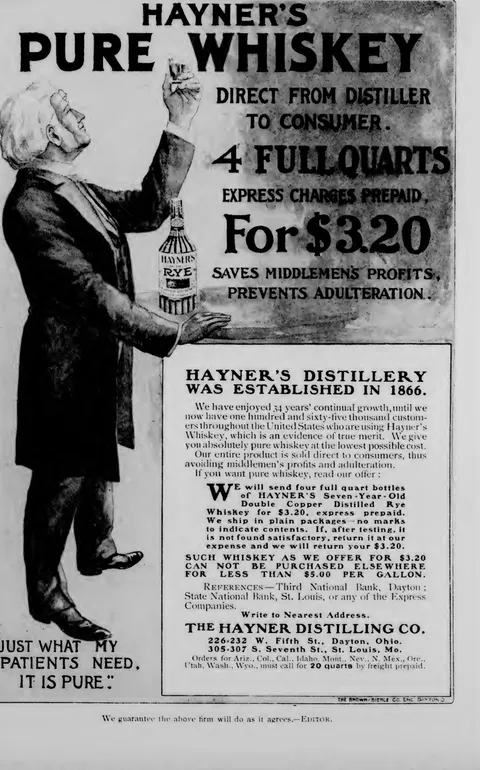 (opens in a new tab)
 Hayner's Pure Whiskey 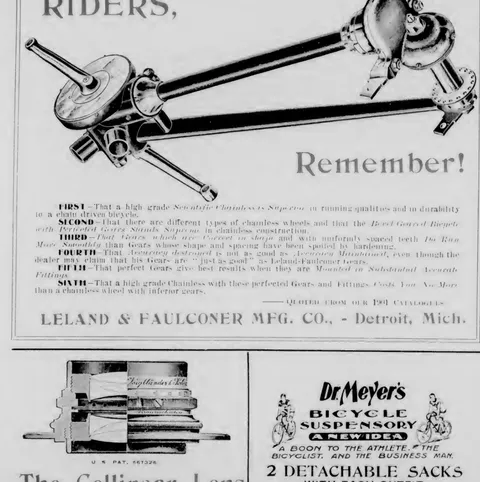 (opens in a new tab)
 Riders, Remember!, Leland & Faulconer chainless gears 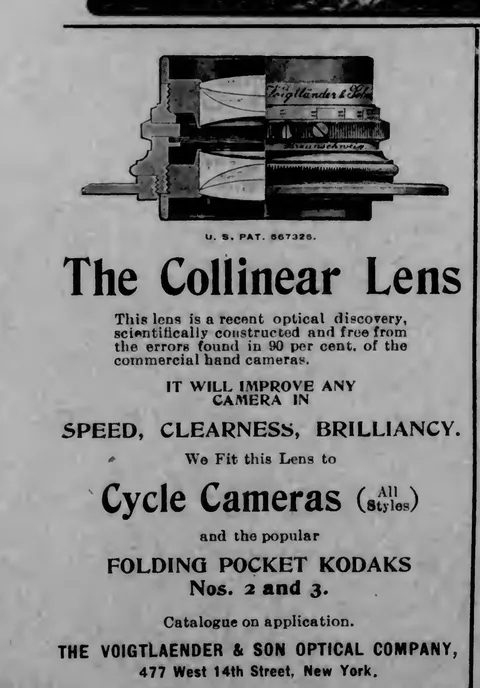 (opens in a new tab)
 The Collinear Lens, Voigtlaender & Son 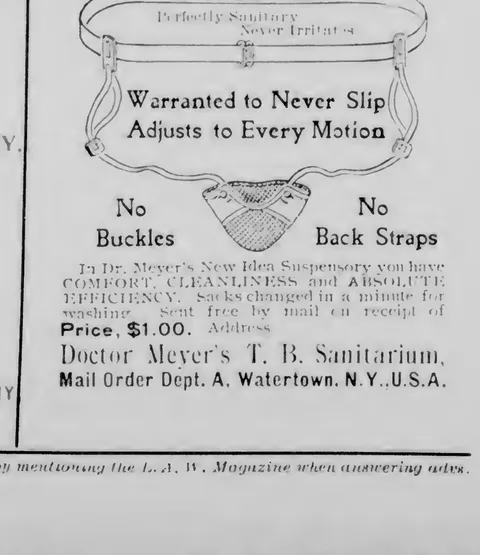 (opens in a new tab)
 Dr. Meyer's Bicycle Suspensory