Vol 31, No 9
190165 articles30 images
Articles in this issue
- The magazine's monthly editorial-comment department for February 1901, opening on the eve of the L. A. W. National Assembly at the Hotel Lafayette, Philadelphia. It runs through League reorganisation, sectional divisions, the presidential race, cycle paths and trade news.
- The National Assembly of the League of American Wheelmen convenes at the Hotel Lafayette, Philadelphia, on the 13th, the first day given to good roads papers and the 14th to officers' reports, the election and the Committee on Revision's entirely new draft of constitution and by-laws.
- How far the Assembly will go cannot be forecast; the most radical proposition talked of is abolishing the divisions and making the national body the collective unit, which New York and other large divisions will fight. Introduces a letter received from Mr. R. S. Webbe of the New York division.
- Webbe opens his letter cautioning against too radical a revision of articles that have stood the test of time, "Let well enough alone" is his watchword, and likens a new constitution to a new broom whose result depends on the housekeeper.
- Webbe argues the Assembly's real business is the League's continually depreciating membership: the question is not how to get new members but how to keep them once recruited.
- Webbe proposes division and consulate clubs as the League's nucleus, with consuls interviewing members in their districts or communicating through the MAGAZINE, and shares of stock issued to old members who wish to join.
- Webbe on the division club as the only means of holding members when all else fails, blaming decline on apathy and on officers whom the rank and file never get to meet, "Who is president, or who is chief consul now?"
- Whether the national body, division or club becomes the unit, some change is needed; the magazine endorses Caspar Whitney's suggestion in Outing of sectional divisions, coupled with a "hands off" policy toward the larger successful divisions.
- A concrete scheme redrawing League territory into seventeen numbered sectional divisions, from No. 1 (Maine, New Hampshire and Vermont) through No. 11 (Ohio, Indiana and Michigan) to No. 17 (Washington, Oregon, Idaho and Montana).
- Consolidation would cut the six officers of Maine, New Hampshire and Vermont to two and make capable officials easier to secure; Maine's chief consul is named a good leader and Mr. Earle of Michigan a splendid chief consul for the eleventh division.
- One sectional office in place of two or three would save money for the members affected; League members in Ohio would not care whether their chief consul sat in Cleveland, Detroit or Indianapolis so long as the division showed life and results.
- State Senator Horatio S. Earle of Michigan and Mr. Geo. A. Perkins of Massachusetts are likely to be the only starters in the presidential stakes, Earle having started his boom well before Perkins' advocates got to work.
- Western wheelmen revive the Chicago-Minneapolis cycle path with a new route from Chicago to Joliet, along the Illinois river and the Hennepin canal to Rock Island and on to Austin, Minn.; a table of altitudes from Minneapolis (826 ft.) to Chicago (590 ft.) is printed.
- Although urged by Otto Dorner, former chairman of the L. A. W. Highway Improvement Committee, and by Senator Stout, Governor La Follette failed to mention the state-aid constitutional amendment in his message, though he called much Badger State road money wasted.
- England's interest in cross-frame construction; fires at the Fowler Cycle Works, Chicago and the McKaig-Dorntge Drop Forging Company at Ebenezer, N. Y.; the death of Felton Parker; the Patee Bicycle Company's purchase of the Outing plant at Indianapolis; and the successful sixth annual cycle and motor show at Madison Square Garden.
- Portland, Ore. wheelmen prepare a new side path bill; W. S. Bull heads the cycling department of the Pan-American exposition at Buffalo and urges the next National Meet be held there; Walter L. Stannard (38,887 miles), A. L. Matlack (261 centuries) and Victor Morgenroth take the century club honours.
- A dated diary of cycling and racing events from December 1900 and January 1901, the Austral Wheel race at Melbourne won by A. C. Forbes, Kramer, Walthour and Cooper at New York, Walthour's 1,099-mile Boston six-day victory, and the first American motor cycle races at Boston.
- T. Phillip Terry, reprinted from Outing for October 1900, rides the Tokaido along Lake Biwa, the "Japanese Killarney", past the priests' cormorant islands and the eight-mile Biwa-Kyoto water tunnel, then through rainy Kyoto to Osaka and on toward Kobe. Illustrated with views near Kobe and of the Tokaido.
- A Foxton Chinaman collared riding his wheel on the footpath sends the magistrate a written apology and defence instead of appearing in court; the defendant was let off with a fine of 2s 6d.
- The magazine's general sporting department for the month, covering the three-league baseball war, golf, the Pan-American exposition programme at Buffalo and a budget of athletic history and news.
- The three big circuits announced for 1901, National League, American League and American Association, are tabulated, and the New York Sun's analysis quoted: the Association is the National League's catspaw against Ban Johnson's American League, with Koch, Havenor, Quin and Irwin expected to lose their money.
- Official 1900 averages for the New York State, Connecticut, Montana and California leagues: Quinn of Cortland led at .411, Ladd of Derby .371, McIntyre of Anaconda-Helena .441 and Pace of Stockton .314, with the leading fielders named in each.
- The golf department for the month, covering the United States Golf Association presidency, a freak stroke at Detroit, the Florida East Coast tournament dates and Horace Hutchinson's advice on clubs for women.
- Robert H. Robertson of New York, president of the Metropolitan Golf Association, is expected to succeed W. B. Thomas as United States Golf Association president at the annual meeting at Delmonico's on February 28; Andrew Carnegie was not seriously considered by the nominating committee.
- During the Lower Lakes championship at Detroit, Lieutenant George S. Hayward, U. S. N., drove 175 yards through a parsonage screen and window, was boosted inside by T. H. Newberry, played the ball out through two rooms and halved the hole in six with Mr. Hudson.
- Secretary Charles B. Cory announces the Florida East Coast Golf Association's third annual tournament, Nassau (February 28 and March 1-2), Miami, Palm Beach, Ormonde and St. Augustine, with the hole distances of each course.
- Horace Hutchinson urges women, and many men, to use spoons rather than cleeks and driving irons, since the wood does better work than the iron for all but the passing strong and passing skilful.
- The tentative sports programme for the Pan-American exposition at Buffalo: college baseball and football, an intercollegiate meet, A. A. U. championships, lawn tennis, a Marathon race in the Stadium, lacrosse, cycling on a proposed Stadium track, Caledonian games, gymnastics and military manoeuvres, with communications to Jesse C. Dann, 433 Ellicott Square.
- A department of short sporting-history notes covering tennis, polo, croquet, handball, hockey and basketball, together with a memorial evening at the New York Athletic Club.
- Tennis traced from the kings and nobles of France, Italy and Spain through Major Wingfield's 1874 indoor game and the All-England club's 1877 rules to the American record, R. D. Sears' 1881-88 singles run and every doubles pairing down to Ward and Davis.
- At the annual dinner of the Veterans of the New York Athletic Club on January 19, the Fresh Air Club presented oil portraits of the late William B. "Father Bill" Curtis and his life-long comrade Harry Buermeyer, the guest of honour.
- Polo's short history: the first recorded club in India in 1862, where the game was called "kangai", the first match at Calcutta in 1863 between the Calcutta and Barrackpore teams, and its introduction to England as "hockey on horseback".
- Croquet, sometimes called "Presbyterian billiards", has been remade with short-handled mallets, composition balls and narrow wickets, its grounds banked and its name changed to "roque".
- Handball, long popular in Ireland and among players in the West, was slow to gain prominence in the East but has been taken up at the colleges and promises to become a leading sport.
- Hockey, the boys' game of shinny transferred to ice, has become a fashionable public sport with its own leagues and crowds, and is played on pumiced floors by athletes on roller skates where no ice is at hand.
- Luther Gulich, a prominent Y. M. C. A. instructor of athletics, invented basketball, football without the roughness of the latter, with tossing in place of kicking, and it is played by male and female athletes in every gymnasium with room for it.
- Governor Hill of Maine's inaugural address holds that improved highways matter most to the country towns and can only come through state and perhaps county aid, while opposing a state highway commission that would take control from the towns.
- Normandy's roads are splendid for cycling, though the straightness of the main routes hides the country; the by-ways are excellently kept, French village names plainly written up, and signposts, milestones and the decimal system make navigation simple.
- Russian women must obtain royal consent before owning a wheel, Frenchwomen a signed declaration from their husbands before joining the touring club, and in Florence women cyclists must carry two warning bells where men need only one.
- Helena M. Maguire's life of John Loudan Macadam, born at Ayr in 1756, who made a fortune in New York as a loyalist prize agent, returned to become trustee of the Ayrshire roads, addressed the House of Commons in 1811 and macadamised England's highways while refusing payment and a knighthood. Illustrated with the Rochester-Scottsville path.
- The death is announced of Geo. J. Hobe of San Francisco, one of the pioneer wheelmen of the coast and an L. A. W. veteran.
- A new department opening with an essay on mankind's habit of resisting each advance in self-propelled transport, from the steam carrier exhibited at Alexandria twenty-one centuries ago to the motor cycle, and crediting bicycle makers' ball bearings, wire spokes and pneumatic tires (patented as far back as 1845) with the modern road vehicle.
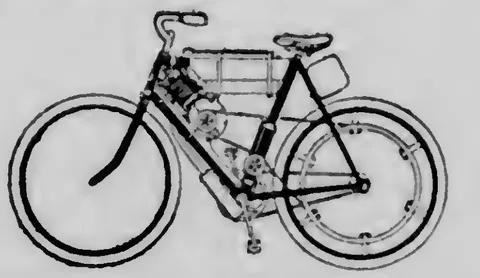
- A description of the Auto-Bi motor bicycle built by the E. R. Thomas Motor Company of Buffalo: a 20-lb., 1 1/2 h.p. Thomas motor on an aluminium bed plate, no carburetor but a mixing valve, belt drive, coaster-brake, five to twenty-five miles an hour, sold through bicycle agents at $200 complete.
- A three-stanza comic poem by Fred Emerson Brooks about overtaking a wheelwoman on the pike, tightening her pedals, and catching her in his arms when she strikes a stone coasting down the hill.
- The February editorial page, under the L. A. W. Magazine and Good Roads masthead, backs Senator Horatio S. Earle's plan for a special train of road-making machinery to visit twenty-five states in three months, and adds paragraphs on a Duluth fire alarm, a British court ruling the bicycle a necessity, coaster-brakes in 1901, Pennsylvania farmers' sample roads and Rochester's good streets.
- The League's official section, edited by Abbot Bassett, carrying the secretary's remarks, the roster of officers and committees, division reports and financial statements, and the touring department.
- Abbot Bassett on February's place in League history, the hole the League must pull itself out of, the Revision Committee's failure to provide any plan for local organization, and the Connecticut State Federation of Cyclists as evidence for developing the consulate as the unit.
- League members are given a 7 per cent discount on Mr. Elwell's three 1901 European tours, leaving New York May 25 (Holland, England and France), June 22 (France, Switzerland, Germany, Holland and England) and August 17 (Scotland, England and France).
- The League's national officers: President Conway W. Sams of Baltimore, First Vice-President Robt. T. Kingsbury of Keene, N. H., Second Vice-President A. B. Choate of Minneapolis, Treasurer J. C. Tattersall of Trenton and Secretary Abbot Bassett of Boston.
- Chairmen and members of the League's committees: membership (W. A. Howell), rights and privileges (Herbert W. Knight), rules and regulations (Albert Mott), improvement of highways (H. B. Fullerton), touring (Geo. M. Schell) and press (Geo. L. McCarthy).
- Chief consuls and secretary-treasurers state by state, with post office addresses, beginning with Colorado, Connecticut, Delaware, the District of Columbia, Illinois, Iowa, Kansas and Kentucky.
- The League's consuls abroad, including Joseph Pennell in London and T. Lee Lloyd in Liverpool, Paul Oeker and J. M. Erwin in Paris, Friedrich Schweicher at Duren, Ercole Abrate at Turin, Otto Mayer in Vienna, J. Lennox at Dumfries and Raisa Earl at Tokio.
- Chief Consul F. A. Amborn calls on every local consul in Iowa to write him at once, announces the December decision to rebate 10 per cent on all new members, and urges each member to send in at least one new application.
- Abbot Bassett's secretary's account ($27,906.23) and James C. Tattersall's treasurer's account ($29,673.73) for 1900, itemising 2,883 applications, 21,259 renewals, salaries, postage, the L. A. W. Bulletin and committee expenses, examined by Clarence W. Small, chairman of the auditing committee.
- Statement of the League's loan account at December 31, 1900, listing Colorado, Connecticut, District of Columbia, Illinois, Indiana, Iowa, Maryland, Massachusetts, Michigan, New Jersey, New York, Southern California and Wisconsin: $10,258.30 advanced, $6,968.01 still outstanding.
- At the annual board meeting at Pawtucket on December 27, 1900 the division transferred $50 from the highway improvement committee to the cycle path fund, voted not to pay delegates' expenses to the national assembly, and named Barton, Law and Kenyon its finance committee.
- Chief Consul M. M. Belding, Jr. supplements the January consul list, reports the division represented in some 350 towns of a state with 5,000,000 inhabitants, and appeals for names of energetic men to serve as consuls, promising recruiting suggestions next month.
- Secretary-treasurer John F. Clark's accounts for the year ending November 30, 1900: receipts $7,751.27 including loans from C. J. Obermayer, M. M. Belding, Jr. and W. S. Bull, and disbursements of $7,613.92, of which $4,491.66 went to Abbot Bassett.
- W. H. Chubb's membership return for December 31, 1900 (988 members; Cleveland 165, Cincinnati 133, Canton 60), the annual board meeting at Cleveland with Emil Grossman and Thos. L. Pogue elected assembly delegates and J. D. Nicol filling Barnett's vice-consulship, plus Chief Consul Chas. W. Mears' report and the division's financial statement.
- The concluding half of the division's annual meeting: the chief consul on its finances and road book, Carl Hering's road book committee report (4,800 copies, a partial revision of the eastern section and Mr. Fay's Philadelphia riding notes), Joseph Estoclet's press committee report, and Mertens' legislative report on Judge Simonton's ruling that the sidepath law is unconstitutional.
- Chairman George M. Schell divides the country among the seven members of the national touring committee, Peck for New England, Bull for New York, Ryland for Virginia, Munro for Ohio, Black for the Middle West and Welles for the Northwest, and lists the thirteen prepared through routes, from New York to Chicago to Chicago-Salt Lake City.
- Alonzo D. Peck's pointers for L. A. W. members wintering in Bermuda: the Quebec Steamship Company carries wheels free from Pier 47 North River, consul A. C. Thomas uncrates and cleans a machine for 50 cents, rental rates run 12 cents an hour to $9 a month, and the rule of the road is the reverse of the American.
- A Pittsburg correspondent (L. A. W. No. 53418) asks that the official organ print the touring committee's prepared tours, half a page to a page an issue, to popularize touring; Chairman George M. Schell endorses the idea and the editors promise to find the space.
- Members' letters: W. H. Hale's compliment on the magazine, W. F. Selle and others on the November political advertising and a publisher's right to reject it, M. D. Fletcher of the national sidepath committee on free interstate sidepath tags, Henry C. Morse of Peoria correcting the claim that the L. A. W. copied the C. T. C.'s emblem, and A. B. Choate on the lines along which a national wheelmen's organization should be built.
- Trade notes on the Solar acetylene lamp (Badger Brass, Kenosha), Lucke's Exports cigars, the Majestic lamp (Edw. Miller & Co., Meriden), Champion hubs with Knock-Out axles (I. A. Weston, Syracuse), Twentieth Century lamps, the $4.75 Goodyear detachable clincher, G. & J. tires, dealer F. B. Catlin of Winsted and Leland & Faulconer's bevel gears, closing with the Parisian who smuggled brandy in his tires.
Images in this issue 30 pictures from 18 pages
Illustrations 1
 (opens in a new tab)
 Bicycle line drawing
Photographs 6
 (opens in a new tab)
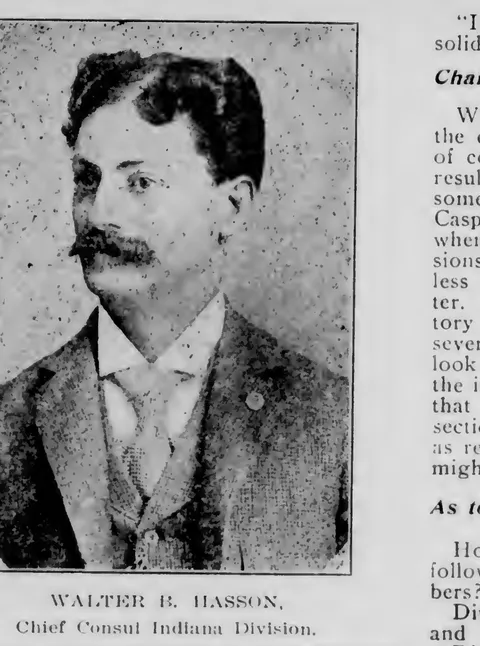
 Walter B. Hasson, Chief Consul Indiana Division 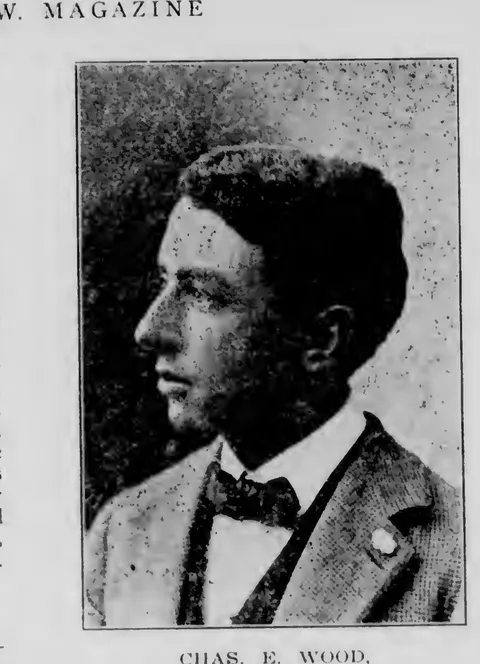 (opens in a new tab)
 Chas. E. Wood, Secretary-Treasurer District of Columbia Division 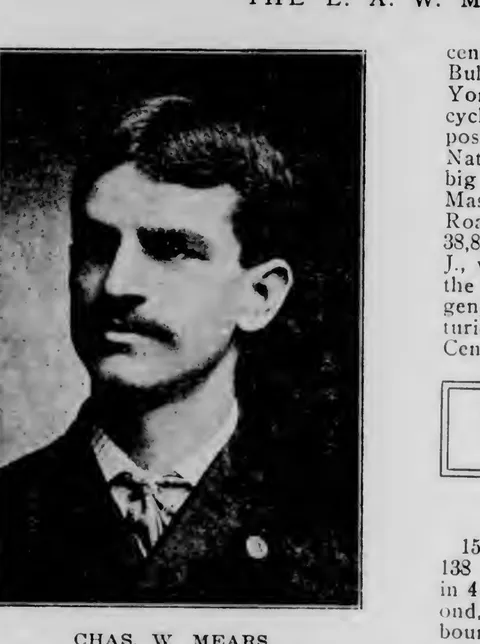 (opens in a new tab)
 Chas. W. Mears, Chief Consul Ohio Division 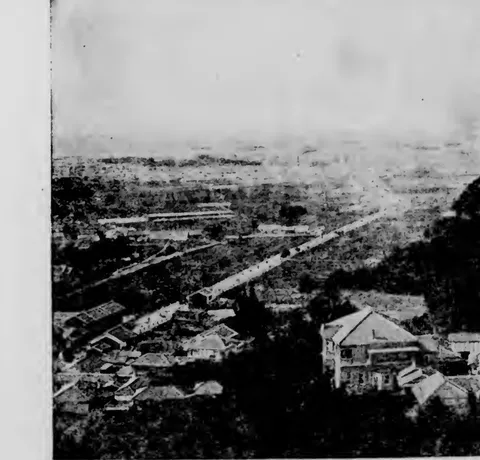 (opens in a new tab)
 The Neighborhood of Kobe 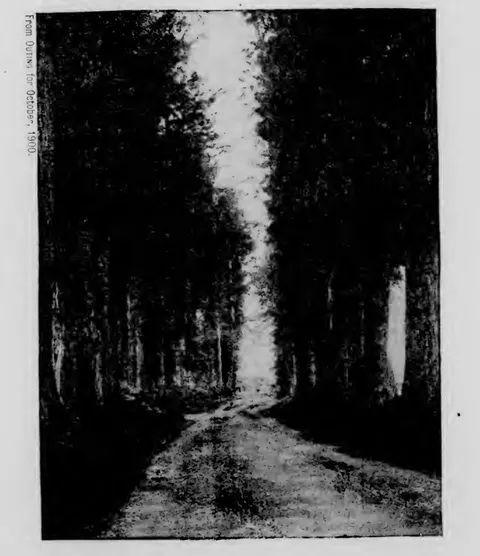 (opens in a new tab)
 A Bit of the Tokaido 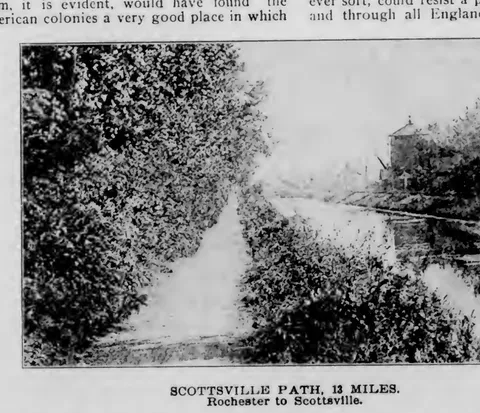 (opens in a new tab)
 Scottsville Path, 13 miles
Diagrams 1
 (opens in a new tab)
 The Auto-Bi motor bicycle
Mastheads 2
 (opens in a new tab)
 L.A.W. Magazine title-piece  (opens in a new tab)
 L.A.W. Magazine title-piece
20 advertisements
 (opens in a new tab)
 Diamond Double Tube Tires 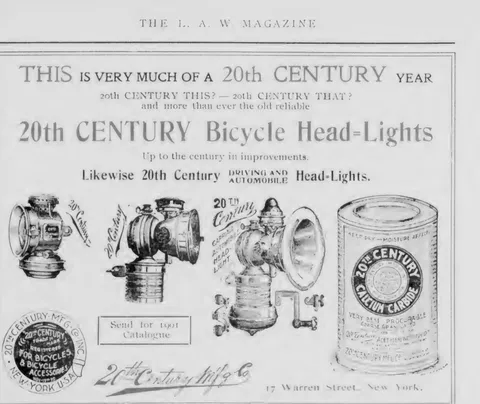 (opens in a new tab)
 20th Century Bicycle Head-Lights 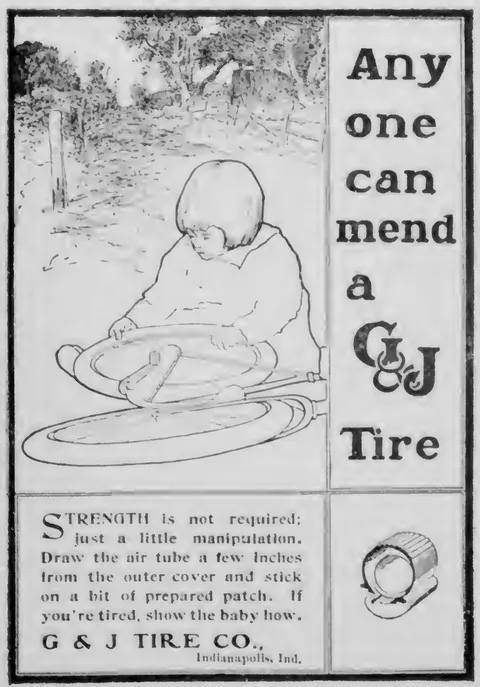 (opens in a new tab)
 G & J Tire Co., Any one can mend a G&J Tire 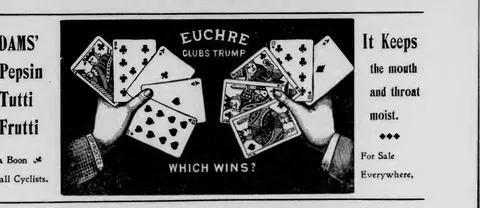 (opens in a new tab)
 Adams' Pepsin Tutti Frutti, Euchre  (opens in a new tab)
 Sen-Sen, Throat Ease and Breath Perfume 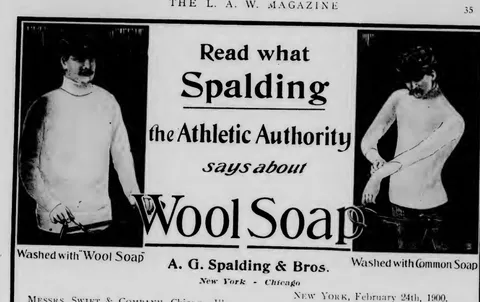 (opens in a new tab)
 Wool Soap, A.G. Spalding & Bros. 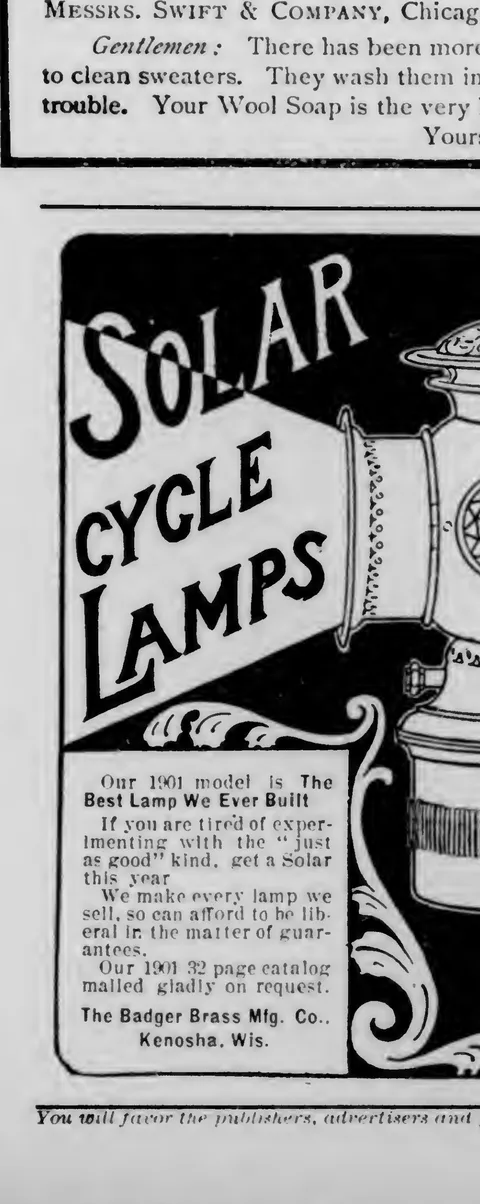 (opens in a new tab)
 Solar Cycle Lamps 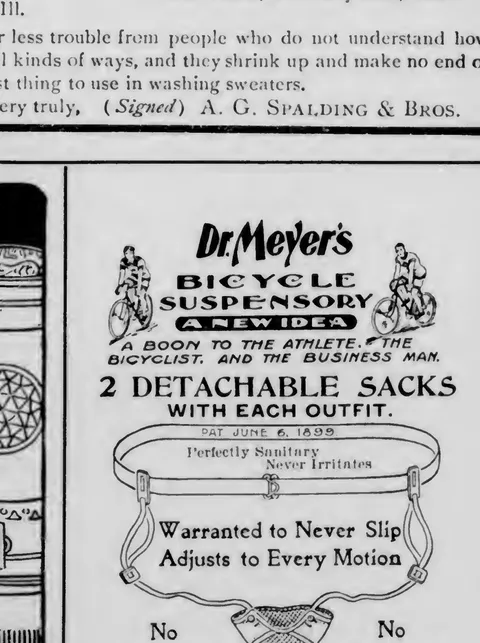 (opens in a new tab)
 Dr. Meyer's Bicycle Suspensory 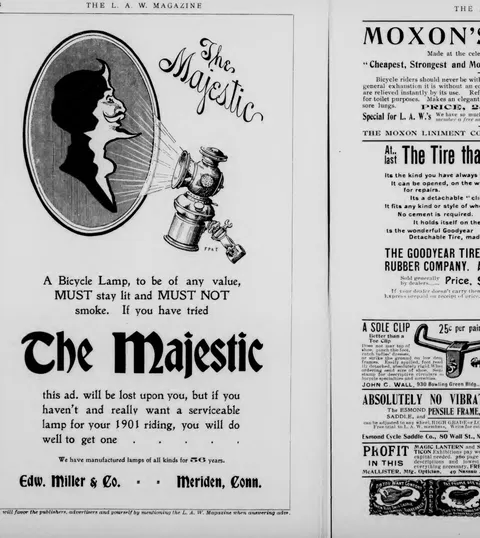 (opens in a new tab)
 The Majestic bicycle lamp 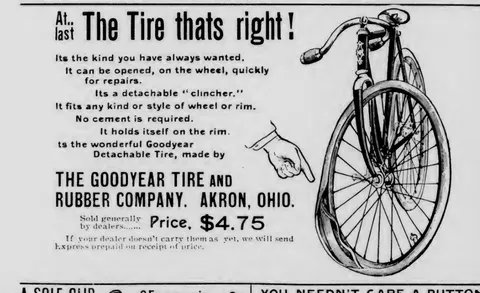 (opens in a new tab)
 Goodyear Detachable Clincher Tire 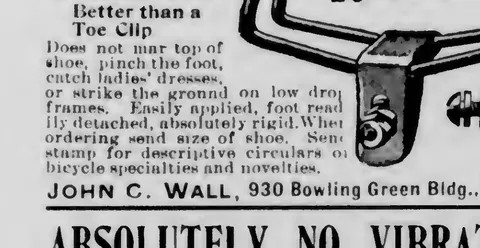 (opens in a new tab)
 A Sole Clip 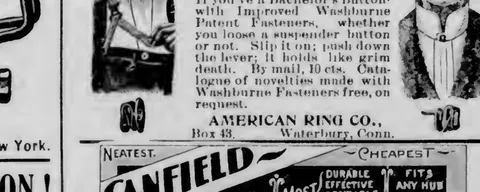 (opens in a new tab)
 Washburne Patent Fasteners, American Ring Co. 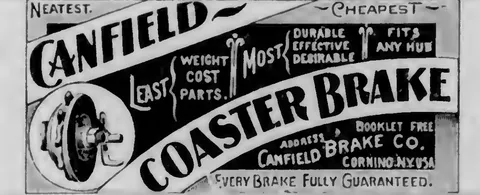 (opens in a new tab)
 Canfield Coaster Brake  (opens in a new tab)
 Trade dealer marks advertising strip 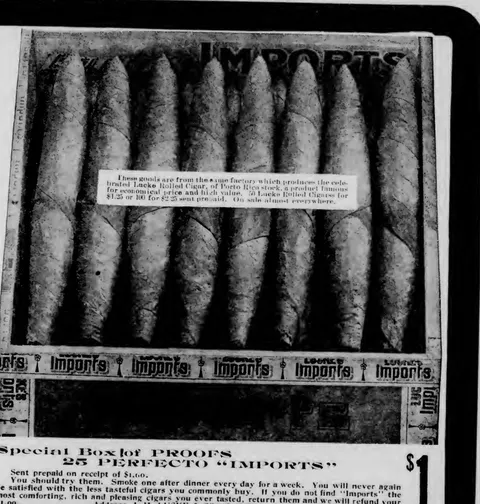 (opens in a new tab)
 J.H. Lucke & Co. Imports cigars  (opens in a new tab)
 Robinson's Bath Cabinet 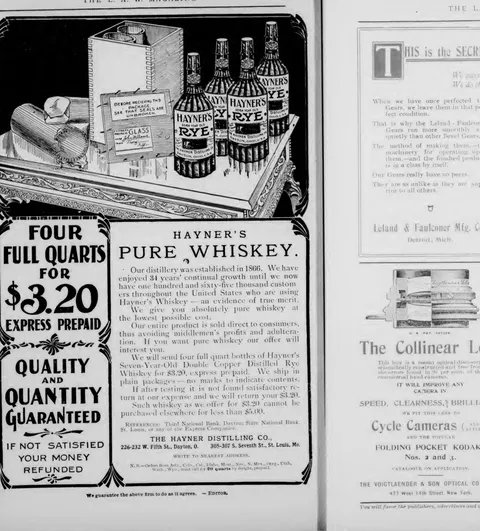 (opens in a new tab)
 Hayner's Pure Rye Whiskey 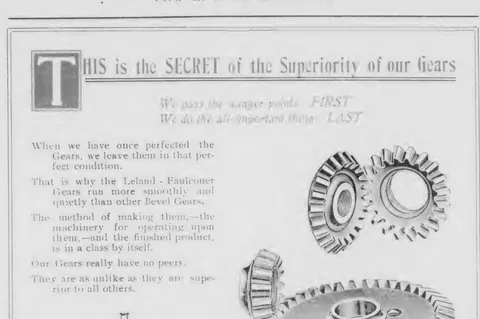 (opens in a new tab)
 Leland & Faulconer bevel gears 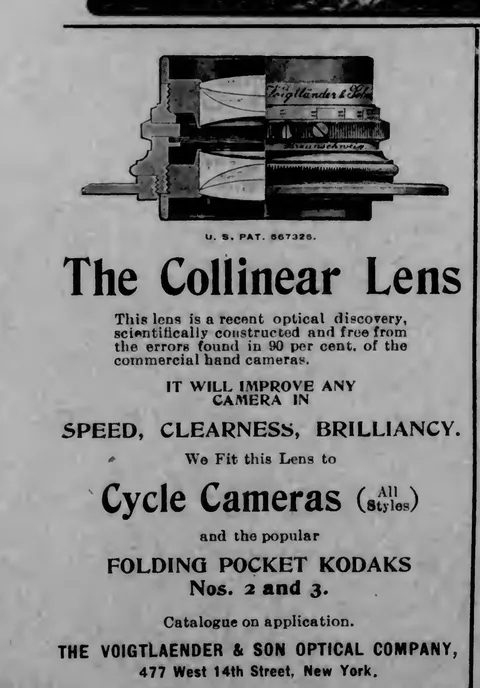 (opens in a new tab)
 The Collinear Lens, Voigtlaender & Son 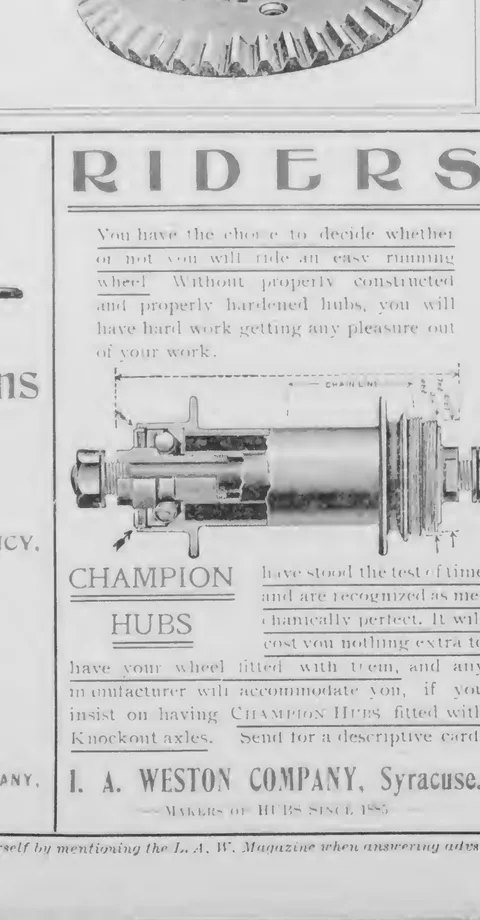 (opens in a new tab)
 Champion Hubs, I.A. Weston Company