The Cycle Age and Trade Review, Vol 21, No 24
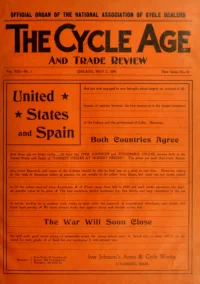
Articles in this issue
- A Chicago parts manufacturer reported a troubling trend of tinsmiths and hardware stores absorbing bicycle repair work in smaller towns, with some attempting frame repairs in soft solder before purchasing proper brazing equipment.
- Buffalo dealers reported steady business despite the Spanish-American War, with warm-weather buyers crowding Cycle Row and manufacturers still running at full capacity to meet demand, while shortages of front forks and Shelby tubing emerged.
- A Chicago manufacturer drew a cautionary parallel between shoddy buggies sold by traveling hucksters to Wisconsin farmers in years past and the current flood of inferior bicycles, warning that fraudulent goods ultimately destroy both buyer trust and market reputation.
- A survey of foreign markets found that single-tube tires, while gaining ground in some countries, faced resistance from riders unfamiliar with their repair methods and from dealers who lacked the necessary tools and instructions.
- A weekly table records exports of bicycles and parts from the port of New York for the week ending April 26, totaling $94,502. Germany was by far the largest destination at $39,957, followed by the East Indies at $19,029 and the United Kingdom at $13,087.
- The issue examined how dealers and manufacturers could improve margins by disciplined use of cash discounts, arguing that prompt-payment terms represented a substantial and often overlooked source of profit.
- The article discussed rising bicycle theft and reviewed the available locks, registration schemes, and legal remedies that dealers and riders could use to discourage and recover from bicycle theft.
- A report on the growing use of Pegamoid, a leather substitute, in bicycle saddle and accessory manufacture, covering the material's properties and its acceptance by the trade.