Vol 15, No 1
190533 articles19 imagesFrench
Articles in this issue
- Reminder to new members of the club's photographic inventory of France's picturesque sites and monuments, 25 of a planned 33 volumes now published at 110 francs the set, with notices by the geographer Onésime Reclus and coloured departmental road maps. Copies are given free to those who teach the young.
- The Conseil d'administration creates a horse-touring committee chaired by M. Hornez, director-general of the haras, with Baron du Teil du Havelt of the Société hippique française and Max-Vincent as vice-presidents, and votes it 10,000 francs. Its three sub-sections cover tourism (stabling, tariffs, itineraries), technique (breeding, carriages, harness, pneumatic and solid tyres, shoeing) and hippic legislation.
- A. Ballif argues the Estérel massif is France's Yellowstone, praising the Pas de Barthélemy seen at sunset from the forest road and the Sentier des Suvières at sunrise, and quoting the naval captain Ozanne, met in the empty hills, that he had seen nothing like it anywhere. He invites painters to work its three hundred square kilometres of inalienable state forest.
- Minutes of the 16 December 1904 sitting under Glandaz: the Saint-Malo chamber of commerce agrees to seek amendment of the decree on quay dues, and the committee adopts an identity card for boating members. Garages are secured with the Société Nautique de la Basse-Seine and the Union Nautique de Lyon on the quai de Caluire.
- Report on the first international motor-boating congress, held at the Grand Palais from 19 to 24 December during the Salon de l'Automobile, with the T.C.F. represented by Rondet-Saint. Its four sections, chaired by de Chasseloup-Laubat, Rondet-Saint, the naval engineer Terré and Max-Richard, voted for freedom of circulation, a single boatman's permit, abolition of speed limits, buoyed hazards, inclined planes beside busy locks and compulsory lifesaving gear aboard motor launches.
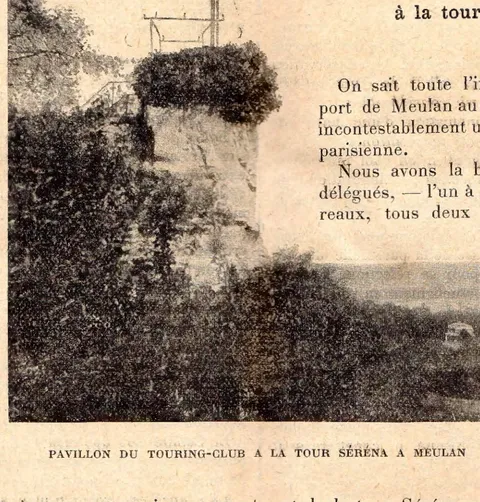
- A photograph of the club's flag flying from the tour Séréna, M. Duchesne's property above the yachting port of Meulan. Signed A. B., the note credits the two local delegates, Duchesne at Meulan and Moussette at Les Mureaux, and looks for more excursions and regattas in the region.
- Minutes of the 27 December sitting under Defert: listing requests for the Tour Jeanne d'Arc at Compiègne, the cemetery cross at Puiseaux and the château of Mennetou-sur-Cher; threats to the chapel of Saint-Laurent at Tournus, the trees of Berrien cemetery and the château of Maisons-Laffitte. André Hallays reports the forêt de Bercé saved and reproduces the forest inspector's notices threatening article 196 of the Code forestier against anyone carving a tree.
- The model "chambre hygiénique" shown to the 400,000 visitors of the seventh Exposition de l'Automobile et du Cycle, furnishable by an innkeeper for 290 francs, with washable lacquered paint in place of wallpaper. Credits go to Achard-Clavel of Draguignan for the platane furniture, Viacroze of Tekko et Salubra for the washable wall coverings and Pérès et Durand for the inlaid linoleum, and the club and the hoteliers' syndicate each vote 1,500 francs to reward long-serving hotel staff.
- Campaign to move the start of French school holidays from 1 August to 12 or 13 July, as the Syndicats d'initiative asked at Grenoble on 5 September 1904, so that mountain resorts get a longer season. Includes C.-A. Laisant's note proposing holidays from 12 July to 1 October with Easter cut to ten days, the club's letter to the Minister, and support from the deputies Fernand Engerand and Louis Mill.
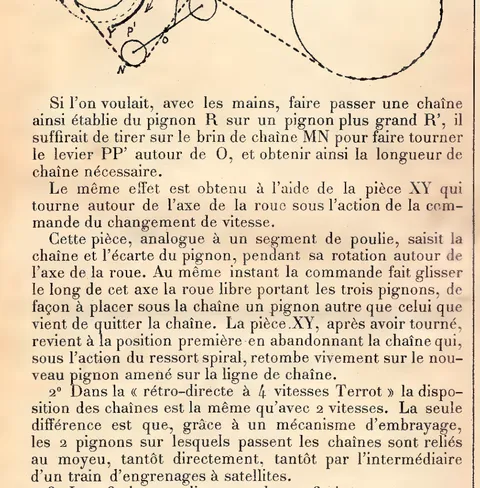
- Perrache surveys the geared touring bicycles at the Salon du Cycle: the three-speed Georges Richard-Pedersen with its hammock saddle, the Hirondelle de Saint-Étienne's single-chain rétro-directe (demonstrated by an electric motor shifting ten times a minute for nine hours a day), Peugeot's three-speed and rétro-directe hubs, Terrot's four models including a gearless three-speed and the Svéa levocyclette, and La Touricyclette's chainless two-speeds. He also notes new Westwood rims giving brakes a proper braking surface, and last-minute leakproof valves.
- With the Swiss and Italian Touring Clubs, the T.C.F. presses the Finance and Foreign Ministries to extend to motorcycles the duty-free entry already granted to bicycles on production of a club card, a reciprocity Switzerland, Italy, Germany and Luxembourg already allow. Brunet, director-general of customs, promises a favourable opinion; de Lahausse of the newly formed international federation of motorcycle clubs joined the deputation.
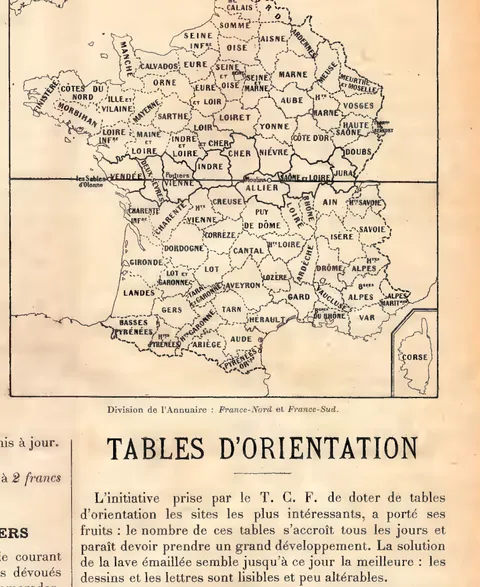
- The 1905 yearbook, out on 10 December, now comes as two volumes of about 400 pages, France-Nord and France-Sud, at 2 francs, absorbing the former motoring annual and adding touring and excursion centres and station connecting services. The Annuaire des Pays Étrangers follows in February with foreign cycling and motoring regulations and a five-language and Esperanto phrasebook.
- H. Rouville reports that enamelled lava has proved the best material for the club's viewpoint orientation tables, but that delegates struggle to supply the panoramic drawing; Eydoux, who surveyed the col de Riou panorama from Tarbes, has written a note on building one from panoramic photographs. A new table has just been placed on the ramparts of Langres by Suquet, and others are in hand for Pau, the Puy de Dôme, the Aigoual, the Galibier, the Canigou and Grenoble.
- Extracts from Forestier, conservator of the Bois de Boulogne, on watering roads with emulsions of tar or bitumen oils, westrumite, odocréol, pulveranto, opulvite, rapidite, instead of tarring, which leaves roads slippery and muddy. At ten per cent oil the effect lasted about eight days on the route du bord de l'eau opposite Bagatelle, at roughly 900 to 1,200 francs per kilometre of six-metre road.
- The Compagnie française de Navigation, with the Compagnie des Wagons-Lits, opens four sailings a week from Nice to Corsica, six hours to Île Rousse and Calvi, eight to Ajaccio and Bastia, with restaurant service and luxury cabins. The note commends the island's Calanches to winter visitors as the only French scenery to rival the Estérel.
- News of local tourist syndicates: Annecy's general meeting of 5 November under Louis Grivaz, whose ten-year record the club offers as a model; the abbé Perron's lecture on the picturesque Jura at Lons-le-Saunier with over 300 views; Pau's requests to the Compagnie du Midi for better links to the Riviera; the Société guérandaise's free enquiry office, fixed-tariff carriage service to Batz, Le Croisic, Piriac, La Baule and Pornichet, and photographic competition; and the Société des Amis de Vienne.
- The club votes 350 francs for a wire-mesh net on an iron frame, eight metres long and 1.50 m above the parapet, at the Luzières bridge over the Agoût, where a steep descent meets a hidden bridge and cyclists and drivers have fallen 18 metres onto the rocks in several fatal accidents. The precedent is the similar installation made at the pont de Ramingao in the Alpes-Maritimes in April 1897.
- Continuation of the running table of warning posts and danger plates given by the Touring-Club and placed to date, listed by department and exact site, the côte du Câtelet and côte du Bucilly in the Aisne, the côte de l'Ouradon and Les Planques in the Aude, côte de Grosmagny in the Territoire de Belfort, Saint-Martin-de-Crau and the côte de la Viste in the Bouches-du-Rhône, and a long run of Calvados hills at Gonneville, Tierceville, Cairon and Falaise.
- The club prepares its annual repair of cycle paths for around 15 March, complaining that market gardeners and rag-pickers wreck newly laid tracks near Paris overnight. It explains the recurring holes on the Paris–Cherbourg path between Nanterre and Rueil, caused by the iron sleepers of the Étoile–Saint-Germain tramway, which Monneron of the Puteaux subdivision has had filled weekly and will have replaced with wooden ones; new work is planned at Roye in the Somme and on the Paris–Montlhéry path.
- A. Glandaz, president of the nautical touring committee, follows his canoeing studies with an argument for camping as the natural companion of the canoe, noting how English and American clubs practise it in organised parties. With the Canoe-Club he means to launch camping as the club once launched the bicycle, and promises further articles on organising a first expedition; spring camping excursions are already being discussed.
- L. Barbier welcomes the new horse-touring committee and answers M. Martin's question about breed with the example of his own half-bred golden chestnut mare, seven years old and 1 m 47. He advises judging conformation, "a barrel on four good stakes", and gives road practice: a strained tendon is the horseman's puncture, groom by hand, feed a litre of barley flour in the water, never water a horse straight after its feed, and walk steep hills rather than trot them.
- Léon Drouaux continues his campaign against the 2¾ hp motorcycle, which he says cannot climb every hill, overheats and above all shakes its rider, citing railwaymen's higher rate of hemiplegia from constant vibration. Drawing on his three machines, the odd Pernoo with its 1¼ hp engine behind the driving wheel, a 2¼ hp with the engine along the down tube and a 2¾ hp with the engine upright in the bracket, he concludes that an engine set obliquely on the down tube transmits far less vibration than the rational-looking vertical one.
- J.-G. Lazare, an Arts-et-Manufactures engineer, backs Drouaux from three years' use of a converted bicycle: a 55 mm bore engine of about ¾ hp, later rebored to 60 mm, on a 28 kg machine with strengthened forks. He ran it on lamp spirit with no carburettor, just a needle cock feeding the induction pipe, at about a litre per 40 km, reaching 35 km/h and touring the Morvan, Charollais and Burgundy.
- A delegate signing Ch. T. (no. 110,099) accepts that hydro-electric "houille blanche" plants keep mountain valleys populated, but shows how to stop them spoiling a site: under the water law of 8 April 1898 and the ministerial circular of 23 December 1884, any dam or intake needs authorisation preceded by a twenty-day enquiry, an engineer's site visit and a second fifteen-day enquiry. Delegates and syndicate presidents should file objections and attend the site visit, when the promoter is most willing to give undertakings on preserving the site and public access.
- C. et L. Boulanger recount their tour's encounters with badly protected monuments, above all the church of Brou at Bourg, where the railings round the jubé and the three tombs stand flush against the sculpture, stopping visitors seeing it but not touching it, and where a Paris photographer had to pay an architect to unbolt them, then quarrelled with local amateurs who wanted to use the moment. They thank delegates at Pontarlier, Morteau, Belfort and Bourg, and A. Monnier for lending his Mors car.
- L. Stévenon's day-by-day itinerary for the club's scholarship holders through the Aude, Ariège and Pyrénées-Orientales into Andorra and Spain: Toulouse to Foix and Ax-les-Thermes, the col de Chioula to Quillan, the forêt des Fanges and gorges de Galamus to Axat, the col de Casteillou to Mont-Louis, then Porté for the guided crossing to Andorra, returning by Amélie-les-Bains, Collioure, Port-Vendres and Perpignan to Carcassonne. He reports the hotels of the three departments generally good, to the credit of the local syndicates.
- Henri Boland defends the Landes against travellers who dismiss them as the dull country seen from the Bordeaux–Bayonne railway, describing instead the true landes between that line and the Atlantic, where pine grows with elm, oak and cork oak. He notes that from the Gironde to the Adour, Arcachon is the coast's only port and refuge, cites Ch. Duffart's work and Claude Masse's charts on the vanished mediaeval harbours, and asks what Bordeaux and Arcachon are waiting for.
- An account of commandant Renard's road trains, shown at the Salon de l'Automobile et du Cycle, and of a meeting round a map of the Tarn and the Causses to plan regular services into the gorges. Because the Renard trains need neither rails nor special roads, the scheme could open the region without the cost of a railway; the author also saw one at work in Paris, notably in the rue Jean-Goujon.
- A digression on American travel: the St Lawrence rapids and the Thousand Islands past Quebec and Montreal, Niagara where the Americans have already harnessed 150,000 of its 600,000 horsepower, the ruinous deforestation of the Rockies, and the alkali and salt deserts beyond the divide. Beyond the Great Salt Lake lie Ogden, the new entrepôt of the Rockies, and the Mormons' Salt Lake City, then twelve hours of Nevada sand and mirage.
- List of gifts to the club library, including Richard Andree's universal atlas from Velhagen and Klasing of Leipzig, Touring Club Italiano maps of Venetia, Sardinia and Corsica, Joanne monographs on Toulon, Hyères and Cannes from Hachette, Baedeker's 1905 United States from the publisher, and a rare five-volume Encyclopédie méthodique de la marine of 1783. The club appeals for further gifts to build nautical and hippic libraries.
- A letter from Dr L. Dumont, delegate and president of the Automobile-Club Creusois, welcoming the Revue's readers' near-unanimous case against heavy motorcycles and doubting the four-cylinder 12 hp machines shown at the Salon. What mountain cyclists want, he repeats, is a small auxiliary engine, Pawlowski's "cheval de renfort", that relieves the climb without taking away the pleasure of pedalling.
- Minutes of the 23 December 1904 sitting: the bureau is re-elected, the horse-touring committee constituted and voted 10,000 francs, and grants made of 500 francs for a cycle path at Roye on the Paris–Lille road, 250 francs to finish the Montlhéry path, 50 francs for a refuge at Montfaucon near Besançon and money for a dangerous gutter at Leysse in Savoie. Honours go to the Cambo club and to delegates Colle, Basset, Fhéry and Vachet, and a long list of new delegates is named.
- Minutes of the 15 December 1904 sitting under Max-Vincent: a member reports the Hirson police court fining a carter 6 francs for keeping his vehicle in the middle of the road for a kilometre despite the horn of the vehicle behind, and another asks who is liable for bicycles stolen from a club garage whose key was left with a servant, the committee holds the club responsible in principle. Bonnard is asked to study the rules on unlit level-crossing gates.
Images in this issue 19 pictures from 52 pages
Illustrations 1
 (opens in a new tab)
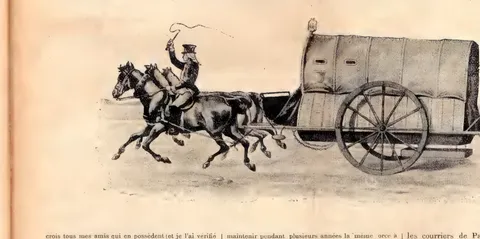
 L'Affaire du Courrier de Lyon, la voiture-courrier de 1792
Photographs 1
 (opens in a new tab)
 Pavillon du Touring-Club à la Tour Séréna à Meulan
Cartoons 1
 (opens in a new tab)
 Indispensable aux fumeurs, cyclistes, chauffeurs...
Maps 3
 (opens in a new tab)
 Division de l'Annuaire : France-Nord et France-Sud 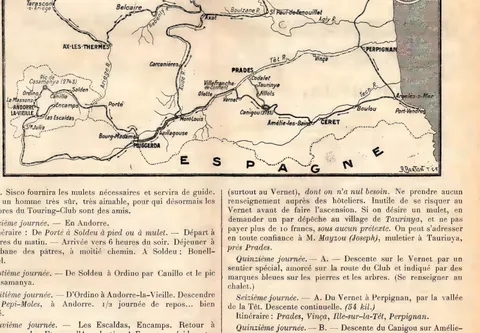 (opens in a new tab)
 Voyage des Boursiers du Touring-Club en 1904, Aude, Ariège, Pyrénées-Orientales, Andorre, Espagne 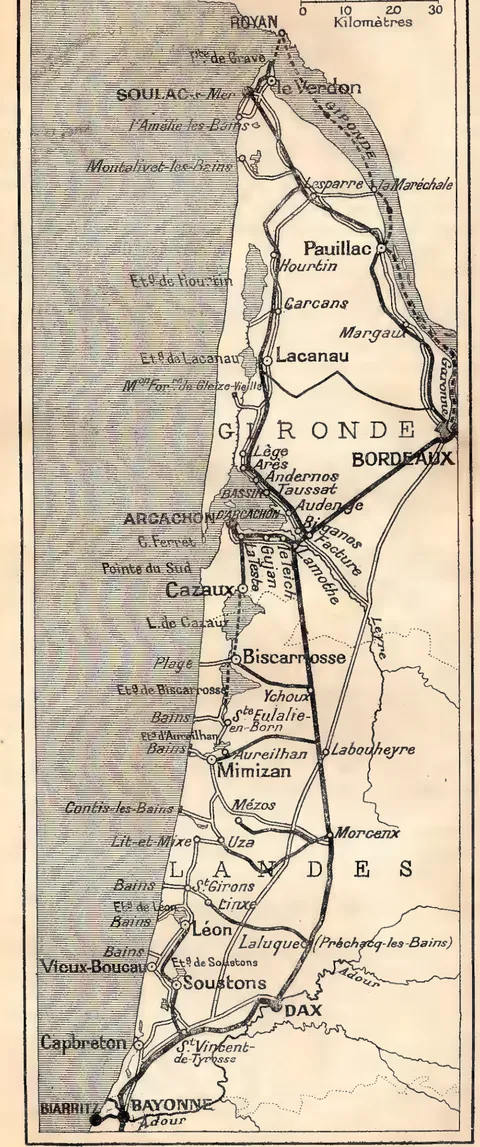 (opens in a new tab)
 Les Landes méconnues, carte de la Gironde et des Landes
Diagrams 1
 (opens in a new tab)
 Fig. 1, mécanisme de la Retro-Directe
Mastheads 1
 (opens in a new tab)
 Touring-Club de France, écusson
11 advertisements
 (opens in a new tab)
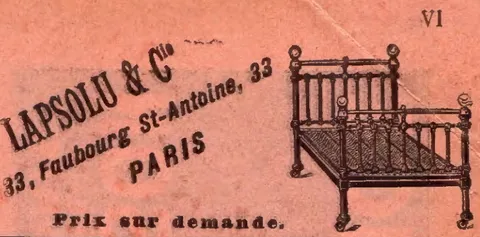
 Lapsolu & Cie  (opens in a new tab)
 Lisez Tous, Les Dégringoleurs de Pantes 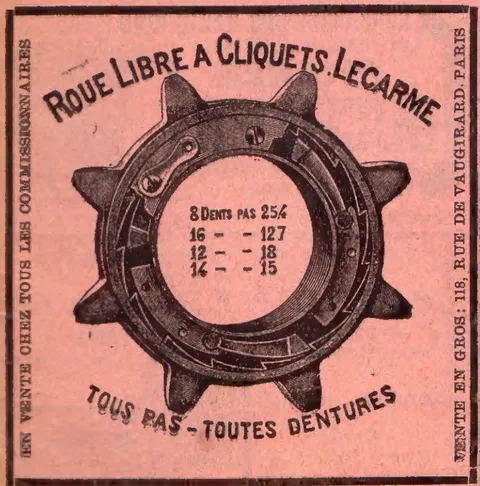 (opens in a new tab)
 Roue Libre à Cliquets Lecarme 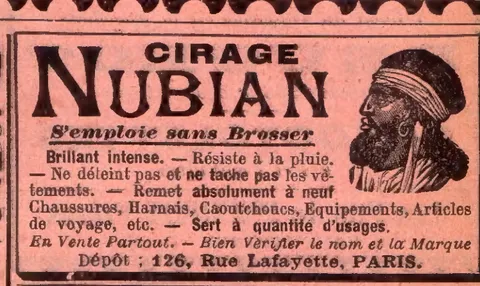 (opens in a new tab)
 Cirage Nubian 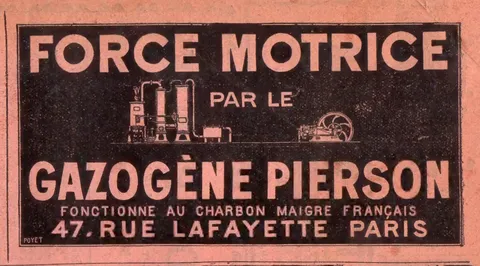 (opens in a new tab)
 Force Motrice par le Gazogène Pierson 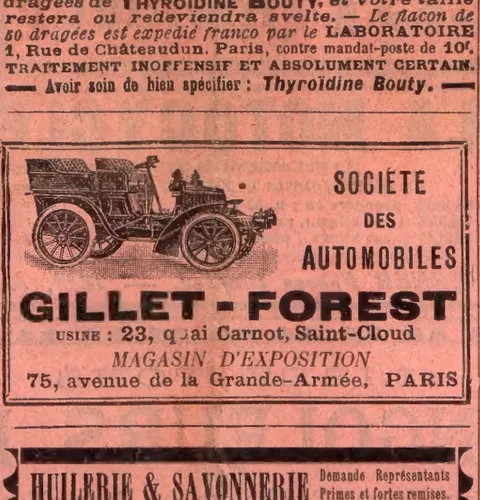 (opens in a new tab)
 Société des Automobiles Gillet-Forest 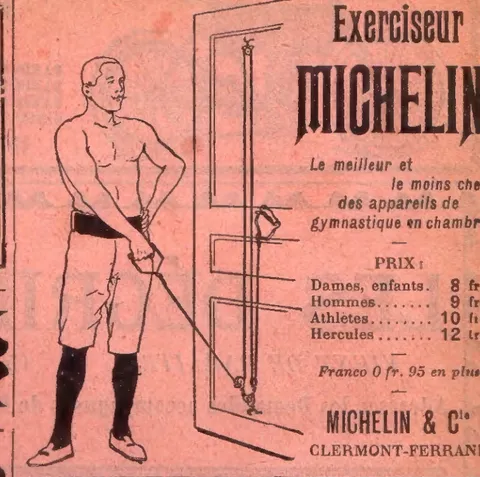 (opens in a new tab)
 Exerciseur Michelin  (opens in a new tab)
 Plaques Positives Lactate Opalines Guilleminot 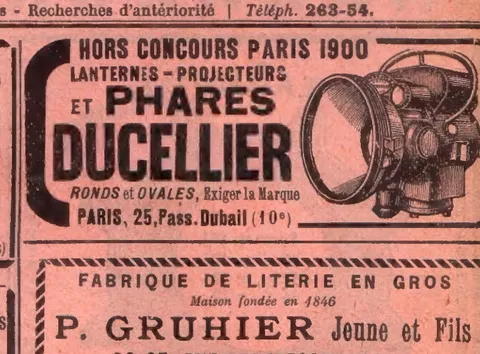 (opens in a new tab)
 Phares Ducellier 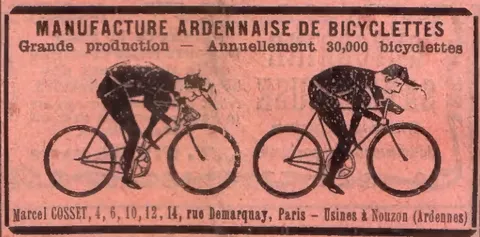 (opens in a new tab)
 Manufacture Ardennaise de Bicyclettes 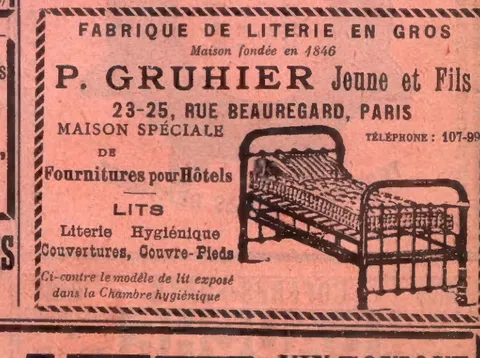 (opens in a new tab)
 Fabrique de Literie en Gros, P. Gruhier Jeune et Fils