Vol 15, No 2
190533 articles28 imagesFrench
Articles in this issue
- Members who had not paid their 1905 subscription by 1 February will be presented by the post office, between 25 February and 15 March, with a receipt for 5 fr. 50 (6 fr. 50 abroad). A facsimile of the postman's second-presentation notice and of the blue stamp to be pasted on the membership card is reproduced.
- A Paris "Bureau de renseignements pour l'Alsace" has been founded at the instigation of the writer Masson-Forestier to send French travellers into the Alsatian Vosges; the T.C.F. Council voted it a 1,000-franc subsidy. Its board is listed, Raymond Poincaré honorary president, the Mulhouse manufacturer Fr. Schœn president, Albert Carré of the Opéra-Comique vice-president, together with the opening articles of its statutes.
- Onésime Reclus appeals for a wealthy patron to endow the protection of French landscape, contrasting French thrift with American and British giving and citing the Renaud des Orgeries bequest of 250,000 francs that let Foureau and Lamy cross the Sahara. He notes the Touring-Club's 10,000 francs voted for Jean Lahor's site-protection work and threats such as the Gimel waterfall in the Corrèze and the Touvre springs in Angoumois.
- A. Ballif reports the letters prompted by the club's Grenoble Congress campaign for longer school holidays and the abolition of prize-books, quoting the collège de Nantua and M. Breunig of the École Alsacienne, which replaced prizes with an artistic diploma. He argues an extra day of holiday is worth more than any prize-book, since the schoolboy will ride home to his province by bicycle instead of by rail.
- The all-sports exhibition of 1907 is settled for the Champ-de-Mars, with a Palais des Sports to be built there and left to the City of Paris now that the Galerie des Machines is condemned. A study commission under M. Gervais met at the Ministry of Commerce on 3 February, and the Touring-Club is represented through Max-Vincent, Pierron, du Teil du Havelt, Cianelli de Sérans, Glandaz and Rondet-Saint.
- Practical answers to readers about wintering in the Estérel over the 40 kilometres from Saint-Raphaël to Cannes, listing the hotels at Valescure, Boulouris, Agay, Anthéore, Le Trayas, La Figueirette and Napoule and recommending the Hôtel Sube at Le Trayas. Cyclists are told to fit a change-speed gear of about 2 m. 60 for the frequent 7, 8 and 10 per cent ramps, and to use E. A. Martel's Carte de l'Estérel drawn for the Touring-Club.
- Minutes of the meeting of 28 January 1905 under M. Defert: S. Pichon, Resident-General in Tunis, accepts honorary membership; Beauquier gets a landscape-protection clause into the water-power bill; the Claude-Lorrain quay elm at Nancy has been felled, the château de Maisons-Laffitte bought by the State, and grants are voted for Château-Roussillon and the Montagne de Beaune, with protests over the demolition of the Pêcherie mosque in Algiers and the quarrying of the Ploumanac'h rocks.
- Minutes of 1 February 1905 under M. Glandaz: a pleasure-boat mooring at Bagatelle, a landing and garage at Rouen on the Société des Régates Rouennaises ground, patronage of the Trouville-Deauville sports pavilion, and Commandant Guichamans's scheme for a corps of T.C.F.-commissioned "patrons-pilotes" for yachts and motor launches. Free lock passage has been granted on the canalised Aisne, and the list of flag and burgee diplomas (nos. 75-100) is continued.
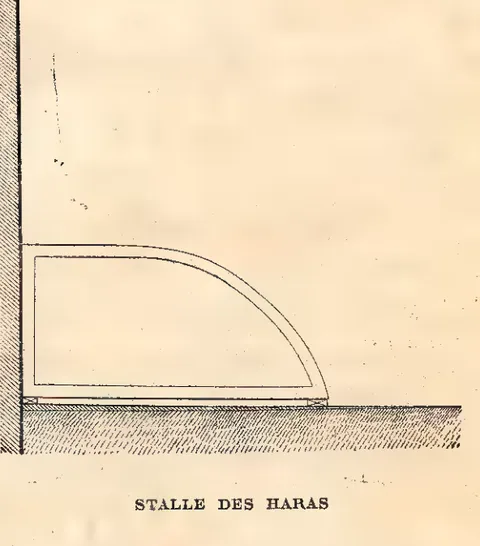
- Minutes of 6 February 1905 under M. Hornez, carrying the full circular of stable advice the committee is sending to hoteliers, outward-opening doors, hard paved floors, 1 m. 60 stalls in place of bails, iron racks and mangers, ventilation, fixed closed lanterns and antiseptic sponges. It announces an exhibition of stable fittings and of carriages, harness and travelling gear at the Grand Palais during the 1905 Paris Concours Hippique, with 1,000 francs of prizes, and votes for a retrospective transport museum at Bagatelle.
- Sheet XIII, Bayonne, of the Association's own 1:400,000 tourist map has appeared, covering the Gascony coast from Bayonne to Santander, most of the Landes and Basses-Pyrénées and the northern Spanish provinces of Navarre, Guipuzcoa, Biscay, Santander, Burgos, Alava and Logroño. Prices and the list of the thirteen sheets already published are given.
- The quarterly balance sheet certified by the treasurer, Comte E. de Reinach-Foussemagne: 270,211 fr. 10 in all, with 60,372 fr. 95 in hand at 31 December 1904 and 234,000 francs of reserve paid towards the headquarters building. A separate account covers the relief fund for roadmen and lock-keepers, which paid out 5,840 fr. 45 in the quarter.
- The 1905 general yearbook is now split into France-Nord and France-Sud volumes divided by a line from Les Sables-d'Olonne to the Lake of Geneva, and absorbs the formerly separate motoring yearbook. New features include tourist and excursion centres and the coach services linking stations to villages off the railway; about 700 pages a volume, 2 francs the pair.
- The foreign-countries yearbook is due during February, revised for the new regulations on bicycle and motor-car traffic in various countries and enlarged with recommended hotels, sights and excursions. It also carries a vocabulary of common travelling phrases in five languages and in Esperanto; price 1 fr. 50 post free.
- More than 3,000 further roadmen received the Touring-Club's waterproof oilskin this winter, bringing the total to nearly 7,000. The Minister of Public Works has authorised chief engineers to buy them out of maintenance credits and several conseils généraux have voted funds for the vicinal service; the cape costs 5 fr. 95.
- Notices to hoteliers: worn T.C.F. panonceaux must be replaced (9 fr. 50, with a free metal notice announcing the ordnance map), lavatories should have a paper dispenser, and a diploma and silver medal go to J. A. Bessac of the Nouvel-Hôtel at Grenoble. Newly transformed houses at Coutances, Creil, Castellane, Le Faouët, Épinal and Eaux-Bonnes are cited, along with Harden fire grenades and the Grenoble Congress vote for oil lamps in electrically lit corridors.
- News of the local tourist bodies: Annecy wins a gold medal at the Antwerp exhibition of illustrated posters and guides, the Ariège syndicate fathers the Excursionnistes du Saint-Gironnais, and a Syndicat d'initiative de la Corse is founded at Ajaccio under S. Frasseto with Emmanuel Arène, Henri Boland and the prefect Delanney as honorary presidents. Reports also come from Grenoble, Châlons-sur-Marne, Lyon (over 4,000 enquiries answered), Carcassonne and Varengeville-sur-Mer.
- Raoul Simon argues that the touring car must abandon the "tonneau" in which early motorists drove from Calais to Ventimiglia and return to the bodywork of the old travelling berline, the coupé-limousine, or a sheltered side-entrance phaeton, with rear luggage racks and roof galleries. Weight, he notes, is limited only by the pneumatic tyre, which is why the motor sleeping-car remains a chimera.
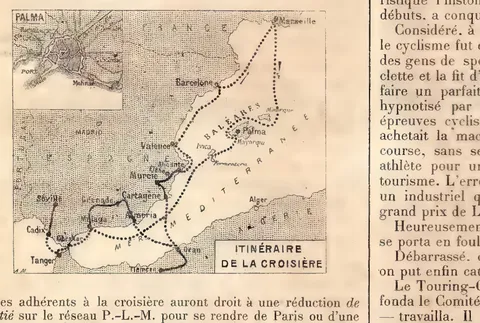
- The Compagnie Transatlantique repeats its Easter cruise aboard the Mediterranean liner Maréchal-Bugeaud, leaving Marseille on Sunday 16 April for Palma, Malaga and Cadiz, with a special train to Seville for the Holy Week processions, then Tangier, Gibraltar, Granada, Oran, Tlemcen and home by Cartagena, Murcia, Elche, Alicante, Valencia and Barcelona. The fare is 600 francs, with half-price P.-L.-M. travel to Marseille.
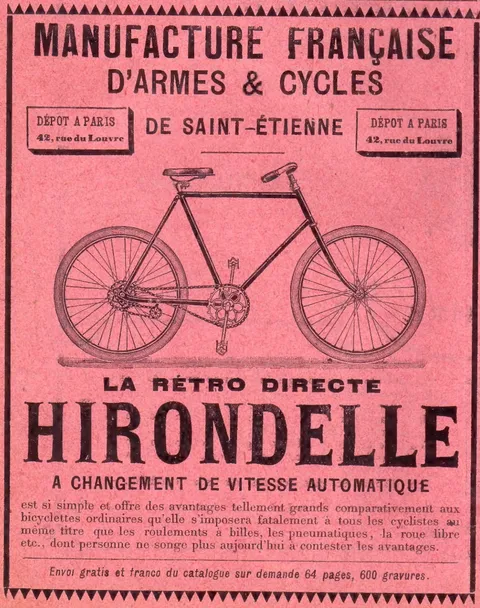
- Report of Carlo Bourlet's lecture of 31 January at the Hôtel des Sociétés Savantes for the Association française pour l'avancement des Sciences. He recalls the scandal of buying a bicycle in 1888 as a young agrégé at the École normale, explains why low gearing suits mountain work, and describes the current back-pedalling two-speed hubs, the Magnat-Debon built to Captain Perrache's design, and the Terrot and Hirondelle rétro-directes.
- Léon Drouaux continues his campaign for the light 1 1/4 hp motor-assisted bicycle, attacking the fashion for refusing to pedal and arguing that the middle-aged rider needs the "little reinforcement horse" rather than a heavy motorcycle. A. Ballif then answers Baudry de Saunier, who in La Vie Automobile of 4 February called the motor-bicycle a voyage to the moon, and bets that experience will settle the quarrel within six months.
- A. Caré urges T.C.F. members to learn Esperanto before the congress season, recalling an improvised Calais-Dover gathering where travellers of six nationalities conversed, and asking what use French or English was to the riders of Paris-Berlin and Paris-Vienna. He announces the international Esperantist exhibition at the Algiers Chamber of Commerce during the April Congress of Orientalists and appeals for tourism material for its section.
- Th. Cart, vice-president of the Société française pour la propagation de l'Esperanto, gave a dialogued lecture at the club on 13 January before some forty women, with Mlle Royer and M. de Coppet and the appearance of a young Swede who spoke only Esperanto. A weekly Friday course, begun on 23 January with about thirty students, teaches chiefly by speaking the language.
- Letter from Dr Bergonié, principal delegate at Bordeaux, on Carlo Bourlet's Esperanto lecture of 10 February in the great amphitheatre of the Athénée, introduced by the delegate and conseiller général M. Bertin and demonstrated with phonographs lent by the Larrieu house. Bergonié also points to the network of cycle paths built in the Gironde by the delegate and engineer M. Clavel.
- C.-M. Gariel describes a winter tour of the Dauphiné made with Mme G..., leaving Paris on 10 January and reaching Grenoble by way of an overnight stop at Lyon, where the Syndicat d'initiative office proved open all year and M. Roux supplied the information. He notes the roadmen carting snow onto stretches of bare macadam so that sledges, the region's only transport, can keep running.
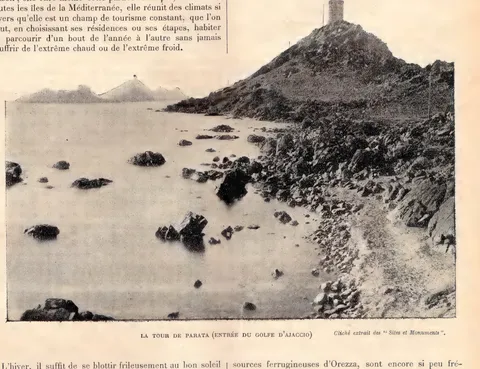
- Henri Boland's monthly travel feature celebrates Corsica, from his first April crossing on the old steamer Bocognano out of Marseille under Commandant Carboni to the porphyry cliffs and fjord-like creeks of the west coast. A suggested fortnight takes in Vizzavona, Corte, Belgodère, Calvi by the Balagne road, the Bonifato forest house, l'Île-Rousse, Bastia and Cap Corse, using the Joanne guide and its road appendix La Corse à bicyclette.
- Dr Marcel Baudouin's account of a horse-drawn carriage journey from Vibraye in the Sarthe to Croix-de-Vie in the Vendée by way of Connerré, Le Mans, Cérans-Foulletourte, La Flèche, Seiches, Angers, Chemillé, Cholet, Tiffauges and Palluau, with stops at Durtal on the Loir and a visit to the Vendée postcard publisher M. Poupin. A table gives the horse's weight and daily ration and the distance of each of the seven days' stages.
- Dr Gilles costs motor launches for touring: a 5-metre decked boat with a 5 hp single-cylinder engine at 3,000 francs and 6 knots, and a 9-metre cruiser with mast, sail, tent and four bunks at 7,500 francs with a 10 hp twin or 10,800 francs with a 16 hp four-cylinder. Upkeep means two haul-outs a year, fuel and oil run 15 to 20 centimes a kilometre, and beginners are warned never to go far offshore, to trust the barometer only when it says stay in, and never to sail alone.
- L. Auscher's continued survey reaches the Sierra Nevada and California, the Southern Pacific's snowshedded climb to Summit Station at 2,800 metres, San Francisco's Golden Gate, the Yosemite valley, and the Spanish-era churches and presidios that make the state feel least American. He then follows the coast through Portland, Seattle and Tacoma to Mount Shasta and the Alaskan glaciers before turning to the difference between American resort hotels and the seventeen- and thirty-three-storey city buildings.
- The magazine's miscellany: membership stands at 92,850 at 31 January 1905; gifts to the library are listed; Charles Jeantaud has shown the Laboratoire central d'électricité an accumulator giving twice the energy for the same weight; the Union française cycliste contre le vol is founded at Bordeaux; Le Matin's Alger-Toulon motor-boat models are judged; and a press review quotes Vivien Netter on alcohol fuel, Lucien Périssé on car stability, Mortimer-Mégret on dust, and Paul Hamelle on the collapse of English cycle prices.
- The Paris cycling excursions resume on Sunday 2 April, open to all members, with half-fare rail travel for those carrying card and badge and routes posted at the Café du Commerce, place des Victoires. The season's long runs are announced, Touraine at Easter, Picardy at Whitsun, Auvergne in mid-July and Jersey in August, under captains Paul Sée and Lucien Favot and the delegate G. Bourguignon.
- Minutes of 31 January 1905: the club takes on the Cour de cassation appeal brought by the P.-L.-M. against a Villefranche judgment that taxed a tonneau-bodied motor car as a one-horse carriage, votes 1,000 francs to the Alsace information bureau and grants for a dangerous bend at Gué-de-Longroi and for the Aisne cycle paths, and awards medals and badges to delegates. A long list of new departmental, town, foreign and nautical delegates follows, from Constantine to Vien-Thiane.
- Minutes of 12 January 1905 under Max-Vincent: opinions on a 54-franc Paris substitute tax claimed on a car kept outside the city, on whether an owner is liable when a garage proprietor drives his broken-down car, and on M. Vergne's request that motor-bicycles be classified for use of cycle paths. The committee also reports the Rennes judgment of 9 December 1904 making the owner of a straying cow pay 65 francs for a broken headlamp and mudguard.
- Meignen's report, which the Comité de contentieux asked to be printed in full, holds that unfair-competition law protects a shipowner's recognition mark but not a club burgee, so societies such as the Touring-Club must sue usurpers under article 1382 of the Civil Code. He advises registering the flag as an industrial model or design with a conseil de prud'hommes, which would give a true exclusive right without having to prove fault and damage.
Images in this issue 28 pictures from 52 pages
Photographs 4
 (opens in a new tab)
 La Tour de Parata (entrée du Golfe d'Ajaccio) 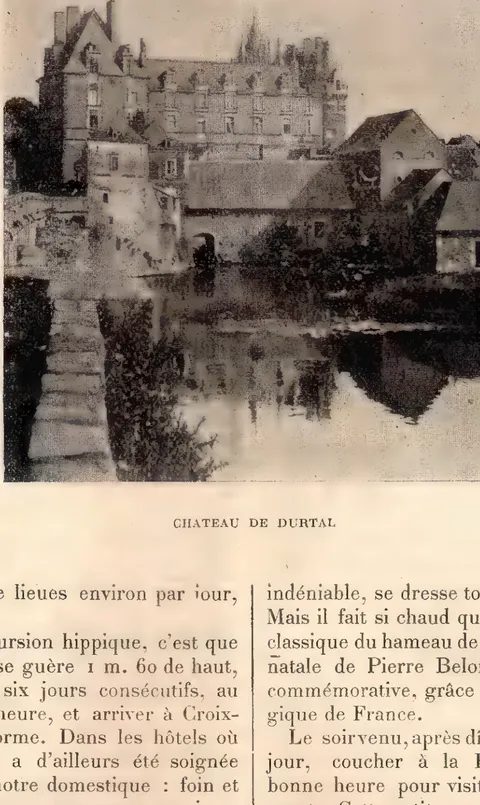 (opens in a new tab)
 Château de Durtal 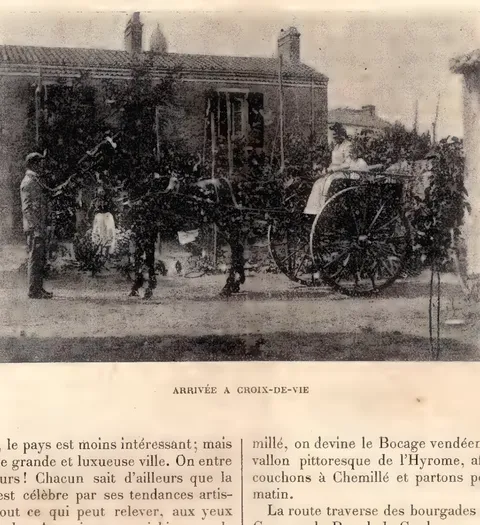 (opens in a new tab)
 Arrivée à Croix-de-Vie 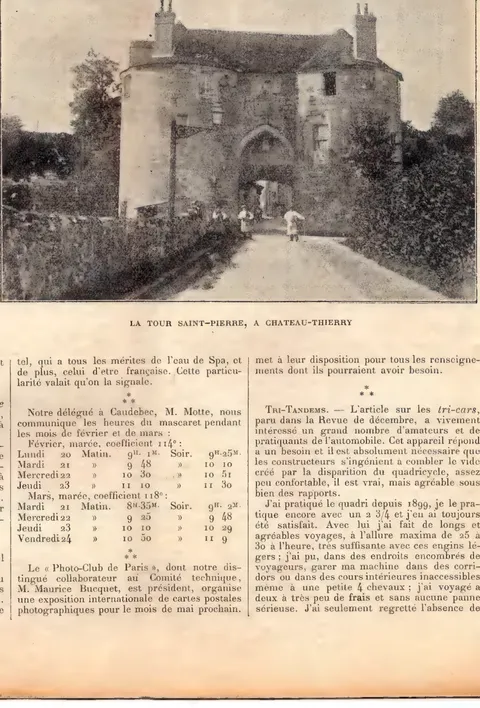 (opens in a new tab)
 La Tour Saint-Pierre, à Château-Thierry
Maps 1
 (opens in a new tab)
 Itinéraire de la croisière en Espagne
Diagrams 4
 (opens in a new tab)
 Stalle des Haras 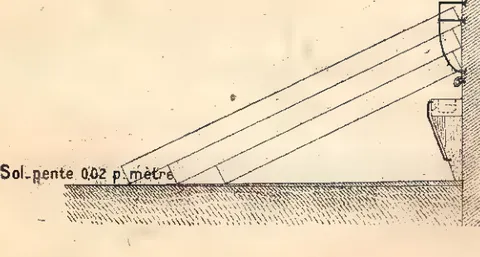 (opens in a new tab)
 Parois de l'écurie 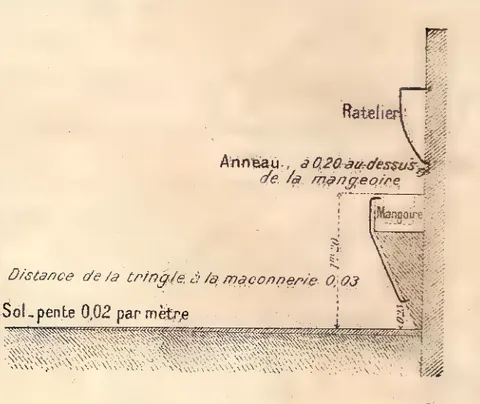 (opens in a new tab)
 Système d'attache 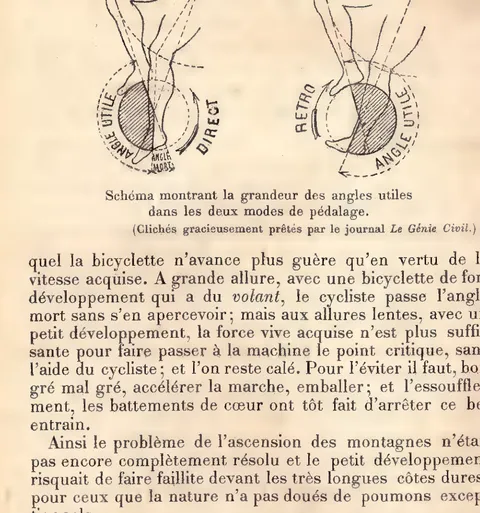 (opens in a new tab)
 Schéma des angles utiles en pédalage direct et rétro
Mastheads 1
 (opens in a new tab)
 Touring-Club de France emblem
18 advertisements
 (opens in a new tab)
 La Rétro Directe Hirondelle 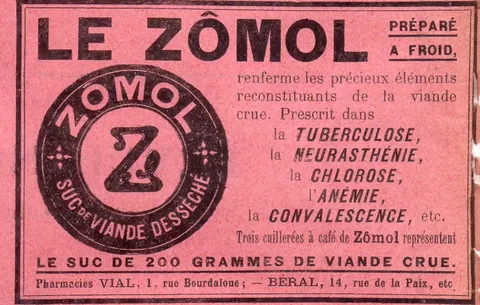 (opens in a new tab)
 Le Zômol  (opens in a new tab)
 Cycles Georges Richard  (opens in a new tab)
 Lapsolu & Cie  (opens in a new tab)
 La Motocyclette Werner 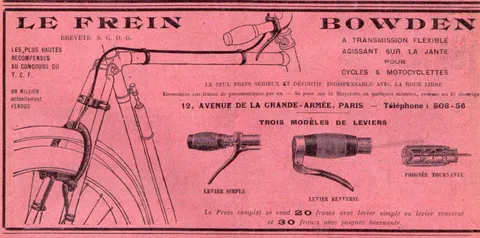 (opens in a new tab)
 Le Frein Bowden 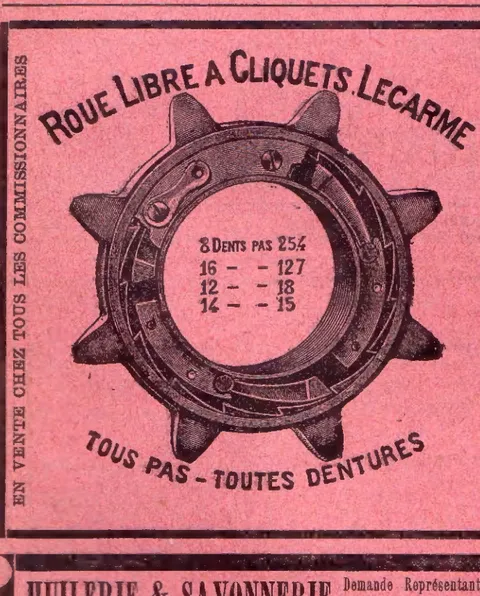 (opens in a new tab)
 Roue Libre à Cliquets Lecarme  (opens in a new tab)
 Cirage Nubian  (opens in a new tab)
 Force motrice par le Gazogène Pierson  (opens in a new tab)
 Thyroïdine Bouty 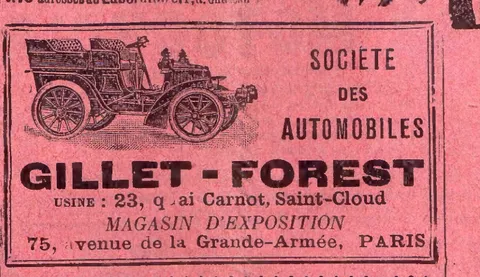 (opens in a new tab)
 Société des Automobiles Gillet-Forest 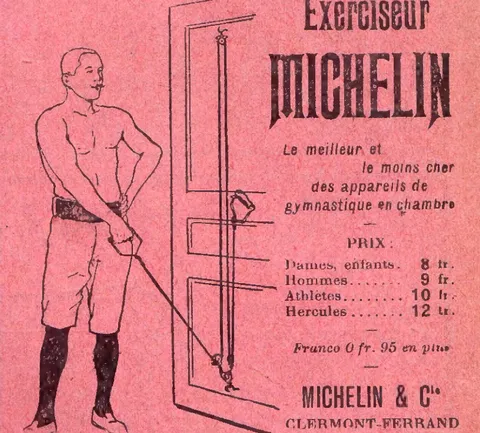 (opens in a new tab)
 Exerciseur Michelin  (opens in a new tab)
 Maison Cochin -- literie  (opens in a new tab)
 Plaques positives Lactate Opalines Guilleminot 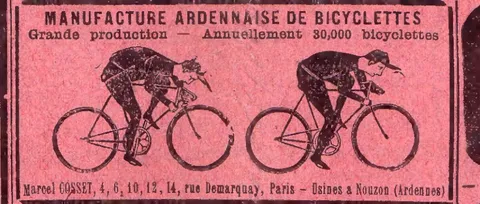 (opens in a new tab)
 Manufacture Ardennaise de Bicyclettes 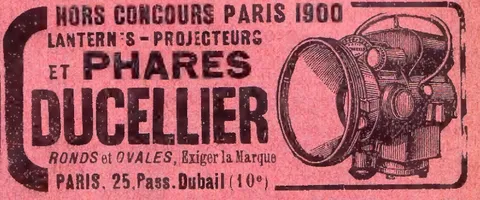 (opens in a new tab)
 Phares Ducellier 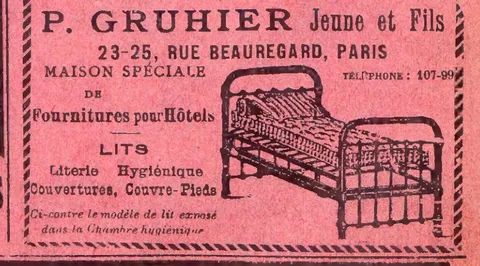 (opens in a new tab)
 Fabrique de literie en gros -- P. Gruhier  (opens in a new tab)
 Le Cochon qui Fume